 Follow Us on Google News


 Follow Us on Google Discover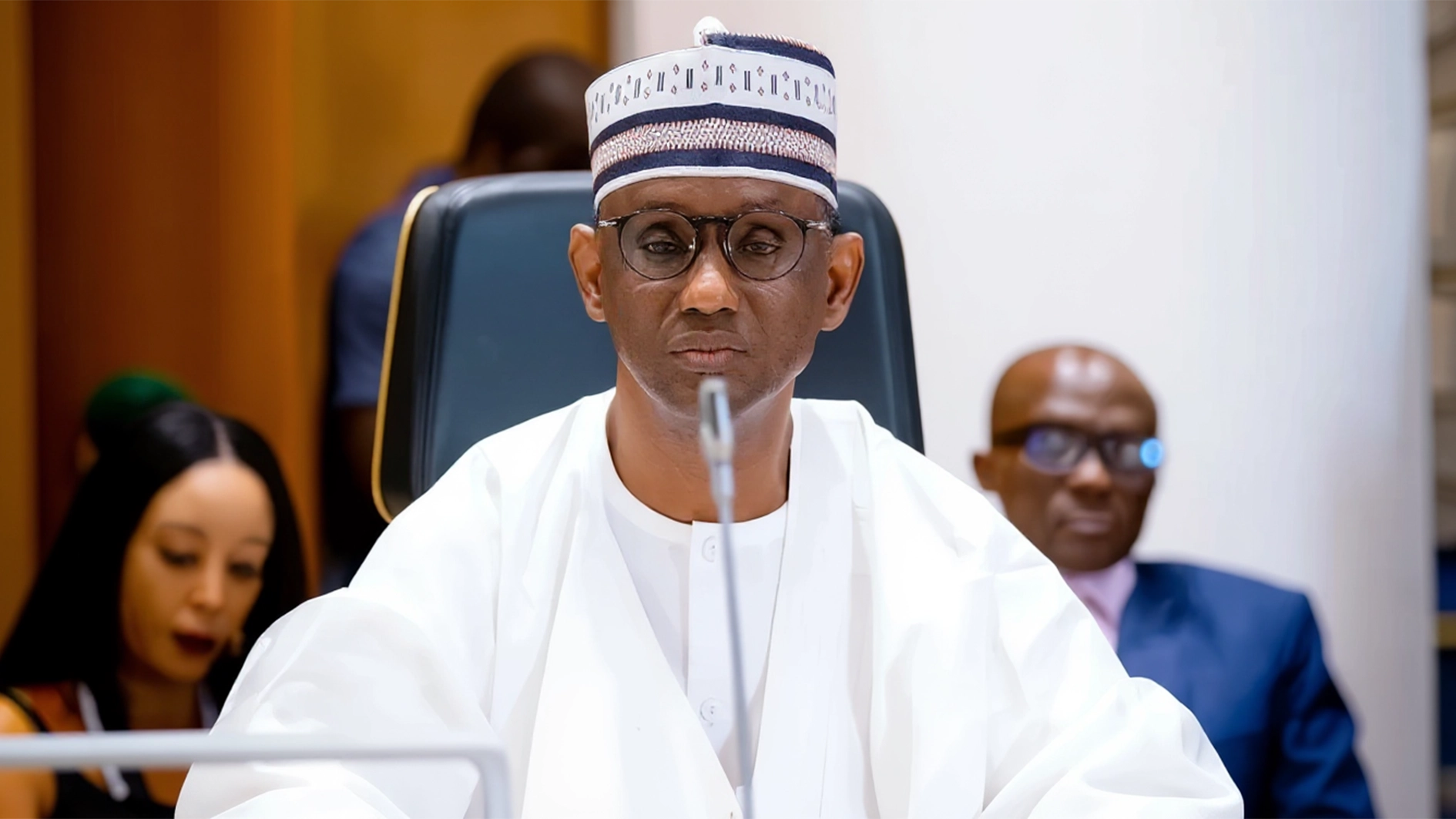
• Lagos-based ISIS financier, three bureaux de change implicated
• U.S. commits to cutting off fiscal lifelines funding ISIS attacks
• NSA seeks stronger global alliance as Nigeria confronts evolving security risks
• UK reaffirms support for counterterrorism, regional stability efforts
• Nigeria allocated N5.4tr to security in 2026 budget, says Kalu
• Troops kill ISWAP spies in Borno as gunmen attack Niger checkpoint
A fresh spotlight was cast on terrorism financing and security threats yesterday as the United States sanctioned a Lagos-based alleged ISIS (Islamic State of Iraq and Syria) financier.
This came as troops neutralised suspected ISWAP (Islamic State West Africa Province) operatives and the Federal Government deepened counterterrorism cooperation with international partners.
The United States imposed sanctions on Mukhtar Adamu Muhammad and three bureaux de change linked to him over accusations of facilitating funds for the terrorist group.
The sanctions, announced under Executive Order 13224, form part of a broader action targeting ISIS financial networks operating across Europe, the Middle East and West Africa.
Muhammad, 35, also known as Adamu Mukhtar and Muhammad Mukhtar, was identified as a key facilitator for ISIS-West Africa. He was listed with an address in Agege, Lagos State.

According to the U.S. Department of the Treasury’s Office of Foreign Assets Control (OFAC), Muhammad allegedly served as a conduit for ISIS financing through bureaux de change operating in Lagos and Kano states.
The three businesses sanctioned alongside him are Generation Currency Bureau De Change Limited and Nine to Nine Exchange Bureau De Change Limited, both based in Lagos State, as well as Manhattan Bureau De Change Limited in Kano State.
The U.S. authorities said the sanctions targeted a network spanning France, Turkiye, Syria and Nigeria that allegedly supports ISIS operations, finances attacks and assists the group’s affiliates.
According to OFAC, the network includes a France-based facilitator accused of providing information on explosives to ISIS supporters and a Syria-based operator who allegedly used cryptocurrency to transfer funds to ISIS associates in several countries, including the United States.
Announcing the sanctions, U.S. State Department spokesperson Thomas “Tommy” Pigott said the measures were aimed at disrupting the terrorist group’s financial operations worldwide.
“Under the leadership of President Trump, the United States is dismantling ISIS’s ability to finance terrorism around the world.
“We are cutting off the financial lifelines that enable ISIS to fund attacks, support its regional affiliates, and threaten civilians, including religious minorities,” Pigott said.
He added that the actions reflected sustained U.S. efforts to weaken ISIS, which he said had increasingly decentralised its operations and relied on financial intermediaries to sustain its global network.
The U.S. government also reaffirmed its security partnership with Nigeria, citing Abuja’s role in the May 16, 2026, operation that resulted in the killing of Abu-Bilal al-Minuki, described as the second-highest-ranking ISIS official.
Washington pledged to continue deploying diplomatic and legal measures against ISIS and its supporters.
“We will continue to use every diplomatic and legal tool available to hold ISIS and its supporters accountable wherever they operate and however they move money.
“We remain fully committed to protecting American lives, defending religious minorities, and working with international partners to eliminate the threat that ISIS poses to global peace and security,” the Department said.
The sanctioned individuals and entities have been added to OFAC’s Specially Designated Nationals list, a designation that freezes any assets under U.S. jurisdiction and prohibits American individuals and organisations from conducting transactions with them.
ISIS was designated a Specially Designated Global Terrorist organisation in 2004 and was later classified as a Foreign Terrorist Organisation by the United States in the same year.
Ribadu: Nigeria cannot tackle security threats alone, UK reaffirms support
MEANWHILE, National Security Adviser (NSA), Mallam Nuhu Ribadu, has said that combating terrorism, violent extremism, cybercrime, organised criminal networks, illicit financial flows, foreign information manipulation and interference, as well as the growing sophistication of transnational criminal organisations, requires collaboration among trusted international partners.
Ribadu said no nation can address such threats alone, stressing that effective responses require coordinated action across defence, intelligence, law enforcement, diplomacy, cyber capabilities and financial instruments.
Speaking yesterday at the fourth UK-Nigeria Security and Defence Partnership (SDP4) Dialogue, the NSA noted that terrorist and criminal networks operating within Nigeria’s borders had been significantly degraded. He, however, cautioned that the threats remain dynamic, adaptive and increasingly technology-driven.
“Nigeria remains firmly committed to confronting these challenges through a whole-of-government and whole-of-society approach,” he said.
The first UK-Nigeria Security and Defence Partnership Dialogue was held in London in 2022.
Ribadu said the interconnected nature of modern security challenges means that regional insecurity increasingly carries global implications. He pledged Nigeria’s continued leadership in advancing security across Africa and strengthening cooperation with partners to promote regional stability, democratic governance and collective resilience against shared threats.
“We therefore welcome continued international coordination and partnership in addressing these challenges.
“Counterterrorism remains a central pillar of our partnership. Nigeria appreciates the support provided by the United Kingdom in strengthening our crisis-response capabilities, disrupting terrorist financing networks, enhancing investigations and supporting strategic communications.
“We are particularly encouraged by ongoing cooperation aimed at strengthening the National Counter Terrorism Centre and advancing sustainable counterterrorism measures,” he said.
He added that defence cooperation between both countries had continued to expand through capacity-building initiatives, operational support, doctrine development, special operations capabilities, maritime security cooperation and strategic communications.
“We welcome continued collaboration aimed at enhancing the professionalism, effectiveness and interoperability of our security institutions,” he added.
According to the NSA, the evolving security situation in West Africa and the wider Sahel region continues to demand close attention, with violent extremism, unconstitutional changes of government, transnational organised crime, arms trafficking and humanitarian pressures posing serious threats to regional stability.
In his remarks, the United Kingdom’s National Security Adviser, Jonathan Powell, reiterated his country’s commitment to supporting Nigeria in addressing security challenges.
“We have immense respect for Nigeria’s leadership role within the region and across Africa,” Powell said.
He added: “We recognise the significant security challenges Nigeria faces, particularly in combating terrorism, disrupting illicit financial networks, protecting civilians and strengthening national resilience. These are challenges we all face, but they are especially acute in this region.”
Powell disclosed that the UK currently has military personnel in Maiduguri supporting Nigerian forces in their efforts to combat terrorism and insecurity.
“We have counterterrorism specialists working with Nigerian law enforcement agencies, and we continue to support the National Counter Terrorism Centre in strengthening its capabilities, including the development of forensic and investigative capacities that enhance the ability to respond to terrorist incidents with greater precision and effectiveness,” he said.
The SDP4 Dialogue is expected to focus on issues relating to national and regional leadership in an increasingly complex security environment.
Nigeria allocated N5.4tr to security in 2026 budget, says Kalu
THIS came as Deputy Speaker of the House of Representatives, Benjamin Kalu, said Nigeria allocated about N5.4 trillion to security and defence in the 2026 budget as part of efforts to tackle terrorism, banditry, kidnapping and other security challenges across the country.
Kalu disclosed this yesterday at the Chatham House Africa Programme Roundtable in London on the theme, “Nigeria’s 2027 Elections: How to Ensure Electoral Integrity Amid a Deepening Security Crisis.”
He said security funding has remained the largest sectoral allocation in the national budget since the inauguration of the 10th National Assembly in June 2023, reflecting its centrality to national stability and development.
“Security and defence remain the biggest priority in our national budget because no meaningful development can take place without peace and stability,” he said.
Kalu noted that allocations to the sector rose from N2.98 trillion in 2023 to N5.41 trillion in the 2026 budget, representing an increase of more than 81 per cent within three years.
He said the National Assembly is also considering a constitutional amendment to make security funding a first-line charge on the national budget to ensure timely and predictable release of funds.
“We are working to ensure that security funding is not delayed or subjected to bureaucratic bottlenecks. It must be treated as a first-line charge if we are to respond effectively to threats,” he said.
Kalu expressed optimism that ongoing legislative and institutional reforms would strengthen national security and support credible elections ahead of the 2027 general elections.
Troops kill ISWAP spies in Borno as gunmen attack Niger checkpoint
ALSO, Troops of Operation Hadin Kai (OPHK) have killed two suspected spies linked to the Islamic State West Africa Province (ISWAP) while attempting to infiltrate Nigeria from Cameroon through a border area in Borno State.
The operation was reportedly carried out by troops of the 152 Battalion in Banki in collaboration with members of the Civilian Joint Task Force (CJTF).
Security sources said the suspects were intercepted on June 21 after crossing from the Cameroonian side of the border fence into Nigerian territory.
According to the sources, intelligence available to the troops indicated that the suspects were linked to ISWAP and were believed to have entered Nigeria either to gather intelligence on troop deployments and military activities or to procure supplies for terrorist elements operating in the region.
The suspects were reportedly sighted scaling the border fence, prompting troops to lay an ambush and engage them. Both men were killed during the encounter.
Following the operation, troops searched the area and intensified surveillance along the border corridor to prevent further infiltration by suspected terrorist collaborators.
The development forms part of ongoing efforts by Operation Hadin Kai to strengthen border security and disrupt support networks used by insurgent groups in the North-East.
Sources said troops remain on high alert across the theatre of operations to deny terrorists freedom of movement and access to logistics.
They added that although the overall security situation in the region remains relatively calm, military authorities continue to regard the environment as unpredictable because of the persistent threat posed by insurgent groups.
Operation Hadin Kai has sustained offensive operations and border patrols across the North-East to prevent cross-border movements by terrorists and degrade their operational capabilities.
Meanwhile, suspected Lakurawa terrorists attacked a Nigeria Immigration Service (NIS) checkpoint along the Mokwa–New Bussa Road at Zugurma in Mashegu Local Government Area of Niger State on Monday.
Security sources said the attackers blocked the highway at about 4:30 p.m. before launching assaults on security installations in the area, including the immigration checkpoint.
During the attack, the gunmen reportedly overpowered personnel at the checkpoint and carted away an AK-47 rifle belonging to an immigration officer.
The attackers were also said to have extended their operation to the police outpost in Zugurma village.
However, police authorities confirmed that all officers on duty at the outpost escaped unharmed.
Security sources further disclosed that no cases of kidnapping or abduction were recorded during the incident.
They said the situation had been brought under control, while efforts were ongoing to track down and apprehend the attackers.
The authorities also assured residents of intensified patrols and sustained security operations in the affected area.

