Get Guardian on Google

The United Nations Children’s Fund (UNICEF) says access to potable water by the masses is a `human right’ which must be respected by all tiers of government.
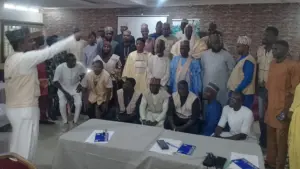
Mr Roy Ndoma-Egba, UNICEF National Consultant on Water, Sanitation and Hygiene (WASH)-Sector-Wide Approach (SWAP), made the remarks at a stakeholders’ meeting on WASH-Sector-SWAP Engagement Process on Monday in Osogbo.
Ndoma-Egba said it was important for the masses to have access to potable water, adding that government can partner the private sector and the civil society to achieve this.
[ad]
According to him, study has revealed that access to potable water can reduce water borne disease to 60-70 per cent, if adequately provided by government.
He said the time people spent on searching for water at the rural areas was huge, adding that government needed to increase budgetary allocation to the water sector.
He said there was a huge gap in the WASH sector due to limited funds vis-a-vis the required investment.
Ndoma-Egba said securing the needed investment in the water sector would require identifying innovative financing mechanism and enhancing revenue generation from WASH service delivery.

The UNICEF national consultant, who noted that provision of potable water involved huge resources, said water was both economic and social commodity.
According to him, the provision of potable water might not be totally free but people will only be encouraged to pay, if the service is regular.
“Private sector engagement is very critical to the development of WASH sector, most especially at the state level. Civil Society Organisations should be fully engaged in the WASH sector.
“Their engagement will help to create public awareness and sensitisation on project requirements and value, also promote advocacy,’’ Ndoma-Egba said.
He appealed to all tiers of government to ensure adequate provision of potable water to the masses.