 Follow Us on Google News
 Follow Us on Google Discover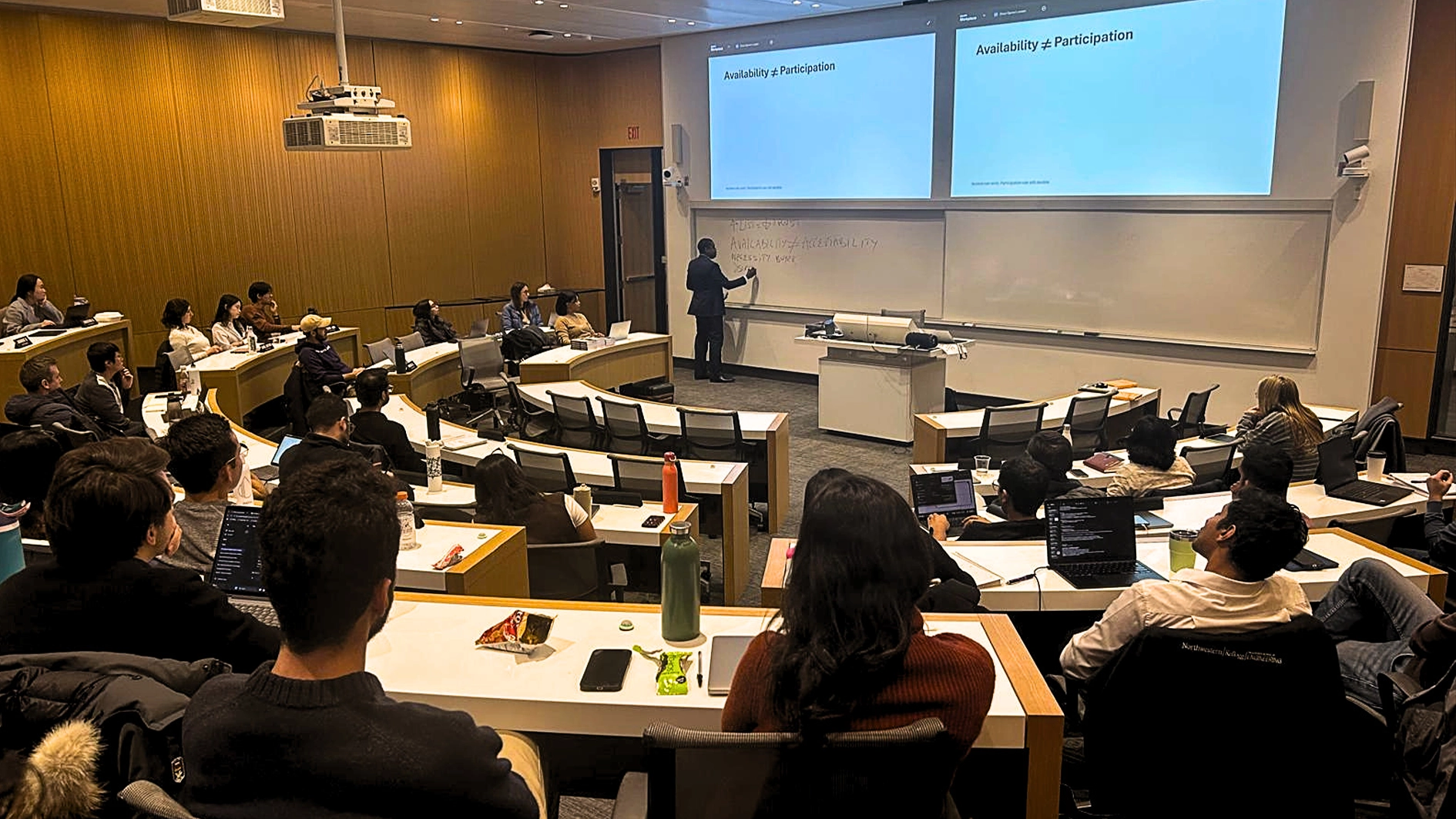
In recent executive discussions in faraway France, Toulouse School of Management, a familiar debate on strategy shifted quickly toward a more difficult question.
What happens when well-designed strategies meet the realities of pressure?
The shift was subtle but decisive. Instead of debating what organisations should do, participants found themselves confronting why those intentions so often unravel once conditions change. For many involved, the issue was no longer the quality of strategy, but the reliability of execution.
That tension, between what organisations plan and what they ultimately deliver, has become a recurring theme in executive classrooms and boardroom discussions. It also sits within a broader debate increasingly shaped by the work of Akin Monehin, focused on organisational execution and strategy delivery, whose thinking examines how organisations behave once strategy moves from paper to practice.
When strategy meets pressure
For years, the dominant focus in management has been on strategy design; clarity of direction, competitive positioning, and alignment of objectives. These remain essential. Yet across sectors, organisations that appear strategically coherent continue to struggle with consistent delivery.
Increasingly, this gap is being framed not as a failure of planning, but as a question of organisational design.
The distinction matters. Strategy defines intent. Design determines whether that intent can survive the conditions under which it must be executed.
In practice, those conditions are rarely stable. Financial constraints tighten decision-making. Market shifts compress timelines. Stakeholder expectations raise the cost of delay. Under these pressures, systems that once appeared sufficient begin to show strain.
Rather than creating failure, pressure tends to reveal what was already fragile.
Similar patterns have surfaced across executive programmes and corporate settings in Europe and emerging markets, where leaders are reassessing how organisations respond under sustained pressure.
Drawing on executive discussions across corporate and academic settings, Monehin observes: “Performance issues often trigger more activity; more meetings, more oversight. But where the underlying systems are misaligned, that activity can deepen inconsistency rather than resolve it.”
A shift in how execution is understood
This has led to a gradual reframing of execution itself.
Execution failure, in this context, refers to the inability of organisations to consistently translate strategic intent into sustained outcomes, particularly under conditions of pressure and uncertainty.
The implication is that execution is not simply an operational phase following strategy. It is a structural capability shaped by how organisations make, reinforce, and adjust decisions over time.
In executive discussions, three elements recur in explaining how this capability holds, or breaks.
Clarity concerns the ability to maintain a limited set of priorities that remain visible across the organisation. Without it, attention fragments and competing initiatives dilute focus.
Cadence refers to the rhythm through which decisions are reviewed and reinforced. Where that rhythm weakens, organisations oscillate between urgency and inertia, undermining both speed and consistency.
Consequence reflects how decisions translate into visible outcomes. When consequences are unclear or unevenly applied, accountability weakens and execution becomes symbolic rather than structural.
These elements are not new. What is changing is the recognition that they must be deliberately designed and continuously reinforced.
A convergence of practice and research

The emphasis on execution discipline is not confined to corporate environments. It is increasingly reflected in academic research on organisational performance.
Scholars in strategic management and organisational behaviour have long pointed to internal alignment, decision processes, and reinforcement mechanisms as critical determinants of performance. What is emerging now is a closer alignment between these academic insights and the lived experience of executives operating under sustained pressure.
The discussions referenced in Toulouse reflect this convergence. Patterns observed in one setting are often immediately recognisable in another, suggesting that the underlying challenge is less about geography than about organisational readiness.
Rethinking leadership under strain
As attention shifts toward execution design, it is also changing how leadership is evaluated.
The ability to articulate strategy remains important. Increasingly, however, it is being assessed alongside the ability to sustain alignment, maintain decision discipline, and ensure that systems function coherently when conditions become less predictable.
This moves the focus from what leaders intend to what organisations consistently deliver.
The question that remains
If strategy failure is less about ideas and more about execution design, the implications are straightforward but not easily addressed.
Organisations must move beyond treating execution as an outcome of planning and instead approach it as a capability that requires structure, discipline, and continuous reinforcement.
The discussions that surfaced in Toulouse do not offer a definitive answer. Instead, they leave behind a sharper question.
Not whether strategies are sound, but whether organisations are built to withstand the conditions in which those strategies must operate.

