 Follow Us on Google News


 Follow Us on Google Discover
Nigeria must develop a more sustainable approach to meeting its vehicle demand while balancing continued imports with affordability, quality and the development of the domestic automotive industry, automotive entrepreneur Larry Banks has said.
Banks, founder of Auto Prince Technologies, said imported vehicles would remain an important part of the Nigerian market in the near term, but argued that attention should increasingly turn to the quality of vehicles entering the country and their long-term cost to consumers.
“Nigeria will continue to need imported vehicles, but we also have to think carefully about how that dependence is managed,” Banks said.
“A sustainable approach has to consider affordability, the quality of vehicles entering the market and what consumers actually need.”
His comments come as Nigeria records a sharp increase in the value of imported passenger vehicles.
Passenger motor-car imports reached ₦1.18 trillion in the first half of 2026, representing a 145.6 per cent increase from ₦479.26 billion recorded during the corresponding period of 2025, according to an analysis of National Bureau of Statistics foreign trade data.

The value increased from ₦552.34 billion in the first quarter of 2026 to ₦624.75 billion in the second quarter.
Overall imports of transport equipment and parts were valued at ₦3.73 trillion during the first six months of the year, compared with ₦2.59 trillion during the corresponding period in 2025.
The figures measure the value of imports rather than the number of vehicles entering Nigeria. Consequently, the 145.6 per cent increase does not mean that the volume of imported passenger vehicles increased by the same percentage.
For Banks, however, the size of the import bill highlights the continuing importance of imported vehicles to the Nigerian market.
“Imported vehicles are meeting a real demand, so the conversation should not simply be about stopping imports,” he said.
“We should be looking at how the market can meet that demand in a way that remains responsible and sustainable for consumers and businesses.”

Imported used vehicles remain an important part of Nigeria’s automotive market, providing buyers with alternatives across different price ranges.
But affordability is affected by factors extending beyond the original purchase price of a vehicle.
Exchange-rate movements, shipping expenses, duties and other import-related costs can affect what dealers pay to bring vehicles into the country and, ultimately, the prices available to consumers.
Banks said sustainability should therefore include consideration of what happens after a vehicle reaches the Nigerian market.
“Sustainability is also about what happens after the vehicle enters the market,” he said.
“People should be able to buy vehicles that can serve them properly and that can be maintained without creating unnecessary problems for the owner.”
Access to replacement parts and technical expertise can significantly affect the cost of vehicle ownership.
A relatively affordable vehicle can become expensive to maintain if replacement parts are difficult to source or if repairs require specialist expertise that is not readily available.
Banks said these considerations should influence the decisions automotive businesses make when sourcing vehicles for Nigerian consumers.
“The focus should be on bringing in vehicles that make sense for the market,” he said. “You have to consider the buyer, the condition of the vehicle and what it will take to keep that vehicle on the road after it has been purchased.”
The debate over Nigeria’s dependence on imported vehicles is taking place alongside renewed government efforts to increase demand for domestically assembled automobiles.
In May, the Bureau of Public Procurement and the National Automotive Design and Development Council moved to implement the Nigeria First Policy in the automotive sector.
Under the policy, federal ministries, departments and agencies are required to prioritise domestically assembled or manufactured vehicles, machinery and automotive spare parts, with foreign procurement restricted unless an appropriate waiver is obtained.
The Federal Government says the measure is intended to support local manufacturing, employment and industrial development.
The policy, however, primarily addresses government procurement and does not eliminate the wider consumer demand that imported new and used vehicles currently serve.
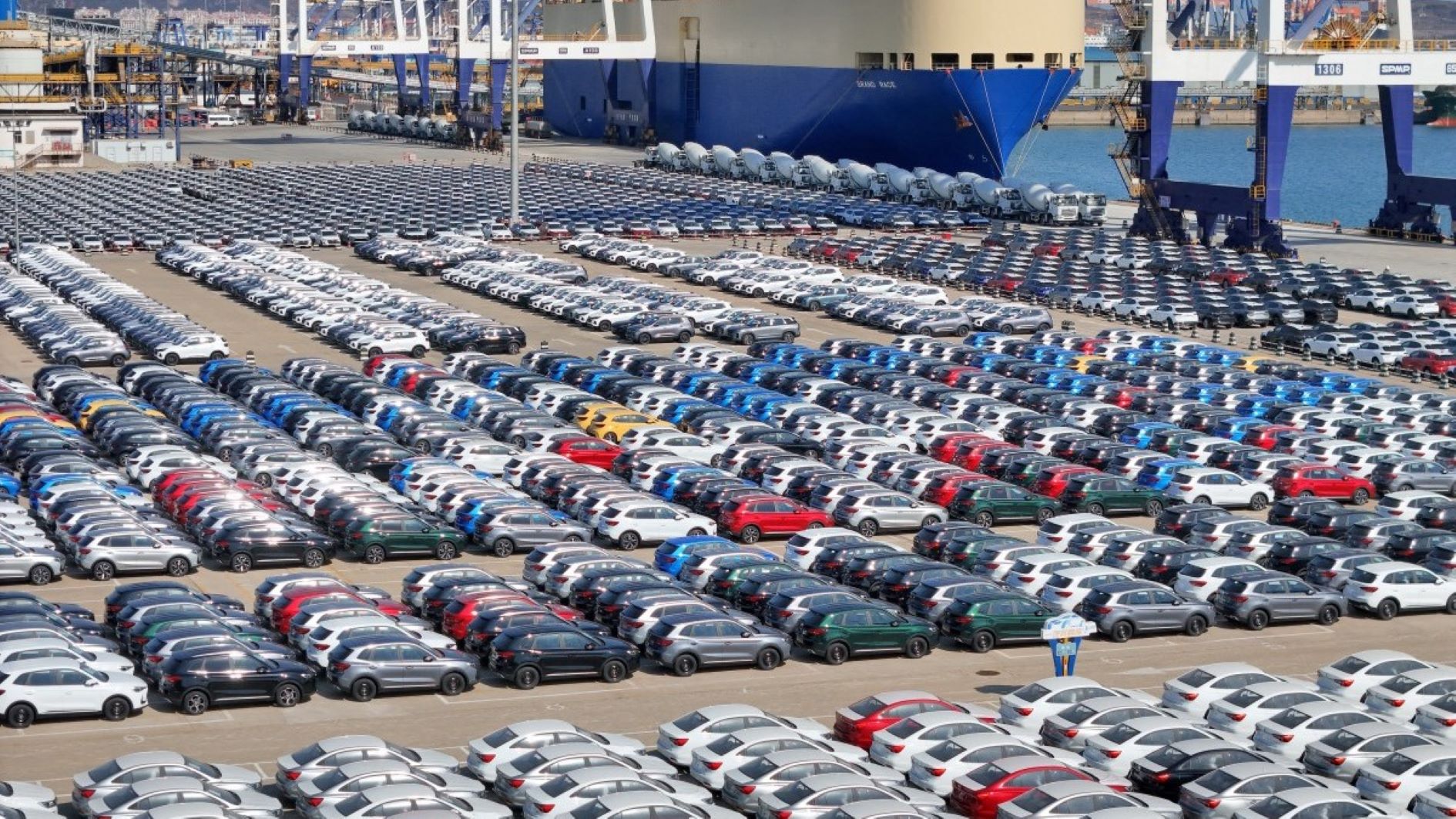
That creates a broader challenge for Nigeria’s automotive industry: expanding domestic production and assembly while responding to the affordability considerations that continue to shape purchasing decisions.
Banks said reducing dependence on imports should therefore be approached as a longer-term transition rather than simply a question of restricting imported vehicles.
Quality, he added, should form part of that discussion, particularly in the used-vehicle segment.
Attention should not only be paid to how much Nigerians spend importing vehicles, he argued, but also to their condition, suitability for local use and the support available throughout their working life.
For Banks, the objective should ultimately be a market in which vehicles are assessed not simply by their purchase price but by whether consumers can reasonably maintain and operate them over time.
As Nigeria seeks to strengthen its domestic automotive industry, imported vehicles are likely to remain part of the country’s transport landscape.
Managing that reality, Banks said, requires balancing immediate consumer demand with affordability, vehicle quality, after-sales support and the longer-term objective of developing a stronger domestic automotive industry.

