 Follow Us on Google News


 Follow Us on Google Discover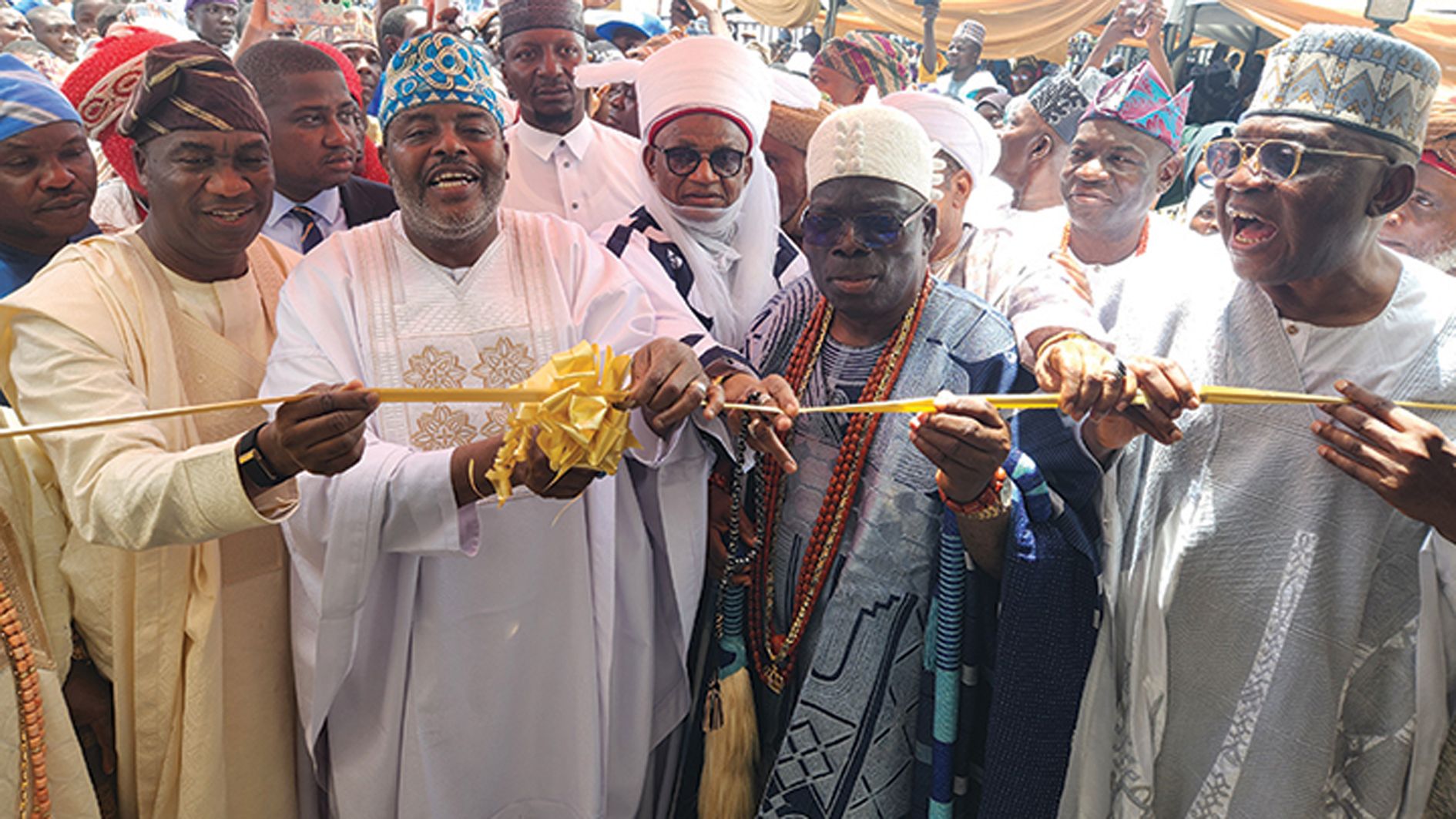
“Now, indeed, the places of worship are solely for God. So do not call upon anyone in worship along with God.” Qur’an 72 V18-19
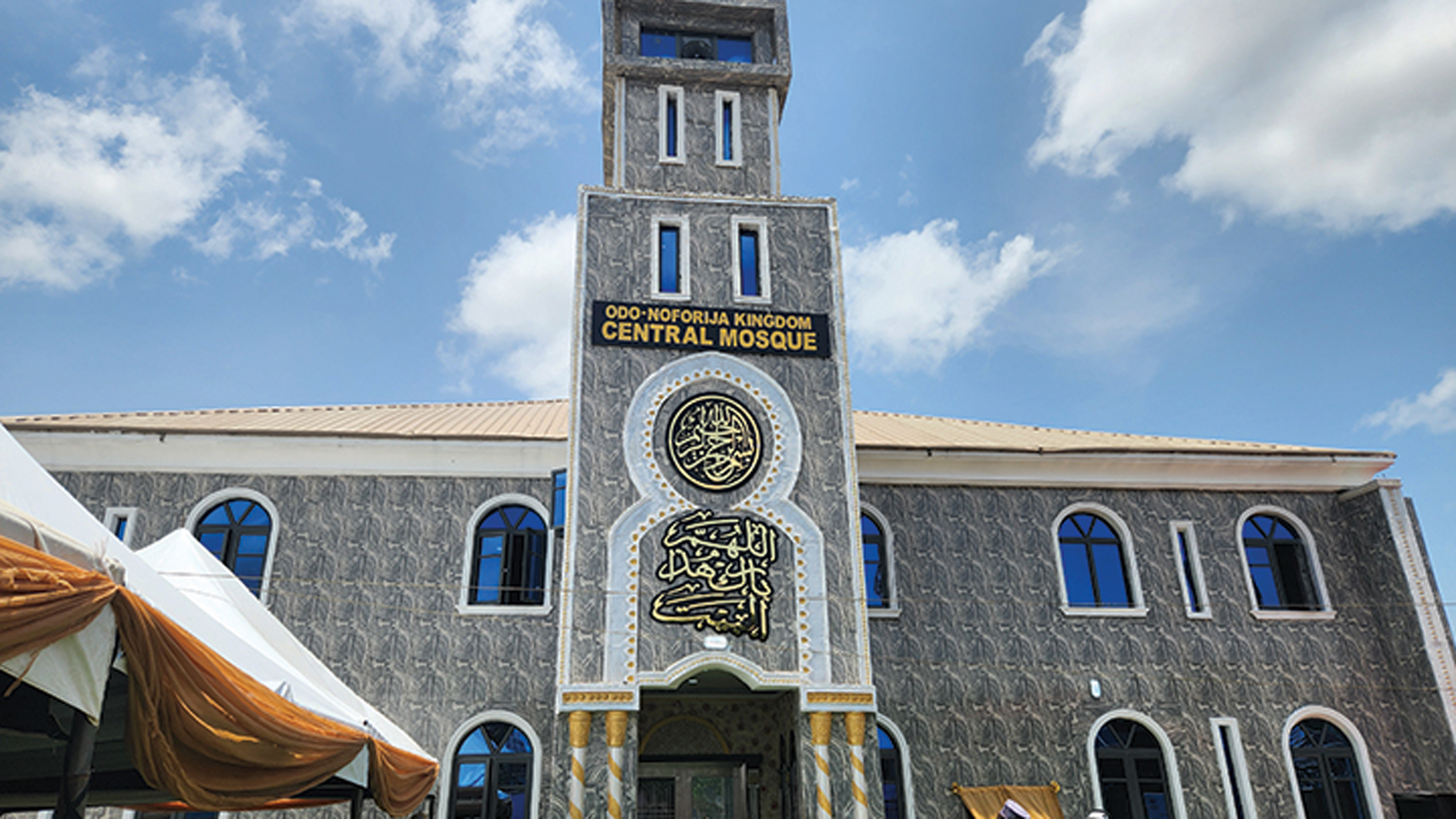
The concept of a mosque as more than a place of ritual prayer which is deeply rooted in early Islamic history and has evolved across cultures and centuries came alive last Friday at the commissioning of the Odo-Noforija Ultra-Modern Central Mosque, located in Odo-Noforija Kingdom, Epe Division of Lagos State.
Largely, the new edifice is celebrated as a symbol of unity, reflecting a deliberate effort to promote peace, balance, and interfaith harmony.
Built by the Chief Executive Officer of Al Hujaaj International Umrah and Hajj Services Limited, Alhaji Abdul Jelili Animashaun, the mosque now stands in place of the historic Ratibi Mosque, which was originally built in 1830 and later demolished by the Lagos State Government to make way for the Epe/Ijebu-Ode Road expansion project.
In a historic moment at the ceremony, Alhaji Animashaun, who sponsored the project, made the first call to prayer while the Chief Imam of National Mosque, Abuja, Prof. Luqman Zakariyah led the inaugural Jumu’at prayer for the congregants who filled the 3,000 capacity of the ultra-modern mosque.
The commissioning, however, stood out for the rare gesture by His Royal Majesty Oba (Dr.) Babatunde Olaogun Ogunlaja JP, the Aladeshonyin and Paramount Ruler of Odo-Noforija Kingdom, a Christian monarch, who personally facilitated the provision of a new site and laid the foundation for the building of the central mosque.

Speaking at the event, Alhaji Abdul Jelili Animashaun, stated that the mosque project was supported as part of efforts in propagating Islam, adding that this is among many other mosque projects he has undertaken in recent years.
He noted the tremendous role the monarch played in ensuring the project came to fruition, adding that he was first contacted while attending the 10-year remembrance of his cousin, Ibrahim Fashola, father of the late former Governor of Lagos State.
“When I got here, I realised he is a Christian and the people I met on ground hinted that the King had provided the land. So, I see it as a call from my Lord to do something and today, we are dedicating it to the Almighty,” he said.
In his address, the monarch recalled how the community made what he described as profound sacrifice of the two most sacred and ancient landmarks: the historic Ratibi Mosque established in 1830 and the First African Church Mission (St. David’s Parish) established in 1891.
He said: “These two institutions were the twin pillars of faith and heritage for Odo-Noforija for nearly two centuries. It is important to note, Your Excellency, that despite the magnitude of this loss to our spiritual and cultural identity, these ancient institutions were demolished with no compensation from the State Government.
“However, we are a people of faith and resilience. I am humbled that the Almighty God graciously used me and other selfless “like minds” to rise to the challenge of rebuilding.
Through this collective support, we have been able to transform what was the ancient Ratibi Mosque into the Ultra-Modern Central Mosque we see today.”
The monarch, however, stressed that the newly completed mosque represents a symbol of unity and progress, bridging the legacy of 1830 with the aspirations of 2026.
He expressed deep appreciation to Alhaji Abdul Jelili Animashaun for standing as a giant pillar for the project, saying, “I cannot thank you enough. I leave your reward to the Almighty Allah, who alone can adequately compensate such extraordinary selflessness.”
The First lady and Wife of the President, Oluremi Tinubu, used the occasion to call for stronger unity and religious tolerance across Nigeria, noting that the newly constructed mosque is a symbol of faith and collective progress.
He thanked the monarch, despite being a Christian, for his foresight and dedication in bringing the noble project to fruition.
She said: “These are the values that bind us together as one people on that path. Nigeria’s strength lies in its diversity. A moment like this reminds us that our diversity should not divide us, but rather strengthen our collective resolve to be a peaceful and prosperous nation.”
She highlighted her personal connection to both Islam and Christianity, noting that her background reflects the diversity that defines Nigeria.
“Today’s occasion is not just the unveiling of a physical structure, it is a celebration of faith, unity, community and devotion to Almighty God. This beautiful mosque is an example of what is possible when faith inspires action,” she stressed.
Tinubu, who was represented by her Senior Special Assistant on Public Affairs and Strategy, Abdulwahab Alawiye King, praised the construction of the mosque as a profound act of service, referencing the teachings of Prophet Muhammad, who said that whoever builds a mosque for Allah will be rewarded with a house in paradise. According to her, such acts demonstrate devotion, selflessness, and commitment to spiritual growth.
Also, the Governor of Lagos State, Babajide Sanwo-Olu, who was represented by his Deputy, Obafemi Hamzat, described the commissioning as “a deeply meaningful moment” that reflects “what is possible when a people come together with a shared vision and a genuine commitment to the common good.”
The governor commended the Muslim community and all contributors whose sacrifices, prayers, and collective effort have made the project a reality.
He also highlighted the leadership demonstrated by the monarch, noting his “personal commitment and generosity,” adding that the act “reflects a deep sense of responsibility, compassion, and unwavering dedication to the well-being and unity of his people.”
Beyond its physical structure, Sanwo-Olu emphasised the broader significance of the mosque, stating that it represents something far greater and will serve as a place where faith will be strengthened, values nurtured, and lives touched.
He added that the facility would help guide the young, support the less privileged, and reinforce the bonds of unity within the community.
Reaffirming his administration’s stance, the governor said the state government remains committed to initiatives that promote “peace, inclusiveness, and community development,” recognising the role of places of worship in building “strong and resilient societies.”
He urged residents to preserve the mosque as “a lasting symbol of your unity, your values, and your collective aspiration for a better future,” expressing hope that it would stand for generations as a beacon of faith, a symbol of harmony, and a testament to the strength of community.
Delivering his keynote address, the Etsu Nupe and Chairman of the Niger State Council of Traditional Rulers, His Royal Highness, Alhaji Yahaya Abubakar, congratulated the monarch and the entire Odo-Noforija Kingdom for the landmark achievement.
He described the newly constructed mosque as a symbol of the longstanding peaceful coexistence between Islam and Christianity in the kingdom, tracing the harmony back to the 18th century when the first worship centers for both faiths were established.
“The giant stride to give the Kingdom a befitting Central Mosque after the demolition of the ancient Mosque, confirms your unabiased rulership over the Kingdom,” he told the King.
He noted that the decision to rebuild the central mosque demonstrates the monarch’s commitment to unity and development, adding that the project stands as a significant investment in the spiritual life of the community.
While delivering his lecture, former Commissioner for Home Affairs in Lagos, AbdulHakeem Abdullateef, urged the congregants to be cautious of their tomorrow by engaging and investing in good deeds, stressing that only those who put forth righteous deeds will be rewarded by Allah, as He has promised.
He noted that building a mosque for the sake of Allah has huge benefits, urging well-to-do individuals to undertake such efforts or support people seeking help to build theirs.
Speaking on the sustainability and administration of the Mosque, Abdullateef urged management of the mosque to demonstrate good leadership, reminding them that the position is an Amanah, which they will be questioned on the day of judgement.
He also advocated for the proper remuneration for the Imam, urging them to cue from countries that prioritise the welfare of their religious leaders.
He also pointed out that the mosque should not be seen as a mere worship centre but as an avenue for youth empowerment, influencing positive behaviour in the society among others.
The highpoint of the event was the ribbon-cutting segment, signifying its formal opening.

