 Follow Us on Google News


 Follow Us on Google Discover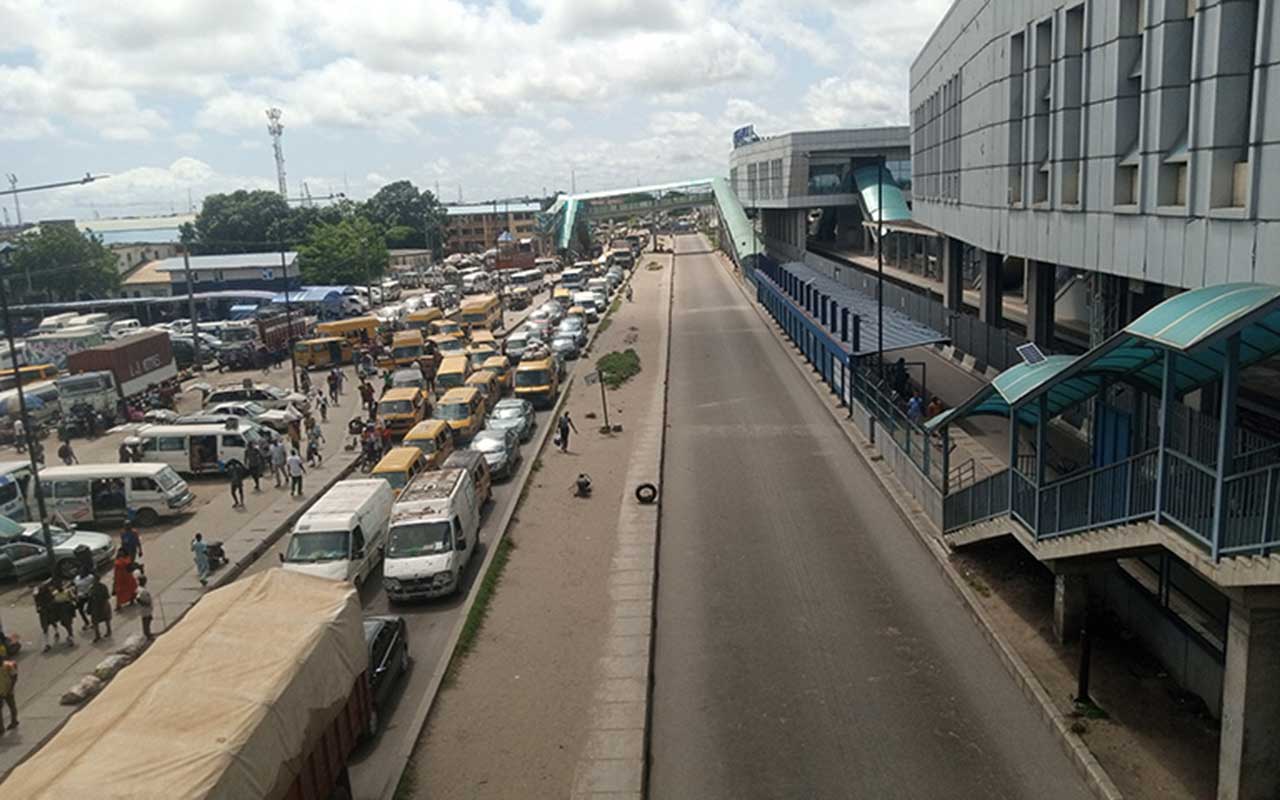
To ease the pains residents and motorists encounter navigating through road construction sites, residents have argued that it is high time Lagos State government implemented a 24-hour road construction policy, as well as night time construction, for its contractors, especially on major routes.
They noted that currently most road construction and repairs were done with the road completely or partially blocked despite the fact that construction activities do not go on all day.
[ad]
They argued that if a 24-hour construction or repair work is implemented, it would shorten the time spent on sites by the construction companies and by extension the pains residents and motorists go through navigating through the chaotic traffic along construction corridors.
Across many parts of Lagos, construction of roads is ongoing with the roads completely blocked or sections of it, resulting in chaotic traffic usually during the day that make residents and motorists to lose economic hours in traffic including vehicles getting dented.
In 2019, the Danne Institute for Research, in partnership with the Financial Derivatives Company, in a research on the estimated financial and economic costs of Lagos traffic congestion for individuals and businesses concluded that on average, Lagosians lose three productive hours commuting to work daily.
It added that if the lost hours remain constant, Lagos loses N10.39 trillion ($22.48 billion) in Gross Domestic Product (GDP) every year due to traffic congestion while the state government is losing N520.34 billion of internally generated revenue.
Yet, actual construction activities only go on for eight and at the most 10 hours in a day, as most road construction sites are only active between 8:00am and 4:00pm, though sometimes to 5:00pm. So, for about 16 hours, no active construction activities are taking place on the sites. This is despite the road is completely or partially blocked to vehicular movement.

For instance, the state government is reconstructing the in-and-outward of the Mile 2 sections of the Lagos-Badagry Expressway.
As a result, the government closed the fast lanes of both sides of the expressway. This has resulted in slow vehicular traffic almost day and chaotic, long traffic during peak hours.
Thus, a journey that should not take more than a minute is now completed between 10 minutes and one hour depending on the time of the day and the chaotic traffic situation.
This is because the closed fast lanes have narrowed the available space for vehicular movement along the corridor, which is compounded by poor traffic management as commercial buses pick and drop passengers on the road.
And the resulting effect is the chaotic traffic, especially during peak periods. Yet construction works are not going on all day but few hours.
A resident, Segun Olumide, asked the state government to develop a programme for its road contractors to be working on sites for 24 hours to reduce the pains residents and motorists go through around construction areas.
“It is important for government to ensure that contractors especially for major roads and routes work round the clock. This is because in some areas, the alternative routes are not available and when available the traffic management around the area is poor. So, residents and motorists spend long hours in traffic driving through the area. If the road is constructed all through the day rather than from morning till late afternoon, the contractor will spend less time completing the project and by extension the hectic traffic around the construction location.”
[ad]
Babatunde Adesola said traffic congestion significantly contributes to air pollution in Lagos as emissions from cars, buses and trucks accumulate, deteriorating air quality, which poses serious health risks, including respiratory diseases, heart problems, and other health issues for residents.
He added the increased carbon footprint exacerbates climate change, further threatening the city’s long-term sustainability.
“The average commuter in Lagos can spend anywhere from two to four hours in traffic daily. This time drain not only reduces the time available for work and leisure but also affects family life and social interactions. Many residents find themselves sacrificing quality time with loved ones due to the demands of commuting, leading to a diminished quality of life,” he said.
A motorist, John Bassey, said the state government should consider 24-hour road construction to accelerate infrastructure development, reduce traffic congestion, and enhance economic activity because continuous work on construction sites all day can lead to quicker project completions, minimising disruptions for commuters and businesses, which ultimately will improve overall quality of life.
Bassey also noted that longer detours and idle vehicles contribute to increased emissions so shorter closures can help minimise the environmental footprint of construction projects.
Similarly, Olamide Benjamin said many cities with the same population like Lagos have found working round-the-clock on construction sites as a means to reduce peak hour congestion because it allows projects to be completed faster, minimising the duration of road closures.
She added that many of the roads patching being done during the day in Lagos should be done at night to ensure residents do not waste economic hours in traffic.
She noted that most densely populated and commercial cities usually employ overnight construction to expedite projects, particularly for highway upgrades and repairs.
“Heavy traffic conditions contribute to an increased risk of road accidents. Frustration and impatience often lead to aggressive driving behaviours, resulting in collisions and injuries. Emergency services also face challenges navigating through congested roads, delaying critical responses to accidents and health emergencies. This dangerous environment raises concerns for the safety of both drivers and pedestrians alike,” Benjamin stated.
Also commenting, the CEO of Visland Engineering Limited and former Vice Chairman of Nigerian Society of Engineers (NSE), Victoria Island Branch, Christian Okwori, stated that 24-hour road construction is feasible and good.
[ad]
He said the traffic problem around construction sites is caused by lack of or inadequate work method because before embarking on road construction, the resident engineers are supposed to ensure the contractors conduct due diligence with respect to environmental and social impact of the project.
“It is time for construction companies and resident engineers to start taking environmental and social impact of construction projects serious as the economies of areas suffer heavily.
“I have property at Ibeju Lekki axis and I can tell you how horrible the experience was during the rehabilitation of Lekki – Epe Expressway between Sangotedo and Eleko sectors .There wasn’t any alternative route plan.”
As a result of the construction then, he stated that a 15-minute drive from Abijo to Ajah could turn to three hours trip, which could even be extended to six hours during rainy days since the traffic normally leaves motorists with practically no exit or viable alternative in most cases
He added that where there are alternative routes through estates, the estate gates can be opened up for alternative routes in the interest of the general public
He, nonetheless, maintained that working 24 hours is okay but if the poor work method of lack of or inadequate alternative routes continue, 24hour work may not change much except shorten work duration and this usually comes at higher cost.
[ad]
He said that the ideal for any road construction work is for the resident engineers and contractor to measure the traffic volume and estimate average travel time delays, check the reduction in trip rates along that that route, consider the effect of the construction activities on the environment and the hardship the construction will cause and for how long.
“The contractor is then to propose practical methods of mitigating the traffic hardship to acceptable level which should by standards not exceed 40 per cent to 50 per cent increase in travel time by creating alternative route, timing the works for the right seasons of the year and improve visibility of untarred roads during construction by filling pot holes and amending all existing alternative roads in that axis including having signpost directing commuters on the alternate roads.”
He noted that most times in Lagos, these procedures are not followed as the contractors just simply commence work and leave commuters to figure things out on their own and that is the problem.
The Director Public Affairs, Lagos State Ministry of Works and Infrastructure, Adeshina Odunuga, was contacted via phone on the ministry’s position about forcing its contractors to do road repairs at night and constructing roads all day round. He read the message sent to his watsapp but did not respond, including the follow up request message.
[ad]

