 Follow Us on Google News


 Follow Us on Google Discover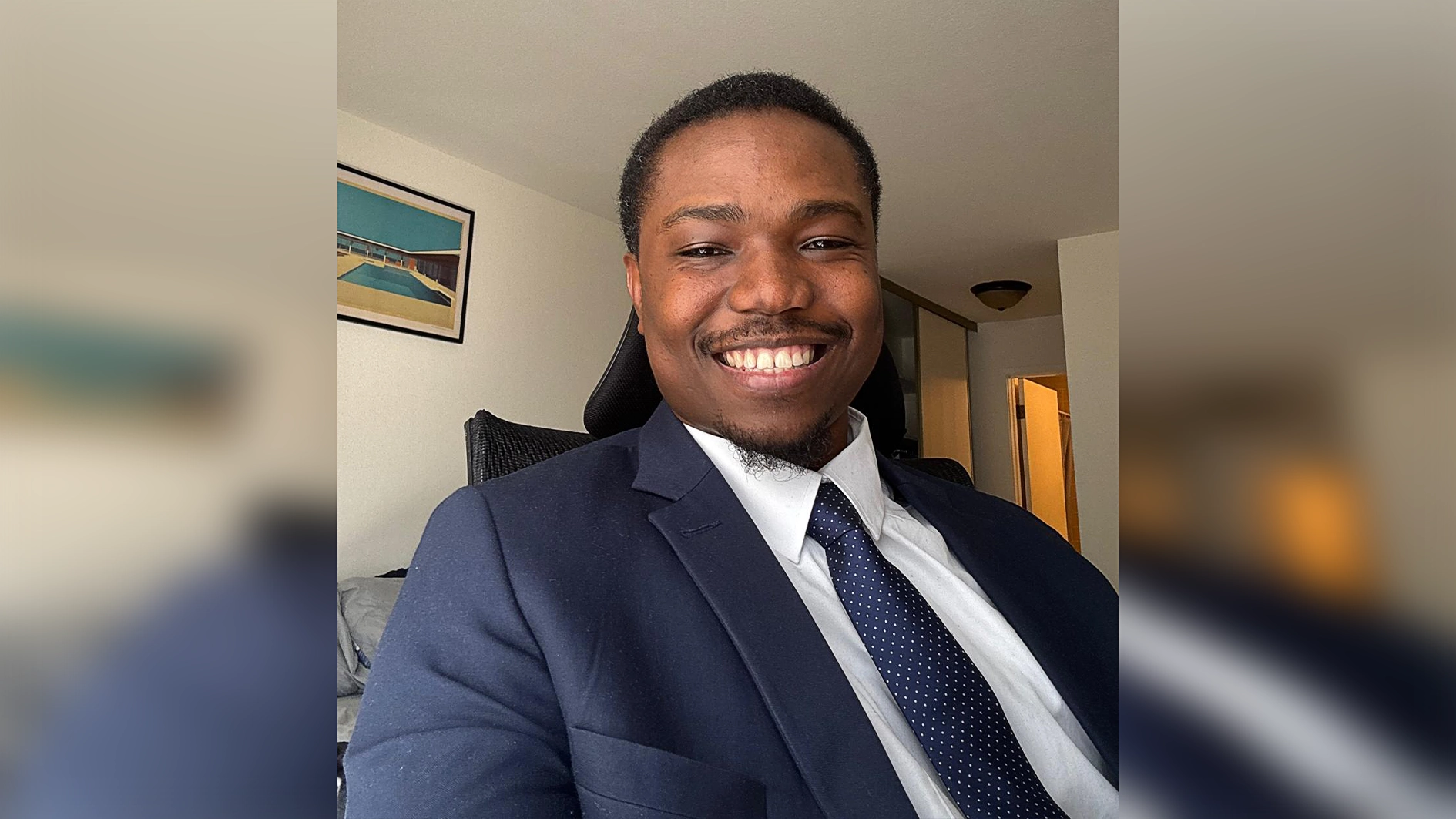
As Nigeria wrestles with the compounding weight of underfunded hospitals, overburdened clinicians, rising disease burden, and the accelerating disruptions of climate-linked health emergencies, one problem continues to silently erode patient outcomes across the country: the crisis of diagnostic error.
While headlines focus on drug shortages, medical tourism, and brain drain, in public hospitals stretching from Lagos to Enugu, Kano to Port Harcourt, a more fundamental question haunts every consultation room: “Is this the right diagnosis?”
“Diagnostic error is not an abstract statistic. It is a missed cancer, a delayed tuberculosis diagnosis, a heart failure case sent home. It is the beginning of preventable death,” says Kenechukwu Emeremgini, a health informatics specialist whose decade-spanning career bridges environmental safety, biomedical laboratory research, healthcare analytics, and artificial intelligence — and who has spent years building the tools to close that gap.
His work has taken him into the architecture of healthcare systems where clinicians are stretched beyond capacity, imaging equipment sits unread, and clinical decisions are made under impossible time pressure.
The stories carry a familiar weight: misdiagnoses, delayed interventions, and patients who return too late.
Nigeria’s diagnostic capacity crisis is stark. Leading healthcare research organizations estimate that millions of patients worldwide are affected by diagnostic errors annually, resulting in delayed treatment, avoidable complications, and increased healthcare expenditure. In Nigeria, where physician-to-patient ratios remain critically low and specialist access is concentrated in urban centres, the consequences of a missed diagnosis fall hardest on those already most vulnerable.

As disease complexity grows and conditions like tuberculosis, cancer, and cardiovascular disease continue to claim lives that early detection could have saved, the burden of inadequate diagnostic infrastructure deepens.
Healthcare technology specialists who have observed the evolution of AI-assisted diagnostics believe the stakes extend well beyond any single country. “Artificial intelligence will not replace clinicians, but it can significantly strengthen clinical decision-making by providing physicians with additional analytical support,” says Dr. Temibola Oni, a healthcare technology specialist with expertise in emerging AI applications in medicine. “Solutions that can improve diagnostic consistency and reduce the likelihood of missed diagnoses have enormous potential value, particularly in resource-constrained healthcare environments.”
Emeremgini, who holds advanced graduate training in health informatics, earned his foundation in the discipline through work that began in environmental safety and compliance before expanding through biomedical laboratory research into the architecture of clinical data systems. That unusual trajectory gave him something rare: the ability to see healthcare challenges simultaneously from the laboratory bench, the operational floor, and the data layer.
He has worked at the intersection of machine learning, predictive analytics, medical research, and health information systems, developing a clinical decision-support platform that incorporates seven artificial intelligence diagnostic models designed to assist healthcare professionals across a broad range of clinical conditions.
The platform’s scope is deliberately wide. It covers pneumonia detection, COVID-19 identification, tuberculosis screening, benign and malignant tumor classification, heart failure prediction, brain tumor detection, and polycystic ovary syndrome diagnosis. Validated diagnostic accuracies reach 95.63% for pneumonia, 96.67% for tuberculosis, 95.54% for brain tumors, 95% for heart failure, and 100% for PCOS — performances that, in resource-constrained environments without specialist radiologists or pathologists on demand, represent not incremental improvement but a fundamental shift in what is clinically possible.
To Emeremgini, the ambition was never simply technical. “Artificial intelligence will not replace clinicians. But in a system where one physician serves thousands of patients, AI can be the difference between a diagnosis made in time and one made too late,” he has reflected. “The goal is not to automate medicine. It is to give every clinician the analytical support they deserve.”
He has also turned his attention to the operational layer of healthcare failure — the logistics breakdowns, fragmented information systems, and resource misallocations that cause treatment delays even when a correct diagnosis has been made. Through predictive analytics and data-driven decision frameworks, he has developed tools designed to help healthcare organizations better allocate resources, reduce waste, and build operational resilience in settings where margins for inefficiency are dangerously thin.
That operational dimension is precisely where specialists in healthcare analytics see the most transformative potential. “Healthcare systems generate enormous amounts of operational and clinical data every day,” observes Dr. Makinde Badmus, a specialist in healthcare analytics. “Professionals who can transform that information into actionable insights are becoming increasingly important. The ability to combine diagnostic innovation with operational optimization is particularly valuable because both directly affect patient care.”
The economic case for this work is compelling. Poor diagnostic infrastructure and healthcare inefficiency cost health systems billions annually in unnecessary interventions, prolonged hospitalisations, and complications from late-stage disease management. In Nigeria specifically, where out-of-pocket health expenditure pushes households into poverty and public health budgets remain chronically insufficient, the downstream cost of diagnostic failure is not merely clinical — it is economic and social.
Emeremgini believes the transformation of Nigeria’s healthcare system requires treating health informatics as critical national infrastructure. “You cannot modernize a healthcare system on paper. You need data systems that work, diagnostic tools that scale, and the intelligence infrastructure to connect them,” he argues. His long-term advocacy is directed toward expanding clinical decision-support adoption across Nigerian health facilities, strengthening health data infrastructure at the institutional level, and building the policy case for AI integration into national healthcare delivery frameworks.
Nigeria’s National Health Act and successive digital health strategies have established foundations, but implementation remains fragmented and donor-dependent. For researchers like Emeremgini, the path forward demands moving from pilot projects to system-wide integration, with Nigerian-led innovation at the centre.
As Nigeria confronts the healthcare demands of a growing, urbanising, and climate-stressed population, the quiet revolution happening in health informatics laboratories may prove to be among its most consequential investments.
And in that revolution, professionals like Kenechukwu Emeremgini are not simply researchers or data scientists — they are the diagnosticians of a broken system, building the tools to make it whole.

