 Follow Us on Google News


 Follow Us on Google Discover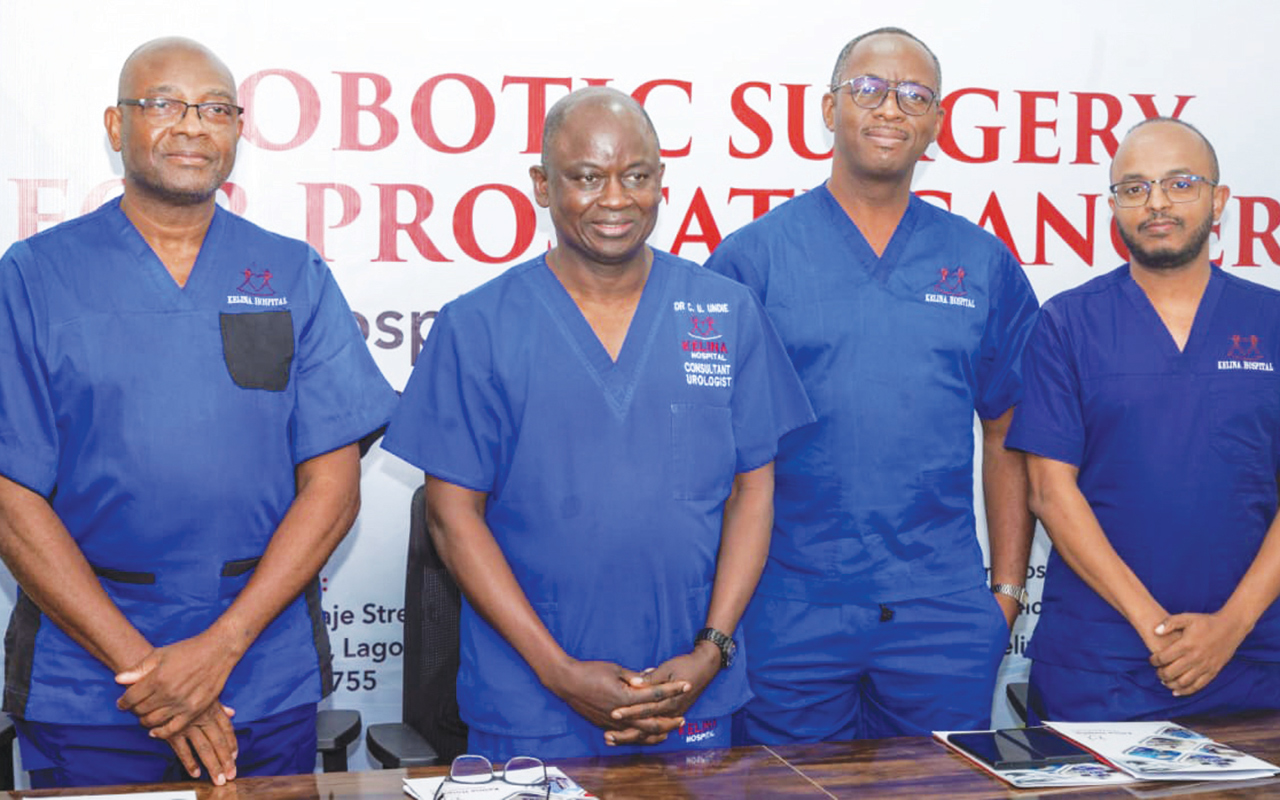
To curb rising cancer deaths and reduce reliance on medical tourism, experts at Kelina Hospital have urged men to prioritise early detection, as the facility announced that it performed 212 prostate surgeries in 2025, the highest number recorded in a single year.
The milestone comes amid projections that global men’s cancer cases will rise by 84 per cent by 2050. The Medical Director and Chief Executive Officer of the hospital, Dr Celsus Undie, disclosed the figure during a press briefing, noting that the surgeries covered both prostate cancer and benign prostatic enlargement.
Undie said that beyond the growing numbers, the hospital remains focused on patient outcomes and on changing the mindset of Nigerian men who believe quality cancer care is only available abroad.
He revealed that Kelina Hospital had also achieved another landmark by successfully performing 101 prostate cancer surgeries over two years without a single mortality, a feat he described as worthy of recognition.
According to him, the hospital has carried out more than 6,000 surgeries overall, while maintaining a surgical mortality rate of less than one per cent.
He identified late presentation as a major challenge in prostate cancer management, stressing that early intervention is critical to successful treatment. “The most effective treatment for any cancer, including prostate cancer, is radical surgery. Removing cancer before it spreads is the most effective path to a cure,” Undie said, warning that delays often limit treatment options to palliative care.

The medical director explained that the hospital offers a full range of surgical options for prostate cancer, including open radical prostatectomy, laparoscopic radical prostatectomy and robot-assisted procedures. He also highlighted the hospital’s pioneering role in introducing Holmium Laser Enucleation of the Prostate (HoLEP) in Nigeria in 2018. “We have performed over 600 HoLEP procedures since 2019, with a mortality rate of less than 0.2 per cent, comparable to the best hospitals globally,” he said.
Undie said the hospital’s experience underscores the importance of early detection and a well-prepared healthcare system. “Our results show that when patients present early and the system is equipped to respond, survival is possible and recovery is possible,” he said.
Also speaking, a consultant family physician at the hospital, Dr Nedosa Kenechi, attributed the facility’s success to increased awareness and early presentation by patients. He noted that minimally invasive surgical techniques reduce tissue trauma, speed up recovery, shorten hospital stays and help address patients’ fears of prolonged disability or being bedridden after surgery. He added that fertility and sexual health concerns can be managed through options such as sperm banking and assisted reproductive technologies.
A consultant urologist, Dr Aklilu Getachew, explained that prostate cancer risk is influenced by both genetic and environmental factors. While genetics, which cannot be modified, play a significant role in initiating the disease, he said environmental factors largely determine how the cancer progresses. He added that men of African descent are particularly at higher risk.
The hospital’s announcement comes amid growing global concern over men’s health. A study published in Cancer, a journal of the American Cancer Society, projects that global cancer cases in men will increase from 10.3 million in 2022 to 19 million by 2050, with deaths expected to almost double. Prostate cancer is projected to be a major driver of this increase, especially in countries with weak screening systems and limited access to early treatment.

