 Follow Us on Google News


 Follow Us on Google Discover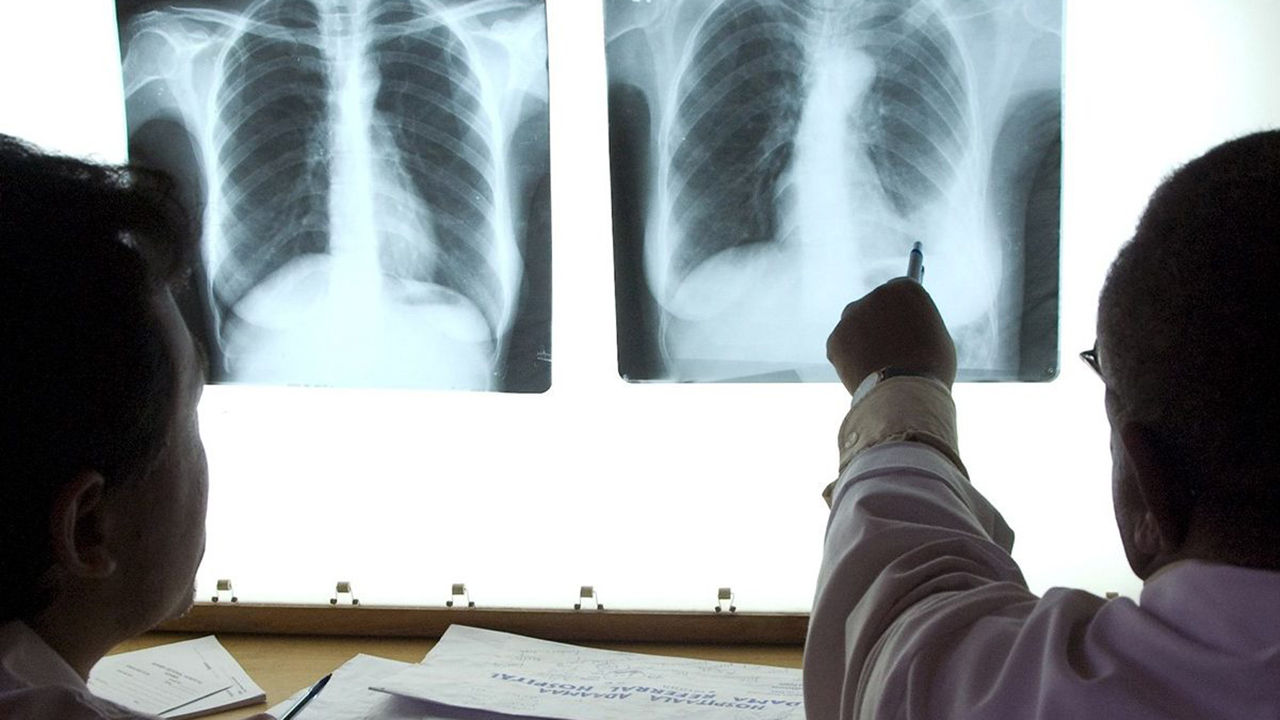
• Patients decry stigma, discrimination
There are concerns that United States Agency for International Development (USAID) funding cuts may threaten decades of progress in the country’s fight against tuberculosis (TB).
[ad]
In January, the Trump administration issued a stop-work order for all global funding and a 90-day freeze to undertake a review, which led to the termination of 83 per cent of the United States’ foreign aid contracts.
The funding cuts further exacerbate the existing underfunding for the global TB response. In 2023, only 26 per cent of the $22 billion yearly needed for TB prevention and care was available, leaving a massive shortfall. TB research is in crisis, receiving just one-fifth of the $5 billion yearly target in 2022—severely delaying advancements in diagnostics, treatments, and vaccines.
USAID contributes $22 million yearly to TB cases in 18 states in Nigeria, and following the U.S. executive order, case detection efforts in the states are now being affected. About $404 million is required to deliver TB services this year in Nigeria.
Though the Federal Government, in response to the U.S. aid cuts, has announced an injection of funds into TB, HIV, Malaria and immunisation services, experts say domestic resource mobilisation has become more critical and urgent now than ever before if Nigeria must end the TB scourge by 2030.
TB remains the world’s deadliest infectious disease, responsible for over one million people’s deaths yearly, bringing devastating impacts on families and communities. Nigeria currently ranks first in Africa and sixth globally among the 30 high-burden countries.

Available statistics from the WHO show that in Nigeria, one person dies every five minutes from TB. An estimated 499,000 Nigerians developed TB in 2023, and about 71,000 Nigerians died from the disease the same year.
Despite accounting for the high burden of the disease, Nigeria still has a 70 per cent funding gap. In 2023, only 30 per cent of the funds needed for tuberculosis control were available.
The Acting Board Chair of Stop TB Partnership Nigeria, Dr Queen Ogbuji-Ladipo, told The Guardian that there is the need for in-country political commitments and investments to eradicate TB with the dwindling support from donors and of the unfolding events globally.
Ogbuji-Ladipo lamented that more than 70 per cent of the TB investment is from donors. At the same time, domestic financing has remained low, stressing that if the government fails to inject more funding in the TB response, there will be a reversal of all the gains that have been made in the past years.
She said: “This is the right time for government to invest more in TB control. With donors withdrawing their funding, if we fail to invest in TB, there will be a reversal of all the gains that have been made in the past years and setting the pace for more people to be infected.
[ad]
“One person that has TB can transmit it to 10 to 15 people in a year. There is need for our country to take responsibility for its citizens to ensure the disease is ended in Nigeria by the year 2030”.
Also, the Executive Secretary of the Country Coordinating Mechanism (CCM) of the Global Fund, Tajudeen Ibrahim, said Nigeria needs about $404 million in 2025 to fight TB nationwide.
Ibrahim stated that the global fund has allocated $89 million for the TB response in 2025, based on a grant signed in January 2024. “In 2026, the fund has only $16 million available on paper. You can imagine the implications of not having enough funding for the TB programme.
“In 2024, we estimated that 499,000 Nigerians needed to be identified and placed on treatment, and we were able to reach 418,000,” he said.Ibrahim noted that the burden of TB in Nigeria is huge according to the WHO ranking, and as such, inadequate funding was the major challenge to properly expand TB services to all facilities across the country.
He stated that government allocation to TB has been consistent with national health appropriation for about six years, adding that the inability to meet the Abuja declaration of 15 per cent budget for health yearly confirms that there have been inadequate funding allocations.
Ibrahim noted that another key challenge is poor infrastructure at most health facilities to support the modern molecular diagnostic tools. While commending efforts being made by the Nigerian government to bridge the funding gap created by the United States funding cuts, Ibrahim said, “Before the US Government executive order, the government has increased funding and mobilised the private sector to support the financing of TB yearly.”
He emphasised the need to mobilise adequate resources, improve access to TB services, improve awareness creation on the availability of TB services, provide adequate information that TB is preventable and curable and person affected should not be discriminated against, as well as work with government to include TB on health insurance.
The Deputy Director of the National TB and Leprosy Control Programme, Federal Ministry of Health and Social Welfare, Dr Urhioke Ochuko, disclosed that Nigeria was only able to get 30 per cent of the funds needed for tuberculosis control in 2023, leaving about a 70 per cent funding gap.
He said: “Though the resources needed for TB control is relatively significant, we have not received the entire funds that we need yearly for TB control, but the government is stepping up efforts.
“The government is ensuring that we get that needed domestic funding from the federal, state, local government, as well as private sector to eradicate TB. The current administration is placing a high premium on health, in line with the health sector renewal investment initiative. ”
He stated that Nigeria has made significant progress in terms of finding Nigerians with TB and placing them on treatment, adding that in 2024, the country was able to place about 400,000 Nigerians on TB treatment out of the estimated 508,000 Nigerians.
He said: “We are ensuring that we place everyone with TB on treatment with the use of a portable digital X-ray. We are introducing about 400 of them, which will be distributed to all 36 states and the Federal Capital Territory to facilitate prompt screening and diagnosis of TB among Nigerians.”
[ad]
On the availability of TB drugs and diagnostic kits, Ochuko said, “We have enough medicines for treating Nigerians for tuberculosis. There was a time last year when we had an issue, which was a global problem regarding supplies of medicines, but that has eased off, and we are getting good quantities of supplies, and the programme is ensuring that these medicines are distributed to facilities for the treatment of Nigerians.
Ochuko, who spoke on the recent funding cuts by the US government, said: “We have had reasonable donor support, especially from agencies like the USAID, but the recent freeze in funding, of course, has some implications for TB control, because it provides facilities ad hoc staff, that helps to support TB screening and facilitate diagnosis and treatment of Nigerians.”
MEANWHILE, TB patients in the country face serious stigma and discrimination in the communities due to persistent cough. Rebecca Chinonso, a mother of three, was diagnosed with TB in March last year, four months after giving birth to her third child.
Chinonso said, “I started having the symptoms in March last year, but by then, I did not know anything about TB. I later went to see one of my doctors, and he told my husband that, considering the way my body was shrinking, I should go for a TB test. I went for the test, and it came out positive.
She continued, “My husband played a significant role in my healing. I take my prescriptions religiously; I am praying for God’s help. TB is not a death sentence; people should go for test because if they don’t go for test, they will be ignorant of it.”
Another TB patient, Onyeka Ozah, who was diagnosed with TB about seven months ago and is currently on treatment, said the only challenge he has encountered is the problem of stigma and discrimination.
Ozah told The Guardian that at the early stage of the sickness, people in his community thought that it was a punishment from the gods and that he must have offended someone who reported him to the shrine.
He said, “When this whole problem started, people started asking where the sickness was coming from, is it from the gods? Nobody, including my family members, believed that I would be alive by now because I became a shadow of myself. But one of my sisters suggested that I go for a lab test, which I did.
“When the result came out, I tested positive to TB, my wife made frantic efforts to ensure that I start treatment. Today, I am fine and healthy, recovering fast and looking good. I advise anyone having prolonged cough to go for TB test because the treatment is free.”
A TB survivor and the North Central Zonal Coordinator for TB people in Nigeria, Francis Ubong, told The Guardian that the love and care shown to him by some friends, doctors, and family members contributed to his quick healing.
[ad]
“Drugs and injections are not just enough. It is love and care that hasten the healing process,” he said. Ubong recalled his TB treatment journey, “It was a terrible experience, when people got to know that I cough, they started avoiding me, people were talking about me, that’s why some TB patients go far from their locations to receive treatment.
“When you’re on treatment consistently for two weeks, you cannot infect anybody. I was confined to a particular room in my house, and I was always wearing my mask. Even if I want to come out, I put on my face mask, I became consistent with the treatment. They also placed my family members on Tuberculosis Preventive Therapy (TPT).
“After the six months, I became fine, and I was certified free and clean of tuberculosis. It is love and care that fastens the healing process because when these people are being shown love and care, they will adhere to the treatment constantly until they become fine.”
IN a related development, WHO is leading efforts to accelerate TB vaccine development through the TB Vaccine Accelerator Council, but progress remains at risk without urgent financial commitments.
Every year, March 24 is observed as World TB Day to amplify the urgency of ending TB, the world’s deadliest infectious disease. With the theme Yes! We Can End TB: Commit, Invest, Deliver, World Tuberculosis Day 2025 campaign offers an opportunity to reflect on ongoing efforts and encourage stronger commitment at local, national and international levels to end TB, including combating the growing threat of drug-resistant infections.
The huge gains the world has made against TB over the past 20 years are now at risk as cuts to funding start to disrupt access to services for prevention, screening, and treatment for people with TB,” WHO Director-General, Dr Tedros Adhanom Ghebreyesus said.
Tedros said WHO is committed to working with all donors, partners and affected countries to mitigate the impact of funding cuts and find innovative solutions.”
[ad]

