 Follow Us on Google News


 Follow Us on Google Discover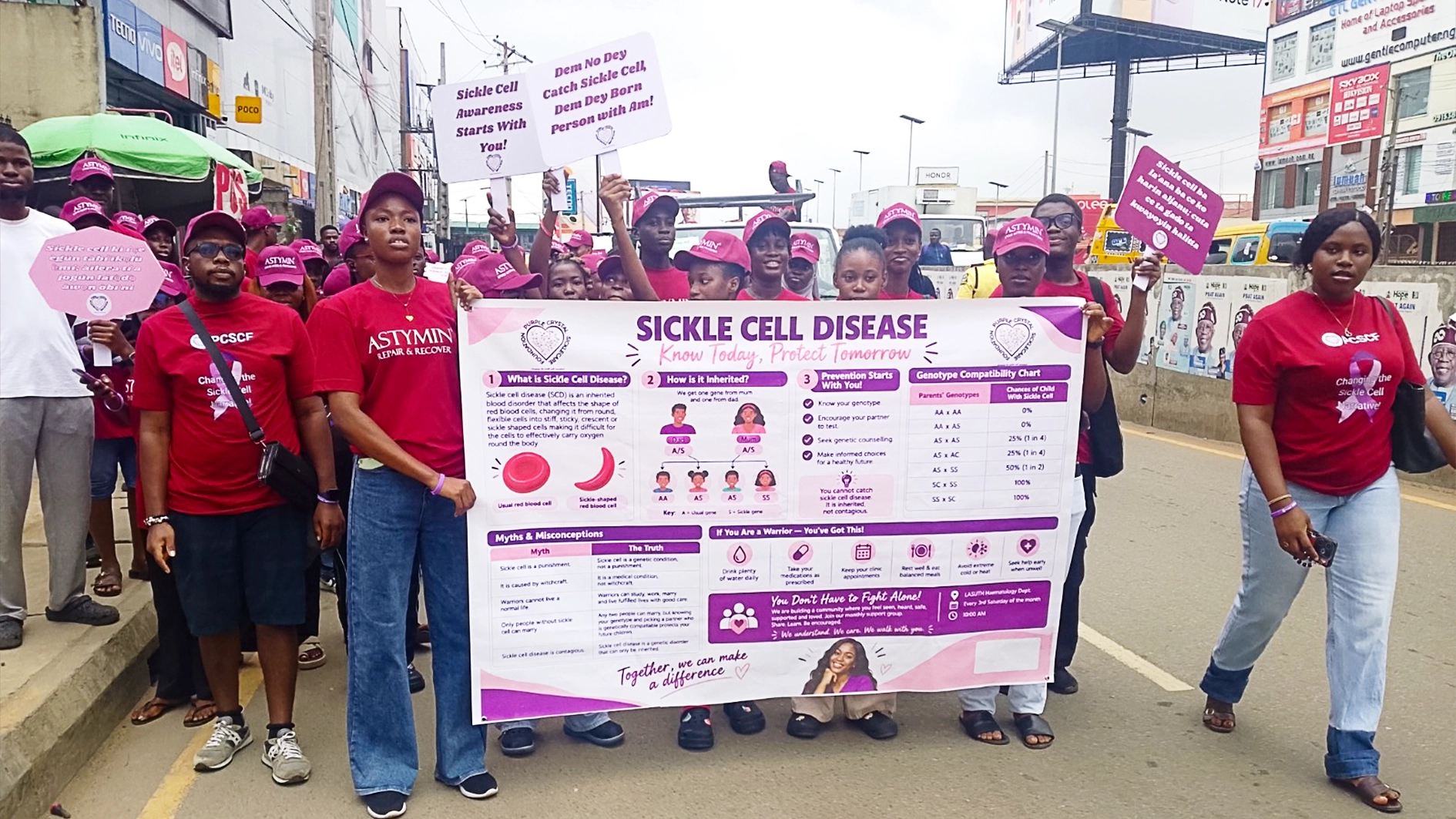
The Founder and Executive Director of Purple Crystal Sickle Care Foundation, Afunmiso Titoluwani, has called for greater attention to the prevention of sickle cell disease and the mental health of people living with the condition.
Titoluwani made the call during the first edition of the foundation’s Sickle Smart Walk held in Ikeja, Lagos, as part of activities marking Sickle Cell Awareness Month.
She said she established the foundation because she wanted to help change the way sickle cell disease is viewed and addressed in Nigeria.
According to her, while much attention is often placed on people living with sickle cell disease and how they can access medication, there is a need to do more in the areas of prevention, genotype awareness and mental health.
She said the foundation has been using genotype testing and advocacy to educate Nigerians and help prevent the transmission of sickle cell disease to future generations.
“A lot of people were focusing on warriors and how to get medication, but I saw a clearer picture where I discovered that so many people weren’t focusing on prevention and the mental health of warriors,” Titoluwani said.
Speaking on support received by the foundation, she said the organisation had received donations from Emzor Pharmaceutical Industries and other pharmaceutical companies and brands, particularly during its sickle cell hangout held in June.
Titoluwani said the Sickle Smart Walk was the first edition but would become an annual event every September in line with Sickle Cell Awareness Month.
She also encouraged people living with sickle cell disease not to allow their condition to stop them from pursuing their dreams.
“Sickle cell is just a condition and you can achieve whatever you would achieve even with the condition. Yes, there might be times that you fall sick and the condition will draw you back, and then you have to pick up again,” she said.
She added that she believes the narrative surrounding sickle cell disease in Nigeria can change significantly within the next 10 years if more attention is given to awareness, prevention and proper support.
Also speaking, Titoluwani’s mother, Mrs Oluwaremilekun Afunmiso, said her daughter had been passionate about establishing the foundation for a long time.
She said although starting the organisation was difficult, she encouraged her daughter to continue because she was determined to make an impact.
“We were using our personal phones to run it. We were having to beg people. You know the Nigerian concept, nobody is ready to help anybody until they see reasons. But I thank God that people are beginning to see reasons,” she said.
Mrs Afunmiso also encouraged people living with sickle cell disease not to lose hope, noting that the condition could affect both physical and mental wellbeing.
“It makes you feel as if you cannot be somebody, but I just want to encourage them that let them believe and that with God all things are possible,” she said.
She called on the government to increase sickle cell awareness at the grassroots, particularly by educating young people about the condition and genotype compatibility.
A sickle cell warrior, Chineye Gift, also urged Nigerians to know their genotype and understand sickle cell traits before having children.
She said she did not blame her parents because they may not have had enough information about genotype compatibility at the time, stressing that proper education could help prevent more children from being born with the condition.
Another warrior, Ibrahim Hadiza, called for better treatment of people living with sickle cell disease in hospitals.
Hadiza appealed to the government to engage healthcare workers on the condition, saying many warriors experience severe pain and need proper attention and understanding from medical professionals.
Akinsanmi Emmanuel, another sickle cell warrior, said sickle cell disease should not be seen as a death sentence.
He advised Nigerians to know their genotype before marriage and urged the government to support sickle cell organisations and make medication more affordable for people living with the condition.
Also, Adegbesan Ajoke called for improved healthcare services for people living with sickle cell disease, particularly students.
She urged the government to make medications more affordable and ensure that healthcare workers provide better care and support to sickle cell patients.

