Stakeholders have launched a new technical assistance initiative to support an alternative delivery model aimed at shifting HIV and malaria services into private-sector channels, as Nigeria prepares for an inevitable transition from donor funding.
The initiative seeks to accelerate national ownership of the HIV and malaria response amid shrinking donor support, which has raised concerns over the sustainability of hard-won public health gains. Under the model, private-sector providers, particularly community pharmacies and patent and proprietary medicine vendors (PPMVs) are positioned as frontline service providers.
The shift was announced at a three-day stakeholders’ workshop in Lagos involving the Global Fund, the Society for Family Health (SFH), the National Agency for the Control of AIDS (NACA) and the National Malaria Elimination Programme (NMEP). Discussions focused on co-creating operational pathways, financing options, sustainability strategies and regulatory mechanisms for the alternative delivery model.
Stakeholders said the initiative would play a central role in Nigeria’s transition from donor dependence to a more resilient, country-owned HIV and malaria response, with private-sector providers integrated into national service delivery systems.
Speaking at the launch, the Managing Director of SFH, Dr Omokhudu Idogho, said Nigeria must urgently confront the reality of declining external funding for HIV, tuberculosis and malaria.
He noted that although overseas development assistance accounts for less than one per cent of Nigeria’s total funding, donors still contribute about 78 per cent of spending on the national HIV response.
Idogho described the imbalance as a national security concern, warning that millions of lives remain dependent on donor resources. He said failure to build a sustainable mixed-market health system could reverse decades of progress in disease control and prevention.
He explained that the project is anchored on a total market approach, combining public-sector responsibility with private-sector efficiency and community participation. According to him, the technical sessions are expected to produce a co-created framework that defines how private actors, including pharmacies and PPMVs, can safely and effectively support testing, treatment and prevention services.
As implementation expands across states, Idogho said Nigeria must scale efficiencies and innovations that reduce long-term costs. He added that SFH’s role is to support government leadership while helping to build a functional health market, drawing on its more than 40 years of experience in community-level service delivery.
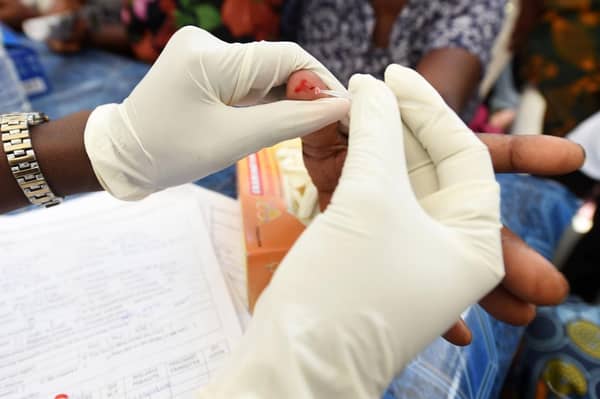
In his remarks, the Global Fund’s Senior Advisor for Supply Chain Strategy and Policy, Sidharth Rupani, said the initiative has strong potential to catalyse sustainable service delivery. He said the investment would test financial sustainability models for HIV self-testing, oral pre-exposure prophylaxis (PrEP) and malaria diagnostics in private-sector settings.
Rupani noted that private pharmacies and PPMVs already serve as the main point of care for millions of Nigerians and must be fully integrated into national health systems. He stressed the need to ensure quality-assured products are available beyond public health facilities. He added that while the pilot phase will begin in four states, lessons from the project will inform future Global Fund funding cycles.
From a policy perspective, the Head of Public-Private Partnership and Resource Mobilisation at NACA, Mr Desmond Aso, said Nigeria’s reliance on donor-driven HIV funding is no longer sustainable. He warned that donor exit would require urgent leadership and stronger financial commitment from governments at all levels.
Aso said efficiency, improved budgetary releases and structured private-sector participation must become priorities, noting that many private health providers still operate outside national data systems, limiting effective planning and accountability. He called for collaboration among government institutions, civil society, communities and private-sector actors to sustain HIV, TB and malaria interventions beyond donor support.
Also speaking, a representative of the National Coordinator of the National AIDS and STI Control Programme (NASCP), Dr Hafsat Iyanda, commended SFH for driving what she described as a people-owned initiative. She said the project would strengthen private-sector engagement and improve collaboration across HIV, malaria and TB programmes.
On malaria control, a Senior Programme Manager representing the National Coordinator of NMEP, Dr Ahmad Njidda, said private pharmacies and PPMVs remain the most accessible providers of malaria services nationwide. He stressed the need to end presumptive treatment by expanding access to quality rapid diagnostic tests and strengthening adherence to test-before-treat guidelines.
Speaking on behalf of the Pharmacy Council of Nigeria (PCN), Ms Ene Daniel-Ebune said the council supports frameworks that enable private-sector innovation while protecting public health. She noted that properly regulated community pharmacies and PPMVs have the capacity to expand access to quality healthcare, adding that effective regulation is essential for sustainability.
The President of the Nigerian Association of Patent and Proprietary Medicine Dealers (NAPPMED), Mr Sylvanus Onuoha, described the initiative as a milestone for strengthening primary healthcare delivery. He said PPMVs, often the first point of care for millions of Nigerians, are ready to support expanded HIV and malaria services, provided there is sustained investment in training and regulation.
Similarly, the Executive Secretary of the Healthcare Federation of Nigeria (HFN), Mr Olufemi Akingbade, said the launch underscored the urgency of integrating private-sector contributions into national health planning. He noted that the private sector already bears a significant share of healthcare costs through out-of-pocket spending and should no longer operate in parallel with government systems.
Earlier, the State Secretary of the Lagos State Medicine Dealers Association (LSMDA), Mr Hope Ezenwoke, pledged the support of Lagos-based PPMVs, saying the association would work with SFH and national programmes to expand access to quality diagnostics and treatment, particularly in underserved communities.