 Follow Us on Google News


 Follow Us on Google Discover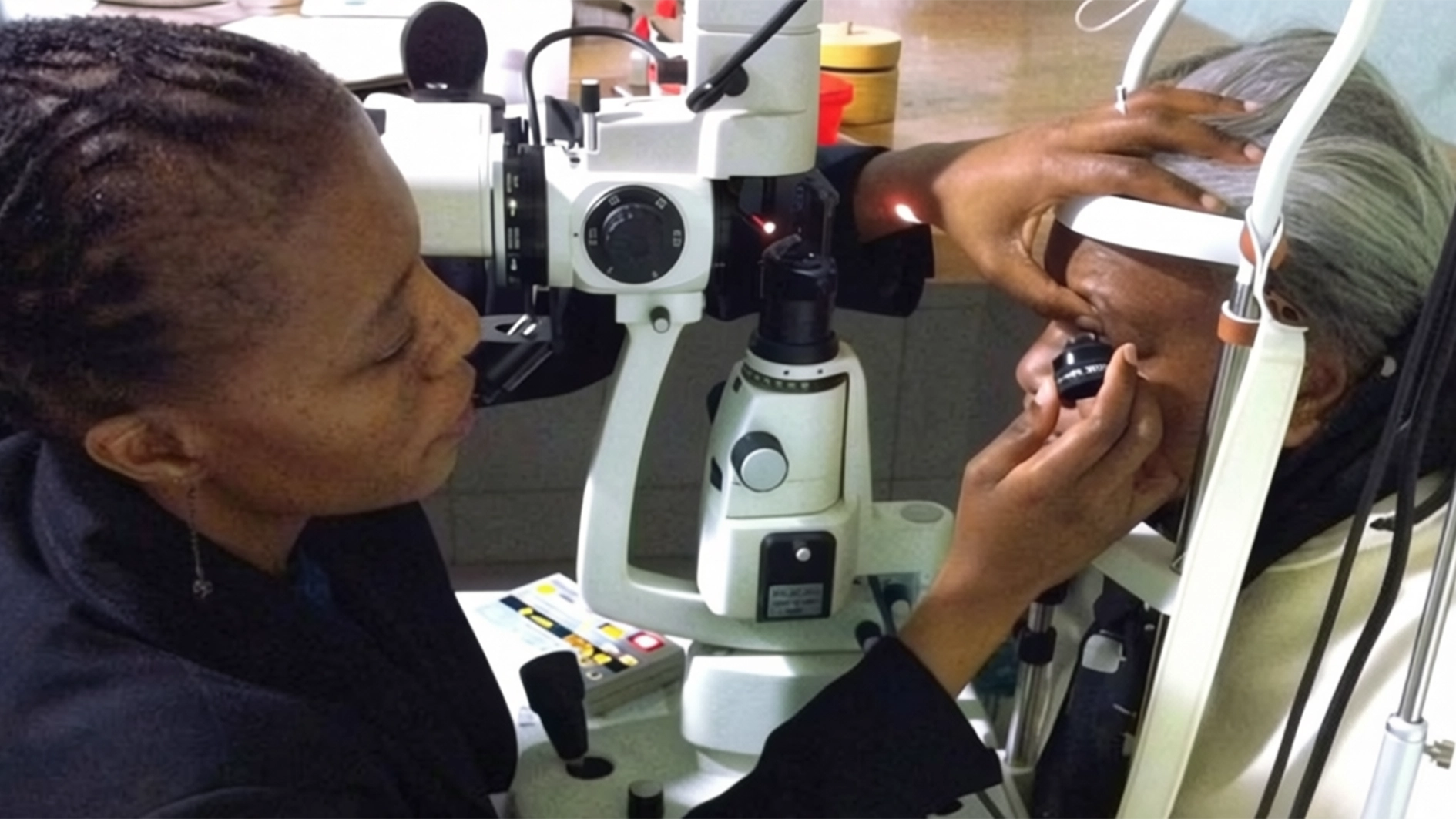
President Bola Ahmed Tinubu has reaffirmed his administration’s commitment to expanding access to affordable eye care services across Nigeria.
To this end, the President has announced the expansion of JigiBola 2.0 to eight additional states, namely Edo, Enugu, Nasarawa, Ogun, Osun, Oyo, Rivers and Taraba, in a major step towards scaling access to affordable eye health services.
Speaking at the launch of the second phase of the Effective Spectacle Coverage Initiative Nigeria JigiBola 2.0 on Tuesday in Abuja, the President, represented by his Senior Special Assistant on Media and Publicity, Mr. Temitope Ajayi, noted that the first phase of the programme has been a huge success over the past two years, adding that more than 1.4 million Nigerians have had their vision restored.
He pledged continued institutional support for the JigiBola 2.0 Initiative as it scales up operations nationwide.
He said: “1.4 million people represent a human whose hope has been restored, whose livelihood was positively impacted. They are people who probably could not read very well before now, but today they can read well and access their businesses more effectively.
“The President is happy, and he has said that he will continue to support this initiative. Whatever institutional support you require at any point in time, we are always available, and we will always be here to cheer you on.”

He commended the National Coordinator of the National Eye, Ear and Sensory Functions Health Programme (NESHP), Dr. Oteri Okolo, the Federal Ministry of Health and Social Welfare, and partners, including Livelihood Impact Fund, Access Initiative, and other implementing stakeholders, for sustaining the initiative.
Implemented under the leadership of the Federal Government through NESHP, the initiative is supported by the Clinton Health Access Initiative (CHAI) and funded by the Livelihood Impact Fund (LIF) and Founders Pledge.
The programme integrates screening and the provision of reading glasses into primary healthcare services, targeting presbyopia, an age-related loss of near vision that commonly affects adults over 40.
Between November 2024 and December 2025, the first phase of the programme was rolled out in 10 states, screening 1,178,573 Nigerians for presbyopia and dispensing 1,089,663 pairs of reading glasses. According to programme data, about 66 per cent of beneficiaries received their first pair of glasses, with women accounting for a large share.
Through targeted training, supportive supervision, and the provision of screening tools and glasses, primary healthcare workers have been equipped to identify and manage near-vision impairment at the point of care, bringing essential services closer to communities.
Speaking at the launch, the National Coordinator and Director of NESHP, Dr. Oteri Okolo, described JigiBola 2.0 as a cornerstone of the broader Presidential Initiative on vision care, which aims to deliver at least five million free reading glasses to Nigerians in the coming years.
She said: “When His Excellency, President Bola Ahmed Tinubu, approved this transformative presidential initiative, the vision was clear: to bring clear sight to millions of Nigerians, especially our older adults living with uncorrected refractive errors such as presbyopia.
“JigiBola 2.0 is more than a programme – it is a promise of inclusion, equity, and renewed hope for millions.”
Okolo said Phase 2 would deepen the integration of primary eye care into the Primary Health Care (PHC) system, strengthen supply chains, expand health worker training, and intensify community engagement.
She added that the expansion would move Nigeria closer to achieving the global target of a 40 per cent increase in effective refractive error coverage and significantly reduce avoidable visual impairment nationwide.
She added, “This initiative aligns perfectly with President Tinubu’s Renewed Hope Agenda and our National Eye Health Strategic Development Plan. It reaffirms our collective commitment to leaving no one behind, particularly women, older persons, and those in hard-to-reach communities.”
Dr. Okolo also expressed appreciation to the President, the Federal Ministry of Health and Social Welfare, state governments, development partners, and donors for providing the political will and resources to drive the programme.
Also speaking, the Executive Director of the Livelihood Impact Fund, Ms. Abigail Steinberg, described reading glasses as a low-cost but high-impact intervention capable of transforming lives and boosting economic productivity.
She said: “When I look at these glasses, I see a parent reading to his or her children and helping them with their homework. I see a woman who can thread the needle again and support her family with her tailoring business. I see a head of household returning to farming, able to see his crops.
“Glasses are transformational. They are not just a product; they are a process, because they move us from dependence to dignity, from blur to clarity, from reliance to self-sufficiency.”
Steinberg said that Nigeria is emerging as a model for last-mile delivery by integrating vision screening and provision of glasses directly into primary healthcare systems and leveraging community health workers, pharmacies, faith-based networks and private-sector channels.
She disclosed that reading glasses cost less than one dollar (about N1,000) to manufacture, yet generate significant economic returns, noting that every dollar invested in eye care yields up to $28 in economic benefits.
“We are proud to continue supporting JigiBola 2.0 as it scales to eight additional states. One million more Nigerians reached in 2026 with eyeglasses means one million more Nigerians will have restored sight, dignity, well-being and livelihoods,” she added.
Steinberg also called for supportive policies to fully integrate vision screening and reading glasses into public health delivery systems and create a regulatory environment that makes glasses more affordable and accessible.

