 Follow Us on Google News


 Follow Us on Google Discover
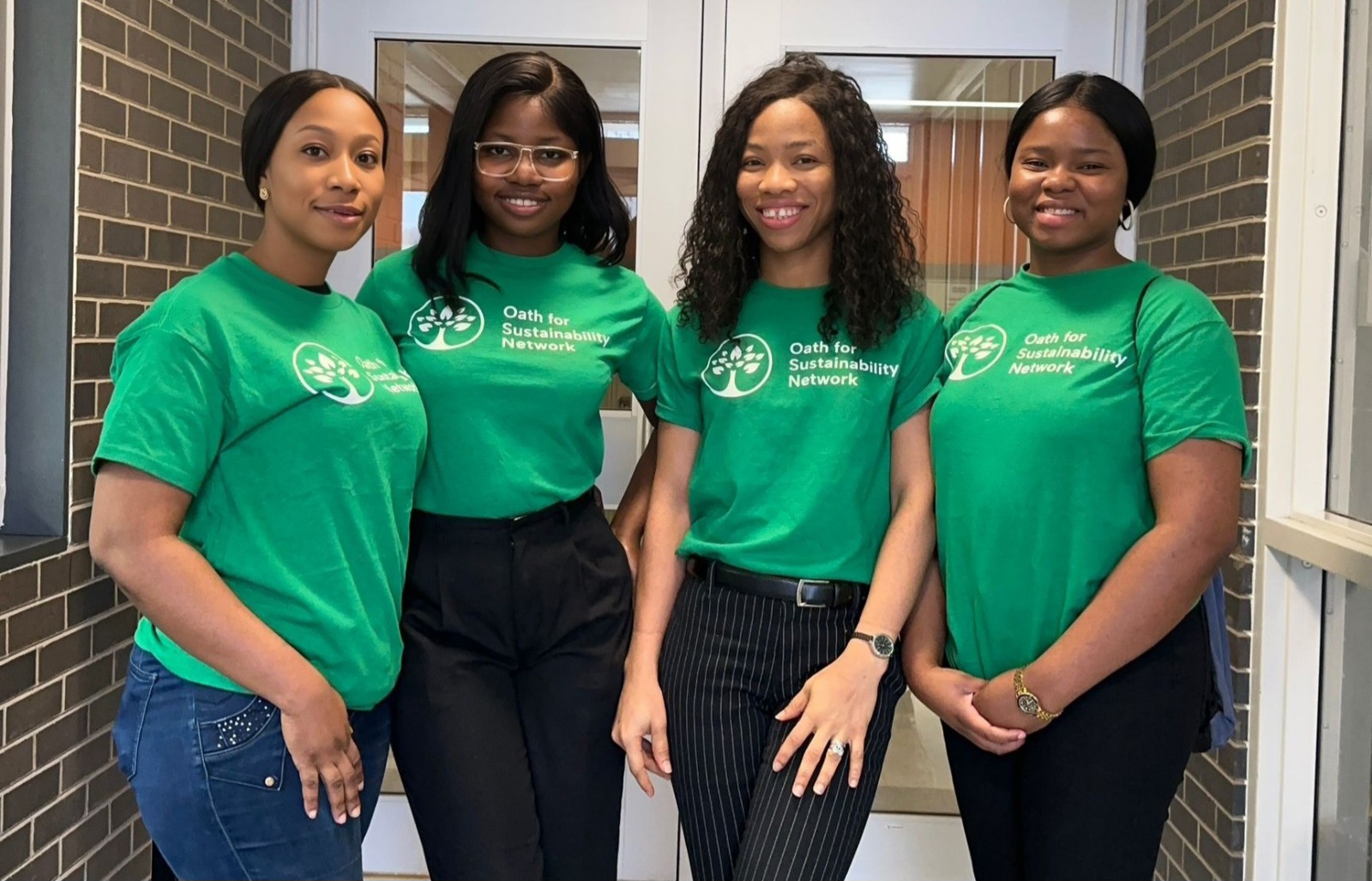 Amid the spike in climate-related health challenges, an expert in public health, Damilola Oluwemimo, is leading a groundbreaking initiative to bridge the research gap in low-income regions.
As the founder and executive director of the Oath for Sustainability Foundation (OFSN), Oluwemimo is championing a program that trains and mentors young people to build their capacity in climate and health research.
She made this known during a webinar session of the Climate and Health Research Training, the first phase of the OFSN Climate and Health Research Lab Program held on September 9th, 2023 . The program, designed to equip young people aged 18 to 35 with essential research skills, has already made a significant impact, training 176 participants from 54 countries in the past year alone.
[ad]
“The disproportionate distribution of climate and health research, where over 50% of studies originate from high-income countries while low- and middle-income countries (LMICs) contribute just 31%, means that critical health issues affecting vulnerable populations remain under-researched,” Oluwemimo stated.
“Our goal is to change that narrative by empowering young people with the necessary knowledge and skills to drive research in their local communities.” To achieve this, the program has only engaged experts in the field as trainers from global research institutions such as the Global Health Focus, London School of Hygiene and Tropical Medicine and the Lancet Countdown Africa.
The program follows a structured four-week format, featuring six interactive webinars. Each session covers different aspects of climate and health research, from foundational concepts to policy applications. Participants engage with experts in the field through lectures, discussions, and practical exercises.
One of the challenges the program faced was the educational disparity among participants. More than 20% of the trainees had little to know experience in research, with fewer than 50% holding a bachelors certificate. This required a tailored approach to ensure inclusivity and accessibility.

“We had to rethink our training strategies,” Oluwemimo explained. “Instead of relying solely on academic theories, we incorporated real-life case studies that directly align with our learning objectives. However, the lack of repositories for African case studies in this field posed a significant challenge.”
Despite these hurdles, Oluwemimo and her team successfully adapted the program to create an immersive learning experience. By using relatable examples and simplified research methodologies, they ensured that all participants, regardless of their educational background, could grasp key concepts and apply them in their local contexts.
Collaboration is a core pillar of the program, fostering networking opportunities among young researchers from diverse backgrounds. Through these connections, participants can work together in teams on research projects that address pressing climate and health issues in LMICs.
“We don’t just want to train researchers; we want to build a generation of community health oriented climate actors,” Oluwemimo emphasized. “By equipping these young minds with the right tools, we are enabling them to contribute meaningfully to global climate and health discussions.”
At the end of the training program, participants undergo an assessment, and participants who score at least 80% qualify to apply for the second phase of the 16-week research mentorship. This ensures that only dedicated and competent individuals progress further, maximizing the program’s overall impact.
Oluwemimo’s dedication to fostering an inclusive and contextualized learning environment has been a driving force behind the program’s success. Her background in Public health with a focus on Global Environmental Change from the Western Illinois University, USA has shaped her approach to capacity-building and education in low income settings.
Reflecting on the program’s impact, she noted, “We’ve seen remarkable transformations. Some of our participants have gone on to initiate local research projects, while others have joined international collaborations. This is the kind of change we envisioned when we started.”
As the climate crisis continues to intensify, Oluwemimo remains committed to expanding the reach of the OFSN Climate and Health Research Lab. With plans to scale up the program and integrate more localized case studies, she hopes to further bridge the knowledge gap and empower more young researchers in LMICs.
“The future of climate and health research must be inclusive,” she concluded. “If we truly want to address these challenges, we need to equip those who are most affected with the skills to find solutions.”
[ad]

