Imo State, like many Nigerian states, has historically pursued development through a flawed model of building industries and relying on bureaucracy rather than market forces. The state has also attempted to foster economic activity on a weak foundation, plagued by inadequate infrastructure, unreliable energy, and a manual land administration system prone to fraud that discourages investment. BERTRAM NWANNEKANMA reports on Governor Hope Uzodimma’s efforts to revamp the state’s economy through the recently concluded Imo Economic Summit 2025.
BY February 2026, Imo State, which was created from the East Central State under the leadership of Nigeria’s former military ruler, Murtala Muhammad on February 3, 1976, will celebrate its 50th anniversary. With abundant human and natural resources, it is expected to be a key economic driver in Nigeria. However, challenges such as insecurity and bureaucracy have hampered its economic potential, leaving it behind in infrastructure and other development indicators.
Governor Hope Uzodimma is changing this trajectory for the state known as the Eastern Heartland due to its geographic location. This shift was evident last week when the state hosted its inaugural Economic Summit at Concord Boulevard, now a hub for serious African investment.
The event, themed, ‘Unlocking Imo’s Economic Potential: Partnership, Investment, and Innovation,’ attracted a high calibre of global participants, including world leaders, policy experts, economic influencers, industry leaders and financial institutions.
Seasoned diplomats and development bankers who typically overlook the South-East in favour of other regions chose to engage in Owerri.
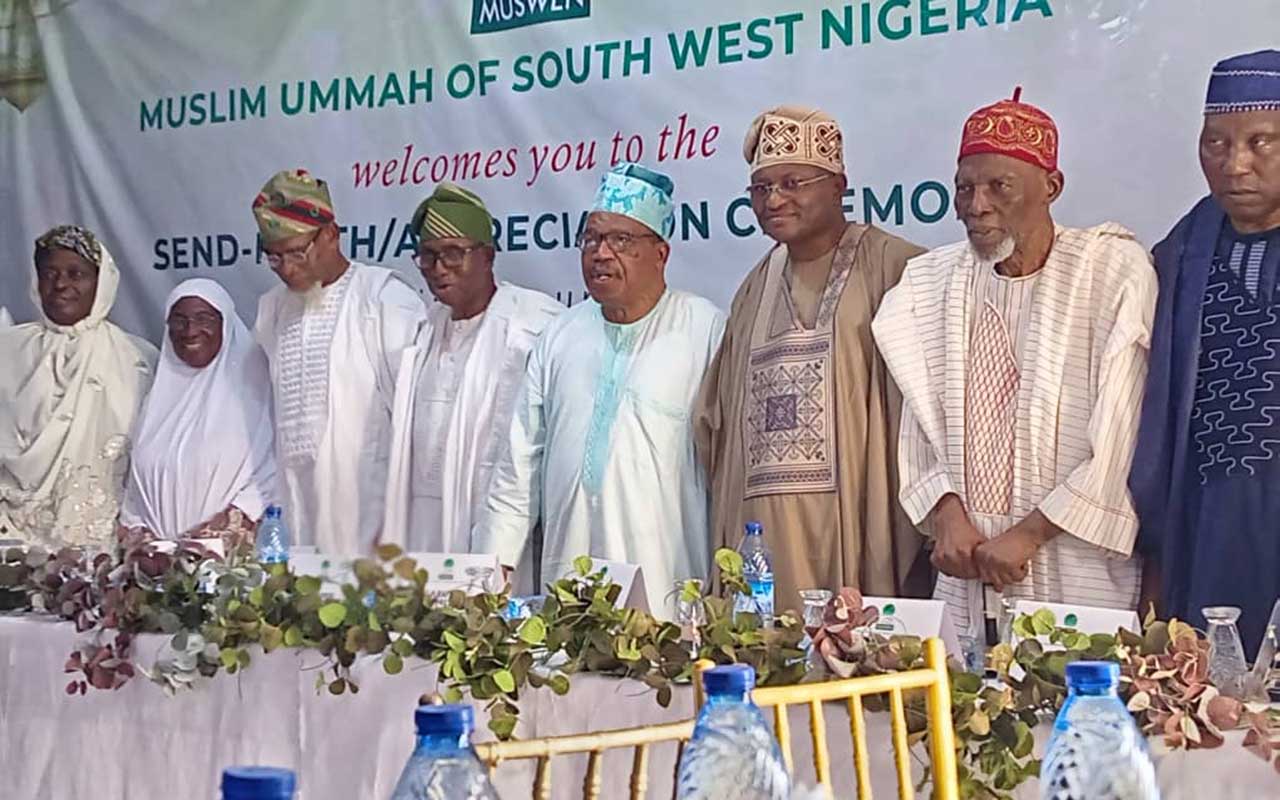
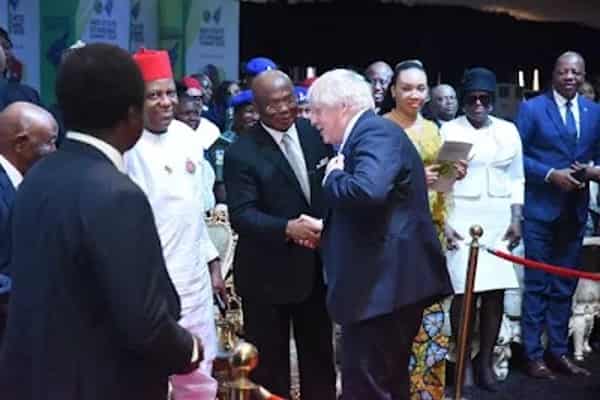
Notably, President Bola Ahmed Tinubu represented by Vice President Kashim Shettima; former United Nations Secretary General, Ban Ki-Moon; former British Prime Minister, Boris Johnson; Liberian President, Emir of Bida, Etsu Nupe, Alhaji Yahaya Abubakar; HRM, Ooni of Ife; former President of Mauritius, Ameenah Gurib-Fakim; Minister of Finance, Wale Edun; Africa’s richest man, Aliko Dangote; Deputy Governor of Imo State, Lady Chinyere Ekomaru, among other dignitaries, attended the summit.
Despite reports of attacks and security concerns, visitors remained undeterred, with Boris Johnson expressing his confidence in Nigeria’s safety.
Every plenary, breakout session, and corridor conversation revolved around one thing – what Imo State possesses in abundance right now and how the world can partner to turn those God-given assets into sustainable wealth for generations yet unborn.
Governor Uzodimma emphasised that Imo State is open for business, having addressed security and other challenges.
“We have provided security, infrastructure, power, and transparent land administration. Imo State offers scale – energy resources, digital talent, agricultural capacity, and global connectivity. We have delivered integration – a Corporate Social Responsibility (CSR) platform that works for you and the communities you serve.
“This market is currently unsaturated. There are no bottlenecks. Growth potential is maximal. We have eliminated risk, simplified administration, and provided the resources.
“So, when I say that Imo State is the new investment equation, engineered for maximum return, I mean every word of it. In more ways than one, Imo State can be seen as a one-stop shop where opportunity and innovation await investments to unlock vast potential. Together, we can trigger the rise of a new industrialised Imo State and make her one of the most industrialised in the country as well. We have everything it takes to make this vision happen,” he said.
Imo As An Investment Destination
Located in the southeastern geopolitical zone of Nigeria, Imo State is situated at a latitude of 5°29’ North and a longitude of 7°2’ East, covering a landmass of 5,542 square kilometres. Recent estimates place the population of the state at about 5.7 million people, making it the 14th most populous state in the country.
It is bordered by Abia State to the east, Rivers State to the south and west, and Anambra State to the north. The state’s capital city, Owerri, is easily accessible, and is less than 40 minutes away from the commercial and manufacturing city of Aba in Abia State, the trading city of Onitsha in Anambra State, and about one hour to the oil city of Port Harcourt in Rivers State.
This unique and strategic location of the state comes with immeasurable commercial opportunities. The state is also blessed with a gentle tropical climate and consists of coastal lowlands with numerous rivers and lakes, the most prominent of which are the Imo, Orashi, and Otamiri rivers, as well as Oguta Lake.
The state is divided into three agricultural zones – Okigwe, Orlu, and Owerri – all of which produce staple crops such as maize, yam, cocoyam, cassava, and a variety of vegetables.
Currently, the state has the third-highest Human Development Index among all states in the country and is ranked as a top-performing state in education and literacy.
Imo State is endowed with several natural resources, including crude oil and natural gas. It also has abundant deposits of solid minerals, including calcium, carbonate, gypsum, granite, lignite, marble, salt, shale, bentonite, kaolin, pyrite, lead, and zinc. Sharp sand, limestone, and fine clay are also present in the state.
However, agriculture is the mainstay of the local economy. In addition to a rich variety of food crops, profitable trees like oil palm, rubber, iroko, bamboo, cotton, obeche, and mahogany can be grown in commercial quantities.
Generally, the people of Imo State are known for their resilience, industry, and creativity. The state has witnessed unprecedented prosperity in recent years, producing the best in human resources, including entrepreneurs and entertainers known across Nigeria and the world.
But the state that birthed these highly successful people is still grappling with challenges of primitive industrialisation, with a weak economy and underdevelopment.
Recognising these challenges, Uzodimma adopted a new acronym for the state, stating: “Investment Meets Opportunities (IMO): I – Investment, M – Meets, O – Opportunities.”
Inviting participants to build the future with the state, Uzodimma thanked President Bola Ahmed Tinubu for opening up the general investment space in the country.
His words: “For the first time in decades, Nigeria is witnessing bold, market-driven policy resets, notably the courageous removal of the restrictive fuel subsidy and the strategic harmonisation of the foreign exchange market.
“Apart from signaling a decisive shift towards transparency, market liberalisation, and fiscal stability, these intentional reforms have created a fertile environment where the private sector can truly thrive.
“This national momentum is the perfect backdrop for our initiative and reinforces that our drive for a $1 trillion economy is synchronised with the Federal Government’s agenda of economic renewal, paving the way for states like Imo to take the lead in regional development.”
Imo Confronting Development Challenges
In confronting development challenges, the Imo State government has laid the foundation for investment and development to flourish by providing essential safety nets like infrastructure, power, security, and stability. This has encouraged industrial players to participate in the emerging process aimed at making Imo State a haven for investors and one of the most industrialised states in the country.
In addition to addressing security challenges, the state has constructed over 120 strategic and economically important roads and bridges that connect its 27 local councils and neighbouring states, which also serve as trading partners.
The current focus is on improving link roads to rural communities to enhance human and commercial mobility across the entire state. The government believes that a robust road network is crucial for trade and economic growth, showcasing its commitment to creating a conducive business environment. The state is also tackling the power issue, a significant obstacle to industrialisation in Nigeria, as it plans to launch Phase 1 of the Light Up Imo Project before the year ends.
This initiative will provide a steady, 24-hour power supply to a large part of the state through Orashi Electricity Company. The first phase will start in Owerri metropolis, followed by extending electricity to the 27 local councils of the state.
Also, recognising the challenges faced by investors in other states, Imo has streamlined the land and title acquisition process to ensure a smooth investment experience. The state took this step to avoid a situation in which investors will be scared, reluctant, or discouraged from acquiring land for investment in the state.
It has also de-risked land administration in the state, formerly characterised by manual processes, fraud, disputed titles, and the near-impossibility of securing clean ownership. Until recently, this was a major obstacle in Imo State. However, it is now history, as it has been replaced with an efficient, fraud-free automated system through the Imo Land Information Centre (ILIC), a one-stop centre offering comprehensive digital land administration information across the state. This process ensures unprecedented ease of doing business.
Speaking at the Summit, President Bola Tinubu, represented by Vice President Shettima, harped on the significance of unlocking Imo’s economic potentials, preparing for greater days ahead and ensuring long-term stability for business.
He highlighted opportunities in high-growth sectors, pre-trade zones, special agro-processing zones, expanded gas utilisation, digital infrastructure, access to financing opportunities, and structured private-public partnerships in housing, transport and renewable energy.
Tinubu expressed readiness to support Imo State in these areas and encouraged investors to explore the abundant opportunities available in Imo, emphasising that the state is open for business.
“Nigeria is also open for business. Imo is primed for transformation. The Federal Government stands ready to support Imo State in these investment areas. Our role is to work with you to unlock opportunities, to release promising ventures, and to ensure that the benefits of development are paid across communities.
“To our investors here today, the message is unmistakable. Imo is open for business. Nigeria is open for business,” he added.
On his part, the former Prime Minister of Britain, Boris Johnson, commended Uzodimma for his efforts to drive economic transformation in Imo State, particularly through the move to provide 24-hour electricity. Johnson said reliable power supply is critical for development, adding that Artificial Intelligence would shape the future of global economies.
Former Secretary-General of the United Nations, Ban Ki-moon, said Africa holds the solutions for many of the world’s pressing challenges, particularly climate change and sustainable development. He stated that the world cannot achieve true sustainability without first addressing the continent’s unique challenges.
He also warned that the world is running out of time to avert climate consequences if political leaders fail to accelerate commitments and emission cuts. Ki-moon highlighted the injustice faced by African nations, stating that “although 54 African countries contribute only four per cent of global emissions, they remain among the worst affected by climate disasters.”
Speaking at the event, the Managing Director and CEO of Orashi Special Energy Free Zone (OSEFTZ), Dr. Chioma Nwachuku, noted that manufacturing is returning to regions with talent and resilience, adding that investors everywhere are searching for an environment where purpose and opportunity align.
She stressed that Imo State is one of those places where there is purpose and alignment of opportunity.
According to her, OSEFTZ is more than an industrial land. She added: “At Orasi, we have developed a model built for global competitiveness and long-term success.
“One, we anchor on energy. Located at the heart of Nigeria’s gas museum, we can power industries from LNG to methanol, to fertilizer, petrochemicals, and power with competitive prices and dependable supply. We build around world-class logistics.
“We are integrating a direct inland port linkage with the Atlantic Ocean. An international cargo airport is being revived. Marine and aviation support systems are being put in place. We are connecting people to global and regional linkages that have never been done before. With the African Centre for Quality Assurance, we make sure that manufacturers have an opportunity to get their goods certified to meet the U.S., the EU, and any international standard and their goods ready for export. And then we embrace technology and smart security.
“So, with that, what we are doing is having digitalised utilities, integrated surveillance systems, smart access control, and a central command centre that ensures safety, efficiency, and world-class operations.”
Already, founder and chairman of Zinox Group, Dr. Leonard Stanley Ekeh, has promised to invest N5 billion in educational institutions in the state next year.
He extolled the governor for investments in what he called the Knowledge City.
Ekeh called for support for the state government’s drive in technology investment and development of the state.
On his part, Alhaji Aliko Dangote thanked President Tinubu for his leadership and policies, expressing optimism that there are so many other policies that are going to roll this investment.
He advised Nigeria’s entrepreneurs to invest at home, stressing that incentives in terms of good governance, rule of law, and good policies have been put in place by the government.
“There are so many potentials and we have mineral sources. Africa has about 30 per cent of the world’s minerals. So, there are a lot of people that are fighting, trying to get these minerals.
“Our job is to keep investing at home. If we don’t invest at home, there is nobody on earth that will come and invest here. What attracts foreign investors is a domestic investor,” he said.
He pledged to invest in Imo State in whatever area the governor requests.
“You have to have electricity to be able to create growth. And you have done that. So congratulations.
“But there are more to come. As I said, His Excellency, you tell me the best area for us to invest in. We are investors, and I can tell you, in the next three years, the programme that we have in the Dangote Group, we’re investing heavily in fertilizer.
“We are actually going to become the number one fertilizer plant in the world by 2028. We’re moving from three million tons of urea to 12 million tons of urea. So, we will actually be the number one today,” he said.