 Follow Us on Google News


 Follow Us on Google Discover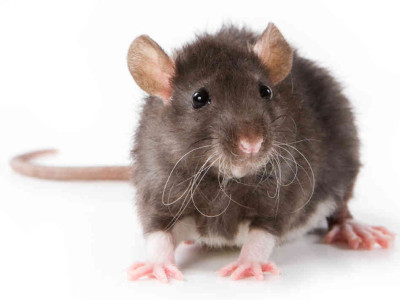
 BARELY three months after World Health Organisation (WHO) declared Nigeria Ebola Free, it is unfortunate that another endemic deadly disease known as Lassa Fever has raised its ugly head in Nigeria. Like Boko Haram insurgency which has claimed many lives, Lassa fever originated from Borno State in 1969. Although not from Maiduguri but from a town called Lassa. It was from the name of the town ‘Lassa’ that the disease got its name ‘Lassa Fever.’
Lassa Fever is caused by a virus called Lassa Virus. The virus belongs to a group of haemorrhagic fevers such as Ebola Virus Disease (EVD), Dengue and Yellow fever, Lassa Fever affects human beings and could lead to sudden death.
Lassa fever lives and multiplies in a particular type of rat called the Natal multimammate mouse which is found in sub-Saharan Africa. The virus is contained in the urine and stool of rats. If the urine of the rats contaminates exposed food and humans they can contract the disease. The virus spreads from person to person through direct contact with body fluids – saliva, nasal discharge, blood of infected persons including mother-to-child transmission and consumption of infected food items.
According to the Federal Ministry of Health, in the last seven weeks, Nigeria has been experiencing Lassa Fever (LF) outbreak which has so far claimed 42 lives from 93 reported cases in 10 states of the country. Twelve states have so far been affected. The states affected include Bauchi, Nasarawa, Niger, Taraba, Kano, Rivers, Edo, Plateau, Gombe, Abuja, Oyo and Imo. Information learnt on Thursday, January 14 had it that a medical doctor died in Port Harcourt, the Rivers State capital as a result of Lassa Fever. A case of Lassa Fever has also been confirmed at the Lagos University Teaching Hospital, Idi Araba, Lagos, as of Friday, January 15. According to the Chairman, Medical Advisory Committee (CMAC), Dr. Olufemi Fasanmade, the patient is isolated at the Accident and Emergency (A&E) unit of the hospital.
The incubation period of a disease is the time it takes the disease to manifest and show its different symptoms if someone contacts it. For Lassa fever, the incubation period is seven to 21 days. Therefore, if a person is suspected to have the disease, he will be put in an isolation room for 21 days in order to confirm if he/she has the disease or not.
Symptoms of Lassa fever include: High fever; serious headache; pains in the chest region; dry and sore throat; continuous stooling and vomiting; in severe situations, there is bleeding from the mouth, nose and vagina and then death results in later stages.

Focusing on the effect of Lassa fever on pregnancy, the Wellbeing Foundation Africa led by Mrs. Toyin Saraki (Wife of Senate President) shared that expectant mothers, especially those in the third trimester of pregnancy, face a higher risk of contracting the disease – which causes mortality in 95 per cent of cases. As studies have indicated, the increased likelihood of mortality at this stage of pregnancy is due to immunosuppressant associated with the third trimester of pregnancy.
Therefore, to prevent the disease, people should ensure their food and grain are properly stored in rodent-proof containers. Liquid soap and antiseptics should be used to wash the hands. Also, other rules of regular hand-washing should be adhered to always. Keeping cats and rodenticides should be used to kill rats, while the bush around the home should be cleared regularly. The windows and doors of the house should be closed especially when it is night time.
Anybody who shows the given symptoms above should not resort to self medication but report to the hospital immediately in order to save him/herself and prevent other people not infected from coming up with the disease. The residents of Lagos State should contact the following phone numbers to report any suspected case of Lassa Fever. 08033065324; 08055281442 while the residents of other states including FCT can contact Federal Ministry of Health on following numbers: 08093810105,08163215251, 08031571667 and 08135050005.
The Federal Government should provide Lassa rapid test kits to detect the disease on the spot. Medical personnel should wear protective gloves and mask when treating people who are infected with the disease. They must ensure that the body fluids and excreta of all persons suspected of Lassa fever infection in isolation should be properly disposed.
All efforts should be geared towards maintaining a general personal, home and environmental hygiene.
Early supportive care with rehydration and symptomatic treatment improves survival. It is often said that prevention is better than cure. The governments of Nigeria and other African countries must take the wellbeing of their citizens very seriously by investing more in the health care system of their various countries.
On the other hand, Nigerians must join hands together with the three tiers of government in the fight against Lassa Fever so that we can chase away Lassa Fever just as we chased away Ebola.
God bless Nigeria.
• Ajiboye, Public Affairs analyst, writes in from Lagos, via [email protected]. +2348138966292.

