 Follow Us on Google News
 Follow Us on Google Discover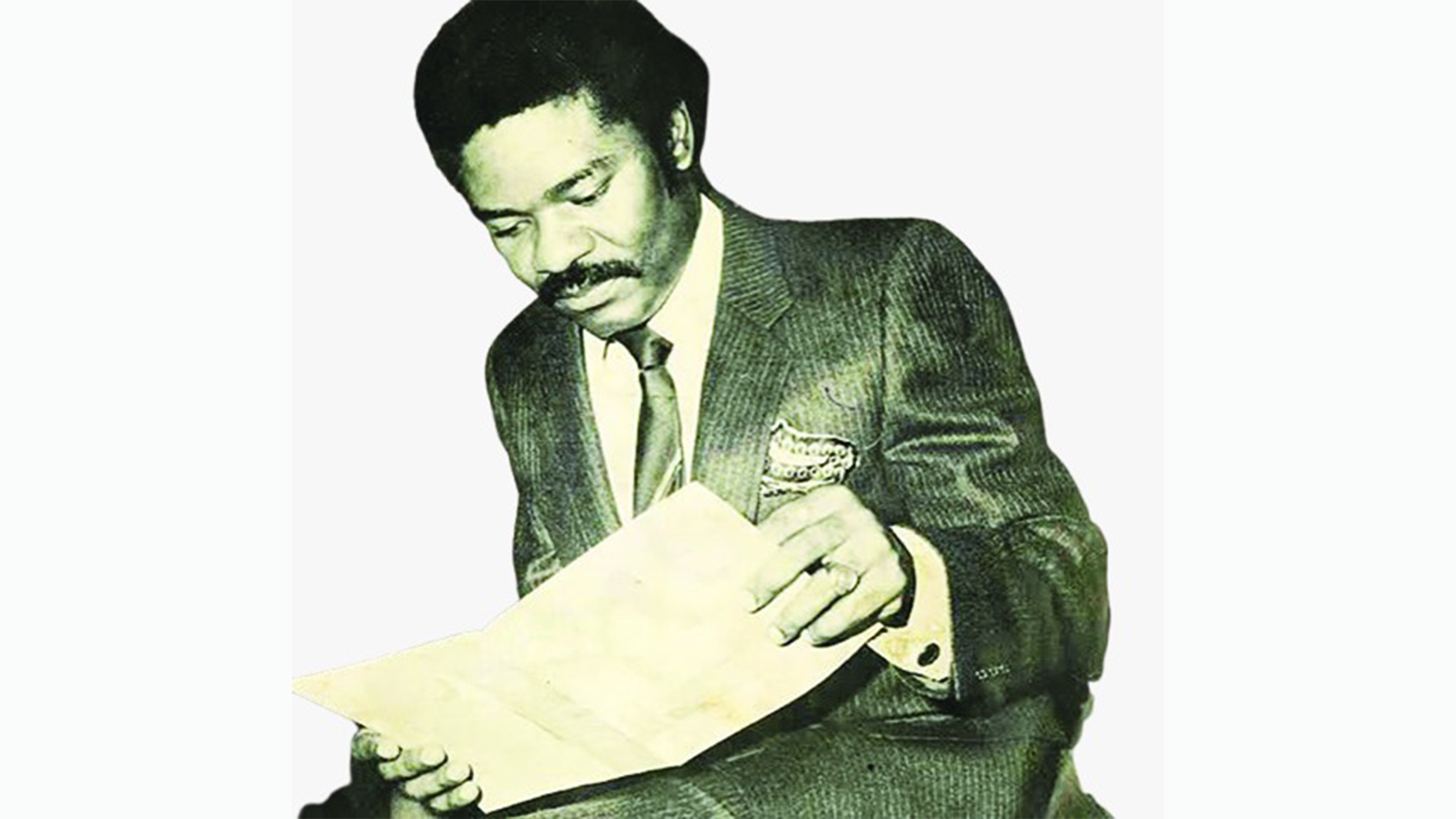
Barely 40 years after his assassination, The Dele Giwa Journalism Research Centre (DGJRC) has been established.
The digital archive serves as a comprehensive research hub dedicated to preserving Giwa’s writings, professional contributions, and historical impact of his work on the nation’s journalism and media freedom.
With a mission to preserve and promote his intellectual legacy, DGJRC’s Chief of Research, NyaknnoAbasi Osso, disclosed that the centre is providing an open, credible, and accessible platform for journalism research, historical documentation and scholarly engagement.
Osso, who is also the founder of Biographical Legacy and Research Foundation (BLERF), publishers of Nigeria’s first and only Online Who’s Who, added that the centre is also dedicated to advancing principles of truth, integrity and courage in journalism, while inspiring future generations to pursue excellence and ethical reporting.
To him, Giwa, “was an omnivorous reader, a voracious assimilator of information, a walking encyclopedia, cerebral, visionary, energetic, street-wise, chatty, domineering, clear minded, full of drive and determination, neatly-dressed, well-informed, mover and shaper of great ideas with complete mastery of what it takes to be a great reporter – nose for the news, eyes for the great story, language, style, elegance, wit and wisdom.”
Saying he was a fearless journalist who exposed corruption and social injustices through his reporting, he added Giwa also mentored young journalists and promoted press freedom.

As a man who wrote more than three hundred lively and thought-provoking columns that touched on all aspects of life, Osso believed he should not be ignored, nor forgotten in a hurry.
Comparing Giwa to the late poet Christopher Okigbo, he stated, “I started collecting Dele Giwa’s materials on April 8, 1979. Later, I was to be invited to join Newswatch in August 1984, as the first senior management staff in charge of Research, Library and Documentation.
Giwa had great confidence in me as a Documentalist ,a rigorous collector and preserver of facts and figures. He consequently handed over everything he had written up to 1984 to me for conservation. I decided to preserve the materials in a bank vault in Lagos.”
One of Giwa’s memorable moments he recalled was August 30, 1984, the day he received a public apology from the then Inspector-General of Police, Etim Inyang, in compliance with a court order, for wrongful arrest and detention by the police.
To Osso, it was from his response to the public apology that the famous quotation – “No evil deed can go unpunished. Any evil done by man will be redressed, if not now, then certainly later; if not by man, then certainly by God, for victory of evil over good can only be temporary” – came about (Daily Times, September 5, 1984).
“Perhaps, he will also be remembered as the first Nigerian reporter who was invited to observe a President of the Federal Republic of Nigeria at work(President Shehu Shagari), starting with having breakfast with him, spending the whole day in his office and having an in-depth interview and discussions with the first citizen for three days,”he stated.
Speaking further, Osso observed that Giwa’s ability to weave ideas into a good story through creativity and wisdom, using picture words to capture the atmosphere, colour and essence of the event, was outstanding in the annals of the nation’s journalism.
Concerning his relationship with Giwa, he recalled something extraordinary happened to him at the Nigerian Chronicle before Ray Ekpu left for the Daily Times Group where he edited the Sunday Times.
In 1980, he noted, “the conference of the Nigerian Guild of Editors was holding in Calabar. Dele Giwa happened to be the Assistant Secretary while Uncle Ray was the Assistant Treasurer. Of course, they were close friends, and both of them were already famous at that time. By then, Giwa had moved from Daily Times to Sunday Concord. As soon as he touched down in Calabar for the Guild Conference, he came straight to see Uncle Ray at the Nigerian Chronicle. At the same time, he also wanted to write his column for the Sunday Concord, and needed to do a little research on what he was writing on. He asked Uncle Ray for the library since he could not reach Lagos on phone to crosscheck certain issues.
Unlce Ray proudly responded, “have you seen Nyaknno?” Giwa asked, “who is Nyaknno.” Uncle Ray told him, “He’s in charge of Research and Library here. Come, let’s go.” Both of them walked into my office and Uncle Ray asked me, “You know Dele?” I responded, “Yes please, I know him.” Surprised, he asked further, “How do you know Dele?” I said, “before he arrived back in Nigeria, from the New York Times, he wrote a story in Sunday Times, stating that he had heard that Nigeria is a difficult place, but it is home and that he was returning, because he was invited by Dr. Stanley Macebuh and Dr Patrick Dele Cole to come to Daily Times.”
Surprised, he added Giwa said, “this guy knows something about me.” He now went ahead to tell me what he needed. I said, “Before I answer your questions, let me give you a big surprise. I have a file here that will interest you. It is a collection of your complete column, Parallax Snaps, from the first one you wrote while still in the United States to the one you wrote last week in Sunday Concord. It is actually in two volumes.
“I pulled them out. Giwa opened and opened and opened. He later confessed that even as the writer of the articles, he did not have a complete collection.” Then he asked, “How did you get them?” I told him that from the day I read his first column, I loved his style of writing and decided to clip it and then followed up from there. He was thoroughly impressed. He patted me on the back and declared, “You are the best of the best.”
“That was my first meeting with Giwa. It marked the beginning of a long professional and personal relationship that refused to end even after his death in 1986,”he stated.
Born in Ile-Ife on March 16, 1947, Giwa was a renowned journalist and Editor who was known for his courageous and critical reporting. He raised the bar of investigative journalism as the Features Editor of Daily Times, as the Editor of Sunday Concord and as the Editor-in-Chief of Newswatch magazine.
At Daily Times, he maintained two columns on the famous ‘Page Seven’, which he created; Press Snaps and Parallax World (later renamed Parallax View), which appeared every Wednesday and Friday respectively. He was, however, assassinated on October 19, 1986 through a letter bomb.

