Mixed reactions have continued to trail the decision of the Rivers State House of Assembly to commence impeachment proceedings against Governor Siminalayi Fubara and his deputy, Professor Ngozi Odu, as political, ethnic, party and civil society groups take sharply opposing positions on the unfolding crisis.
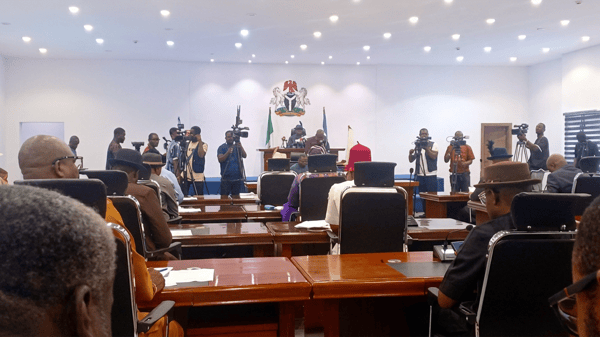
The Assembly, during a plenary session on Thursday morning, activated impeachment mechanisms against the governor on allegations of gross misconduct, including failure to present a mid-term expenditure framework and issues surrounding budgetary processes.
While the decision has deepened political tension in the state, it has also exposed widening cracks across Rivers’ political landscape, with accusations, counter-accusations and calls for restraint dominating public discourse.
Some residents of the state have described the impeachment move as “the last card” available to the 26 lawmakers, arguing that the odds appear stacked against them following Governor Fubara’s defection to the All Progressives Congress (APC) and his perceived alignment with President Bola Tinubu.
Others, however, believe the development signals that the governor and his deputy may be nearing the end of their tenure, insisting that once impeachment proceedings formally commence, political survival becomes increasingly uncertain.
Public affairs analyst, Eme Kingsley, said the impeachment process must be understood within the context of Abuja politics, insisting that President Tinubu is not unaware of developments in Rivers State.
“The President understands almost all these games. Even the governor is not being sincere with the agreements reached — from the first one signed involving Peter Odili, Assembly members and leaders of the state before Mr President, to the second agreement signed by the governor, the Assembly and leaders of the state and submitted to the President,” Kingsley said.
He added, “Even the President himself knows that the governor is not sincere. He is getting a lot of bad advice, believing that the President will do magic because he just switched party.”
Kingsley also dismissed the notion that the Assembly lacks access to the Presidency.
“I don’t know who believes that the Assembly members do not have access to the Presidency. Their leader, Nyesom Wike, has unrestricted access to the President. Just a few days ago, two of his allies were given presidential appointments. Why are the governor’s people not getting appointments if Wike has lost touch with the President?” he queried.
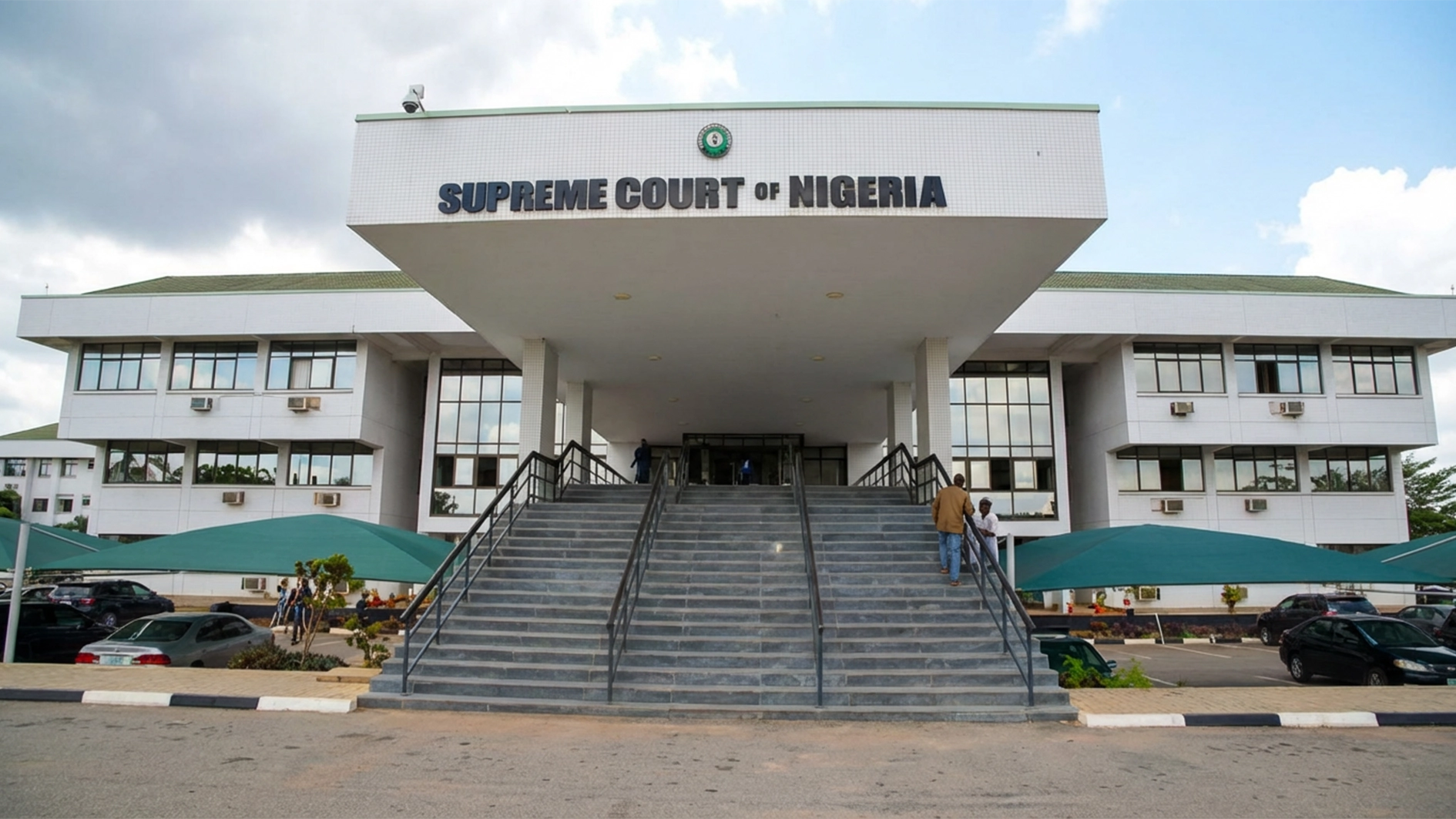
He further argued that judicial pronouncements had strengthened the Assembly’s hand, saying, “The truth is that the Supreme Court before now has indicted the governor for gross misconduct — spending without appropriation and other offences — which empowers the Assembly to impeach him.”
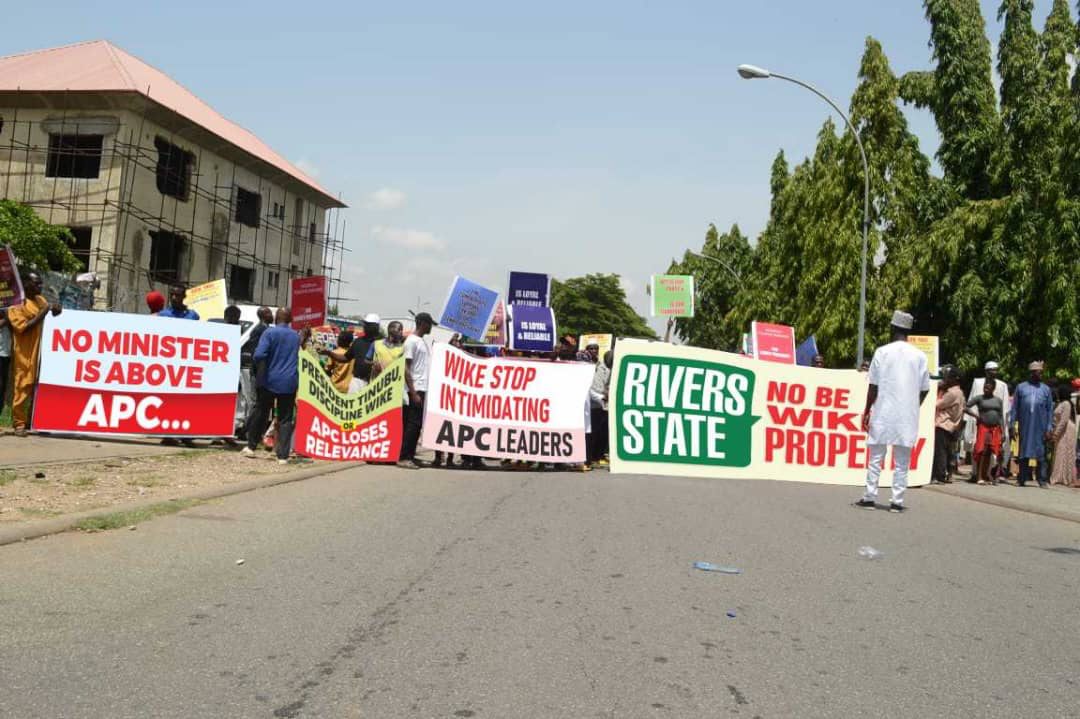
However, the Eastern Zone of the Ijaw National Congress (INC) and the Ijaw Youth Council (IYC) strongly opposed the impeachment move, accusing the Minister of the Federal Capital Territory, Chief Ezenwo Nyesom Wike, of escalating political hostilities in the state.
Speaking at a joint press conference in Port Harcourt, the Chairman of INC, Eastern Zone, Abel Peterside; the Chairman of IYC, Eastern Zone, Prince Datolu Sukubo; and the Speaker of the 6th Parliament of IYC, Gabriel Allen, warned that the situation poses a serious threat to peace and democratic stability.
“The increasingly confrontational posture adopted by the Honourable Minister of the Federal Capital Territory, Chief Ezenwo Nyesom Wike, towards Governor Siminalayi Fubara poses a significant threat to public peace, democratic order and the stability of Rivers State,” the groups said.
They recalled the June 26, 2025 peace accord brokered by President Tinubu at the Presidential Villa, describing it as a widely welcomed effort that has since been undermined.
“Rather than allowing the post-agreement phase to consolidate, the Minister has chosen a path defined by hostility, public provocations and political interference,” the statement read.
The groups also criticised alleged demands for the dismissal of senior state officials, including the Secretary to the State Government, Dr Tammy Danagogo, and the Chief of Staff, Hon. Edison Ehie.
“Such demands constitute an unwarranted encroachment on the constitutional powers of a sitting governor and represent an attempt to personalise and monopolise governance in Rivers State,” they said.
They further affirmed Governor Fubara’s political rights ahead of 2027, saying, “No individual may arrogate to himself the power to determine the political destiny of Rivers State. Governor Siminalayi Fubara retains the unrestricted right to contest any future election, including the 2027 governorship race,” the groups declared.
In a surprising twist, the Rivers State chapter of the APC, led by Emeka Beke, also rejected the impeachment proceedings.
Speaking through its spokesperson, Darlington Nwauju, the party said it would be “totally untenable” to remain silent while internal crises from the Peoples Democratic Party (PDP) are allowed to destabilise an APC-led government.
“We concede that the legislature is an independent arm of government, but we solemnly reject the resort to impeachment against our governor and his deputy,” Nwauju said.
He argued that the impeachment threat, largely centred on budgetary issues, was unnecessary.
“There is an existing one-year budget approved under emergency rule in June and July 2025, which runs until August 2026. The constitution also allows a six-month spending window into a new fiscal year,” he said.
Nwauju warned APC lawmakers in the Assembly to resist external pressure, stressing that the party would not allow the government to be destabilised “through fratricidal disagreements.”
The Human Rights Writers Association of Nigeria (HURIWA), in a statement signed by its National Coordinator, Comrade Emmanuel Onwubiko, also rejected the impeachment plot, describing it as “reckless, unconstitutional and morally indefensible.”
HURIWA accused lawmakers of acting as proxies and urged President Tinubu to urgently intervene to halt what it termed a manufactured crisis.
Similarly, the Rivers Peace Initiative, in a statement signed by its Convener, Obinna Ebogidi, warned that the impeachment notice represents a serious escalation capable of plunging the state into renewed instability.
“Impeachment is a grave constitutional instrument and must never be perceived as a tool of political pressure,” the group said, calling for immediate de-escalation and renewed dialogue.
As reactions continue to pour in, Rivers State appears caught in a web of competing interests — legislative authority, executive survival, ethnic mobilisation, party discipline and federal influence.
Whether the impeachment process proceeds or stalls, analysts agree that without urgent restraint and credible mediation, the state risks another prolonged season of political uncertainty, with governance, development and public confidence hanging in the balance.