 Follow Us on Google News
 Follow Us on Google Discover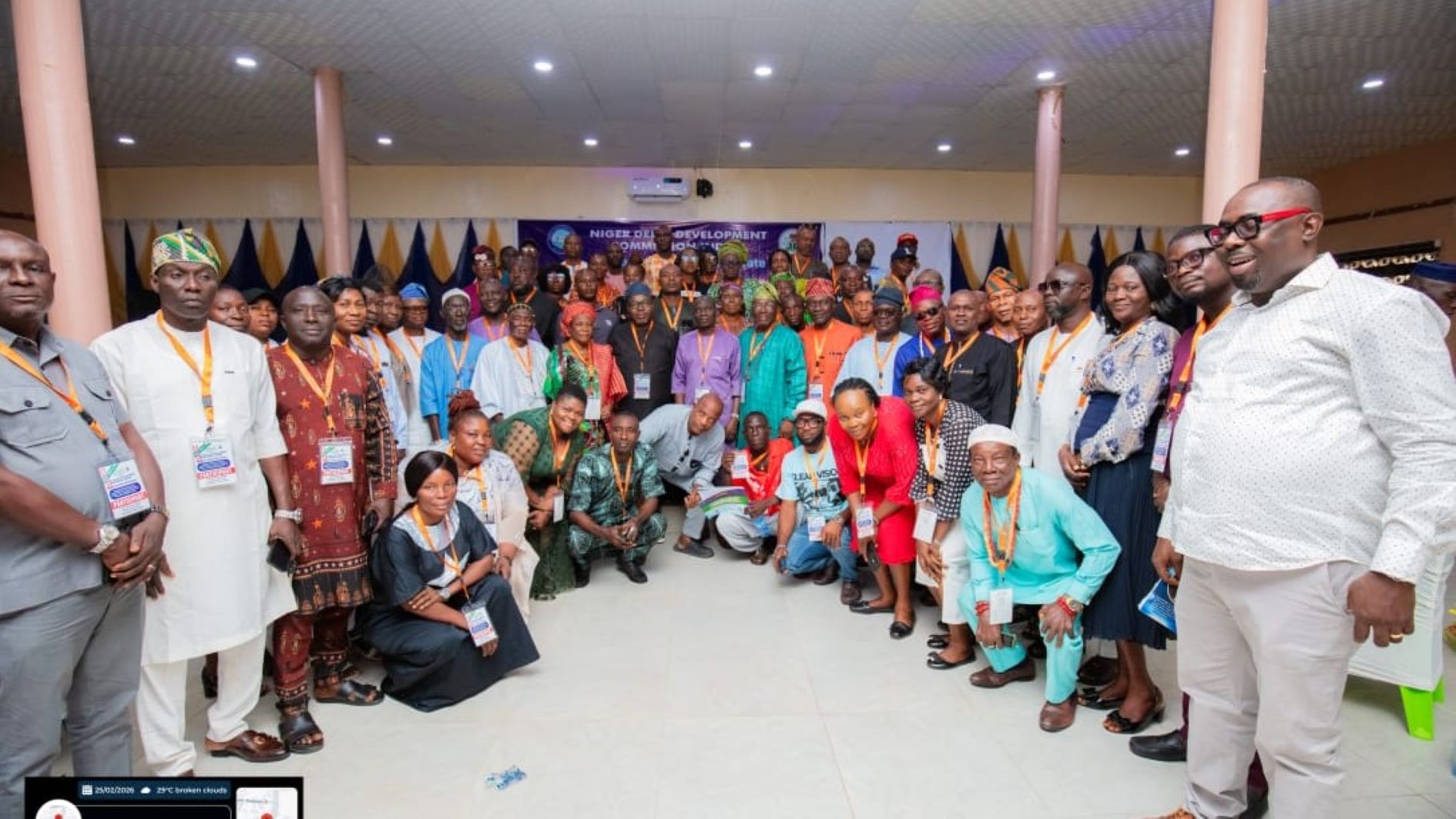
Over the years, the Niger Delta Development Commission (NDDC) has offered several intervention programmes to alleviate sufferings and improve lives of the people in its host communities.
The nine states under the mandate of the NDDC – Abia, Akwa-Ibom, Bayelsa, Cross-River, Delta, Edo, Imo, Rivers and Ondo have witnessed the commissioning of landmark projects manifesting in transforming the landscape of the region.
This commitment to the commission’s transformative agenda under the Dr. Samuel Ogbuku-led management of the NDDC, towards deepening sustainable development has been instrumental to changing the narratives of neglect and squalor that hitherto dominated the story of the Niger Delta region.
For instance, the “Light Up the Niger Delta Initiative” has delivered hundreds of thousands of solar-powered street lights to communities across towns and rural areas leading to improved security, access to renewable energy and enhanced nighttime socio-economic activities, likewise the provision of other infrastructural facilities.
Unfortunately, there is a disturbing pattern of vandalism affecting these projects delivered by the commission, which has continued to raise serious concern. Some of the projects initiated and completed by the NDDC and handed over to communities for utilisation, in partnership with other critical stakeholders have become vulnerable to vandalism and other forms of abuses that are detrimental to the objective of the projects.
Apart from undermining the objective of interventions, experts say vandalism results in avoidable waste of revenue with attendant negative impact on the communities and the prospective beneficiaries, noting that unless the trend is addressed, the region’s developmental efforts may be retarded.

To address these unpleasant occurrences, the Corporate Affairs Directorate of the NDDC embarked on process-led engagement with stakeholders aimed at strengthening collaboration for community ownership of projects at the grassroots.
The engagement sessions in partnership with a team of consultants drew the participation of stakeholders across the nine mandate states. This provided platforms for stakeholders to brainstorm on the need for shared responsibility towards ownership and protection of development projects and public infrastructure in their domains.
In his address at the stakeholders’ engagement tagged: Capacity Building Programme for Stakeholders across the Niger Delta Region on Community Ownership and Protection of NDDC Projects”, the Executive Director, Corporate Services, Ifedayo Abegunde, decried the destruction of government projects initiated by the NDDC in host communities.
According to Abegunde, cases of vandalism, theft, neglect, and insufficient community engagement have compromised valuable assets intended to improve collective well-being of the people of the people.
The Director of Peace and Development Projects (PEDEP) and Lead Consultant, Mr. Francis Abayomi, said the programme is designed to mobilise inclusive engagement towards enhancing the development initiative of the Niger Delta Developments Commission for optimal benefits of the community and the people.
Speaking on behalf of team of consultants, Abayomi expressed optimism that the knowledge shared, as well as interactive engagement provided through the initiative will help promote awareness and help to raise consciousness regarding mutual responsibilities in the protection of projects and facilities of the NDDC.
The engagement sessions held as follow: Ondo State (Okitipupa – February 25, 2026), Bayelsa State (Yenagoa – Tuesday, March 3, 2026), Cross Rivers State (Calabar – Friday, March 6, 2026), Akwa-Ibom State (Uyo- Monday, March 9, 2026), Abia State (Aba – Wednesday, March 11, 2026), Imo State (Owerri – Friday, March 13, 2026), Rivers State (Port Hacourt – Monday, March 16, 2026), Delta State (Warri – Tuesday, March 24, 2026) and Edo State (Benin – Wednesday, March 25, 2026).
In Port Harcourt, Rivers State, the Director of Rivers Operations of the NDDC, Okezie Ule, said the capacity building training was designed to equip participants with the knowledge and strategies needed to protect projects provided by the commission. Ule noted that the stakeholders’ engagement became imperative considering the rising cases of vandalisation of completed projects across the region.
He lamented that several projects, including solar-powered street lights installed to improve security in communities, have been vandalised by criminals shortly after installation. “We have seen with dismay how many of our lofty projects, which communities strongly solicited for, are left to ruin. Vandals go in and destroy them, including solar lights that illuminate our communities,” Ule said.
Also speaking, the Rivers State Representative on the NDDC Board, Sir Tony Okocha, said the capacity building programme was necessary to strengthen community participation in safeguarding development projects.
Okocha, who was represented by his Special Assistant on Technical Matters, Mr. Chibuzor Kwelle, noted that several NDDC projects, particularly solar street lighting initiatives, have contributed significantly to reducing crime in many communities.
In Calabar, Cross River State, the NDDC State Director, Daniel Ajunwa said over the years, the commission has offered several intervention programmes in the state. “But if you go and take a very good look at what is happening, what is on ground, it appears as though NDDC is not doing much.
But, if you catalogue NDDC programmes over the years, you will agree with me that NDDC has embarked on several intervention programmes that ordinarily would help to alleviate sufferings in our communities, and sustain and improve lives in our communities.”
He said the lack of taking ownership of NDDC projects by the communities remains a serious challenge. “That mentality, that orientation, has to change. They have to see the project as their own,” he said.
He advised youths to make effort to protect properties in their communities, saying, “If it means coming together and forming groups, like vigilante groups, to take care of these Projects.”
In Uyo, Akwa Ibom State, the NDDC State Director, Evong Moduck Evong, called on communities to take greater ownership of development projects executed by the commission in their areas.
He stressed that the sustainability of development projects depends largely on the commitment of host communities. According to him, community ownership goes beyond simply using public infrastructure.
Evong assured stakeholders that the commission, under the leadership of Managing Director, Samuel Ogbuku, remained committed to deepening development impact across the Niger Delta.
According to Evong, “the current management of the NDDC is firmly committed to moving the Commission from transaction to transformation,” he stated. Responding to concerns raised by participants that some NDDC projects may not reflect community priorities, the State Director clarified that projects are largely informed by community needs assessments and stakeholder inputs.
He explained that communities regularly submit requests for projects and that the commission also conducts needs assessments before projects are incorporated into the NDDC budget and forwarded to the National Assembly for approval.
“Our office receives numerous letters from communities requesting projects. These inputs, along with needs assessments, guide the budgeting process before submission to the National Assembly.”
Speaking at the stakeholder engagement held in Okitipupa, Ondo State, the Ondo State Director of the Commission, Kunle Karaki, who described the trend of vandalism and other forms of vices as a major setback to development in the Niger Delta region, said community ownership goes beyond simply using facilities, stressing that it requires active stewardship, vigilance against threats to public assets, prompt reporting of irregularities, participation in monitoring processes, and collaborative maintenance efforts.
He explained that the engagement programme was organised to deepen awareness among stakeholders and foster a sense of shared responsibility in securing public infrastructure. “It is in recognition of this reality that we have convened this campaign. Our objective is clear: to deepen awareness, encourage a sense of shared responsibility, and promote a culture of ownership that ensures every completed project is protected, maintained, and optimized for present and future generations.
“Our objective is clear – to encourage a culture of ownership that ensures every completed project is protected, maintained, and optimised for present and future generations.
At the engagement session in Bayelsa State, the state Director, Godknows Alamieyeseigha, represented by the Principal Manager, Project Monitoring Department, Oputa Victor, decried what he described as a disturbing pattern of vandalism affecting projects delivered by the commission.
He said: “The essence of the programme is to sensitise the communities and the need for them to understand that NDDC projects belongs to them, and for them to be able to safeguard the projects and not wait for NDDC; take ownership of the projects and safeguard it judiciously. “A lot of issues were raised by the participants regarding our projects in the various communities in the state and we have taken note of them, they’re very useful and important feedback and inputs.
“We have advised them that even when we handover projects to the communities, we introduce the contract to them, we always emphasise that they should not stall the projects by fighting and causing violence at the site. Whenever they noticed anything the contractor is doing that is not in the interest of the community, they should report him to us and we will take disciplinary actions against such contractor.
“Vandalism of projects in some communities is of serious concerns to the management of NDDC and it is very unfortunate that some projects in some communities are been vandalised. The importance of this gathering is to ensure that projects that were financed by NDDC, the people take the ownership and see the projects as their own.
At the engagement session in Owerri, Imo State, the commission’s State Director, Patrick Obayelu, urged communities to take responsibility for protecting NDDC projects, encouraging youths to report any acts of vandalism in their areas.
According to him, the NDDC was established to bring development closer to the people of the region. Over the years, the Commission has executed several projects in our communities: roads, schools, health facilities, water schemes, electricity, and other critical infrastructure aimed at improving the quality of life of the people.
At the engagement session in Edo State, NDDC State, Mercy Babawale, said the core mandate of the NDDC is to ensure the Niger Delta region is developed, noted that the workshop was initiated to create awareness and to interact with communities in order to know what is happening in their various areas.
She said, “Most often, people in communities where our projects are sited feel they are government projects, so they have no business with them, it shouldn’t be so. We should take charge and protect projects sited in our communities. We should ensure that we don’t accommodate vandals; we should ensure that we don’t have people coming to undo what has been done to us because these are benefits in our communities.
“The irony is that if we don’t protect these projects sited in our communities because we feel they belong to the government, we lose, while other people who take care of such projects benefit and have sustained projects in their communities.”
At the engagement session in Delta State, the NDDC State Director, Onoriode Omo-Udoyo represented by Sweet Odulami urged participants to take responsibility for projects in their domains. “We are gathered here to be empowered to take ownership of our projects. NDDC is designed to develop and empower the Niger Delta. If the project is in good shape, we will all enjoy it,” he said.
According to him, “When you see anything going wrong with the NDDC project, blow whistles, report to community leaders,” while encouraging communities to formally communicate their needs to the Commission.
On project sustainability, he clarified, “NDDC does not abandon projects, we have stalled projects. There may be unforeseen reasons for such stalled projects. It may take a week, month or year. We hand over projects to the state, local governments or communities.”
Across the mandate states, the participants unanimously expressed their willingness to accord priority attention to the protection of projects implemented by the NDDC through sustained sensitization for collective responsibility within the communities.
At the engagement session in Abia State, the NDDC State Director, Anderson Ukeh, expressed concern over incidents of vandalism affecting NDDC projects in the region, noting that that the workshop was organised to encourage young people to take ownership of development projects in their communities and help them from vandalism.
Ukeh commended the Managing Director of the commission, Samuel Ogbuku, for initiating engagement with youths to promote community participation in safeguarding public infrastructure.
According to him, the commission has executed more than 19,000 projects across the Niger Delta, with over 13,000 reportedly yet to be completed. He urged youths to protect projects in their communities, report suspected vandals to security agencies and support efforts aimed at ensuring that development initiatives deliver lasting benefits, adding that the commission operates as an intervention agency and awards projects based on consultations with host communities to ensure they address priority needs.
Ukeh explained that the commission operates as an intervention agency and awards projects on consultations with host communities to ensure they address priority needs.
He explained that contractors are encouraged to involve local residents in project execution and that the commission follows established procedures in awarding contracts.

