 Follow Us on Google News
 Follow Us on Google Discover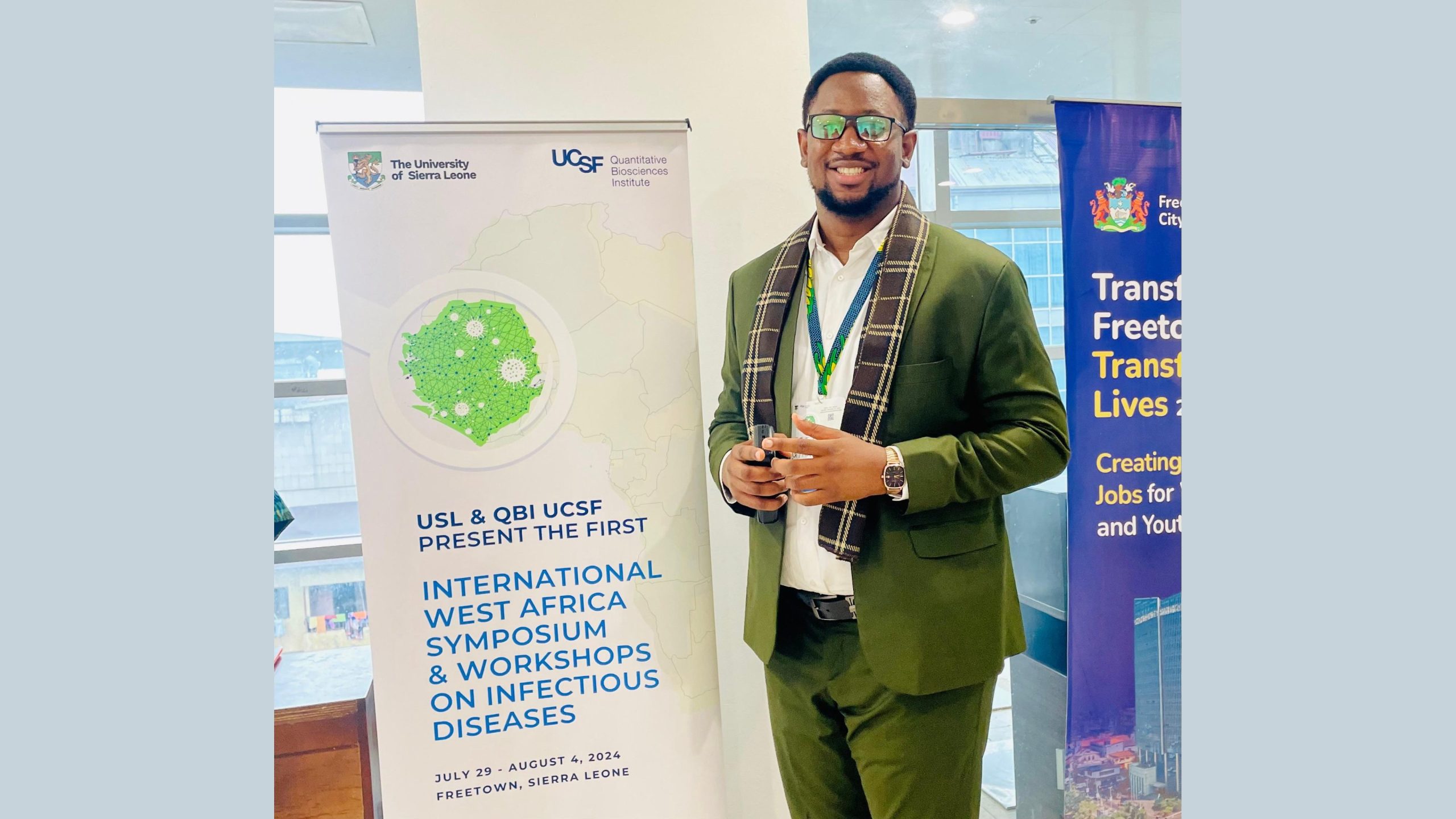
Gabriel Ezenri, a Nigerian HIV outcomes researcher and clinical pharmacy scholar, presented significant evidence on HIV-related stigma and HIV-associated metabolic comorbidities at the inaugural International West Africa Symposium and Workshops on Infectious Diseases in Freetown, Sierra Leone, emphasizing his expanding role in HIV outcomes research and evidence synthesis in Africa.
Hosted by the University of Sierra Leone in collaboration with the Quantitative Biosciences Institute at the University of California, San Francisco, the symposium convened scientists, clinicians, and public health stakeholders to address major infectious disease challenges across West Africa, including HIV, tuberculosis, malaria, and viral hemorrhagic fevers. Among the scientific contributions featured at the meeting, Ezenri was listed as an author on two HIV-focused studies that addressed both social and clinical dimensions of HIV care: one on discriminatory attitudes toward people living with HIV in a Nigerian teaching hospital, and another on the global relationship between HIV, antiretroviral therapy, and type 2 diabetes mellitus.
In one of the studies he presented, titled “Discriminatory and stigmatizing attitude of HIV-negative persons against persons living with HIV in a Nigerian teaching hospital,” Ezenri contributed to research examining how HIV-negative individuals receiving care for non-HIV conditions may still express stigma toward persons living with HIV. The findings showed high levels of anticipated stigma, perceived stigma, experienced stigma, and social judgment, revealing that stigma remains deeply embedded even among general hospital attendees outside dedicated HIV clinics.
The study also identified education as a significant predictor of discriminatory attitudes. Participants with postgraduate education showed lower odds of social judgment toward persons living with HIV compared with those without formal education, while higher educational attainment was also associated with lower levels of general discrimination. By helping generate this evidence, Ezenri contributed to a line of inquiry with clear implementation relevance: positioning healthcare settings not only as sites of treatment but also as strategic venues for stigma reduction and public health education. The findings are particularly significant in the context of global efforts to achieve the 95-95-95 HIV targets, where stigma remains a major barrier to testing, treatment uptake, and retention in care.
Ezenri also presented a second study presented at the conference, titled “Global Perspectives on HIV-Diabetes Mellitus Comorbidity: An Umbrella Review to Identify Risks, Patterns, and the Relationship With Antiretroviral Therapy Among Persons Living With HIV.” This umbrella review synthesized evidence across systematic reviews to clarify how antiretroviral therapy and demographic factors may shape diabetes risk among persons living with HIV. The study also identified ageing and the African population context as important risk considerations, reinforcing the need for earlier metabolic monitoring and more tailored HIV care strategies. Through this work, Ezenri helped advance a globally relevant conversation on the intersection of infectious disease treatment and chronic disease risk, an area of increasing importance as HIV care continues to improve survival and shift toward long-term management.
The abstracts presented at the symposium highlight Ezenri’s work across various fields, including HIV stigma, health outcomes, evidence synthesis, and long-term treatment-related comorbidity. His research encompasses hospital-based primary studies as well as global review analyses, demonstrating an interdisciplinary approach that connects public health, clinical pharmacy, and HIV science focused on implementation.

The Freetown symposium stood out as a crucial gathering of leading experts in infectious disease research and collaboration. For researchers like Gabriel Ezenri, whose work addresses both the lived realities of stigma and the evolving clinical challenges faced by people living with HIV, the conference provided a prestigious international platform to share evidence that can drive more effective HIV prevention, treatment, and health-system responses across Africa and beyond.

