 Follow Us on Google News
 Follow Us on Google Discover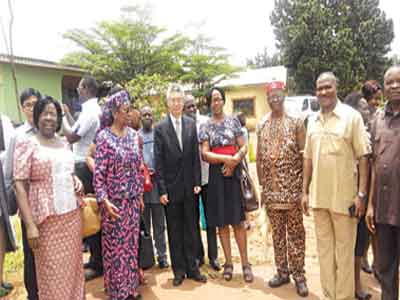

A REPORT from the World Bank on sustainable education has identified school meal programme as “social safety nets that could provide educational and health benefits to vulnerable children” in the society. The report said the scheme would increase enrolment rates going by the number of out-of-school children roaming the streets, especially in third world countries; improve food nutrition and overall health indices among children.
The implication of the bank’s report is that for education to be impactful, the child must be healthy to receive it, no matter his or her location. It is against this background that a non-governmental organization, the Pan African Community Initiative on Education and Health (PACIEH) in 2013 kicked off the school meal programme for public primary schools in Enugu and Anambra states.

Although the programme is running in four rural schools in both states, investigations by The Guardian show that the initiators of the project have capitalized on the sorry state of education, especially in Enugu State where there is general apathy for public schools. It was gathered that after moving round some schools, especially in the rural areas, it was obvious that they had been abandoned to the poorest of the poor due to government’s neglect.
The organization then decided to implement the scheme aimed at restoring confidence. A closer look at Enugu will reveal that running private schools have become the order of the day due to alleged poor management and government neglect of public schools. Although government, in an attempt to redress this situation, had a few years ago introduced free education at the primary to junior secondary levels, the situation has not yielded the required results as low enrolment has continued to bedevil public schools.
Two years ago therefore, four primary schools were chosen: Community Nursery and Primary School, Oma-Eke and Central Nursery and Primary School, Eke, both in Udi Local Government, Enugu State and Central School, Afor-Agu and Salvation Army Nursery and Primary School, Afor-Agu, in Abatete, Anambra State.
Although it started with just school meal, it came with other components that included paying the benefitting pupils N50 per week. Medical experts also conducted de-worming exercise for the pupils while other private organizations that partnered with the PACIEH provided water and toilets as well as treatment for minor illnesses.
Initiated by a former Director of the World Health Organization’s (WHO) African Programme for Onchocerciases Control, Prof Uche Amazigo, she stated that the intervention would not only boost enrolment figures in rural public schools, but improve healthy and quality learning among primary school pupils, improve relations between communities, government and the private sector.
Amazigo, a nutritionist, invested the prize money she won from the Prince Mahidol Award in 2013 to set up the non-governmental organization, PACIEH that drives the project. The Guardian learnt that the feeding of the school pupils proper began in January last year after the PACIEH team of medical doctors which comprised primarily of doctors from the University of Nigeria Teaching Hospital (UNTH), Enugu, conducted a pre-intervention health needs assessment of the primary school children.
Pupils of the four rural Schools that serve as the pilot sites in Enugu and Anambra states, were subjected to clinical evaluation, with emphasis on medical history, clinical examination of the head and neck, ear, nose and throat.
Other members of the implementation team include Prof Uche Eze; now Commissioner for Education, Enugu State; Prof Nkechi Ene-Obong, Dr Ngozi Njepuome, Prof Obioma Nworgu, Dr Rufina Ayogu, Mr Paul Eme, Mrs Amarachi Ene, Dr Lizziana Onuigbo, Prof Nnadi Onyegegbu and Dr Cheluchi Onuobia.
A year after, the programme appears to have gotten the desired results as investigations reveal that from an enrolment figure of 445 pupils when the programme started, it now feeds 775 pupils in the four rural schools.
This was made possible by the help of the Heineken Africa Foundation/ Nigeria Breweries Plc, the TruValu, the benefiting communities in Enugu and Anambra states, the Partnership for Child Development (PCD) and the Ministry of Education in both states. Some of the schools that were dilapidated at the onset now have newly-built and refurbished classrooms, toilets, wash hand pumps, clean water among other facilities, which were hitherto unavailable.
Thailand’s Ambassador to Nigeria, Mr Chailert Limsomboon last week visited the rural primary schools in Enugu and Anambra states where the programme is running to feel the impact it has made so far.
Limsomboon, who admitted he was fascinated by the project, added: “I think it is important to sustain the programme and the kind of sustainability I will advise is self- sustenance. So, if they can have their own materials from their school garden, they can have chicken in their own poultry farm, then they might not need to rely on anyone or anything outside their relations to make the school meal programme sustainable. Like I also observed, government must restore lost values through this programme”.

