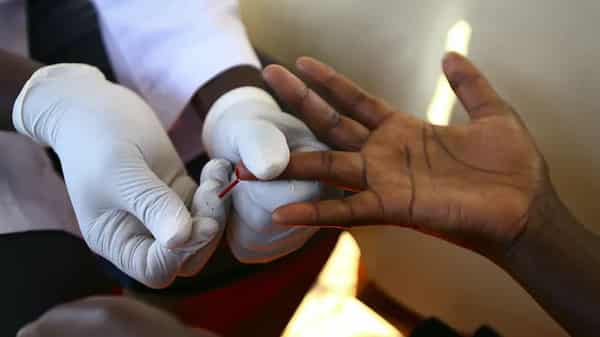
The Nigerian Business Coalition Against AIDS (NiBUCAA) has urged increased HIV screening at border communities, citing the high mobility of people between Seme and neighbouring countries such as Togo and Ghana as a major factor in HIV transmission.
Speaking at NiBUCAA’s 2025 World AIDS Day outreach in Badagry, Lagos, the group’s official, Akorodele Ogundimeya, said Badagry was chosen due to its large, transient population, which makes it a hotspot for key populations and other vulnerable groups. “Badagry’s strategic location makes it a high-risk zone that must not be ignored in the national HIV response,” he said, noting the presence of people who inject drugs and other high-risk groups requiring targeted prevention services.
The initiative combines HIV testing, counselling, health education, and condom distribution to strengthen national efforts to curb new infections, empower residents, and address the vulnerabilities of transient populations. It also highlights the crucial role of communities in achieving both national and global HIV prevention targets.
He said that community engagement, awareness, and routine testing remain critical to reducing new infections and building a healthier Badagry. “If you are healthy, then you can enjoy the dividends of government,” he said.
Ogundimeya acknowledged the responsiveness of the Lagos State AIDS Control Agency (LSACA) but called for increased funding to match the state’s growing population. He also urged private firms to complement government efforts.
He reiterated NiBUCAA’s commitment to the global target of ending HIV by 2030, stating, “We go into communities so people know their status. Once they know, we link them to facilities for treatment, reducing the chances of new infections.”
Representative of the Chairman of Badagry Local Government, Joshua Nunayi, described the outreach as a demonstration of renewed commitment to health education and prevention. He praised the local government for initiatives such as renovating a 24-hour Primary Health Centre at Keta and providing free medical screenings, including HIV tests, at the council secretariat.
Issuing a message to young people, Nunayi stressed personal responsibility and preventive behaviour: “If you want to have intercourse with a partner you don’t trust, you must protect yourself. There are condoms for males and females. Use them.”
NiBUCAA representative, Ngozi Chike, also highlighted the vulnerability of youth, urging regular testing and protective practices. “Fight ignorance. Don’t assume you’re HIV-free. Test every three months. Use protection and avoid sharing sharp objects,” she advised.