 Follow Us on Google News


 Follow Us on Google Discover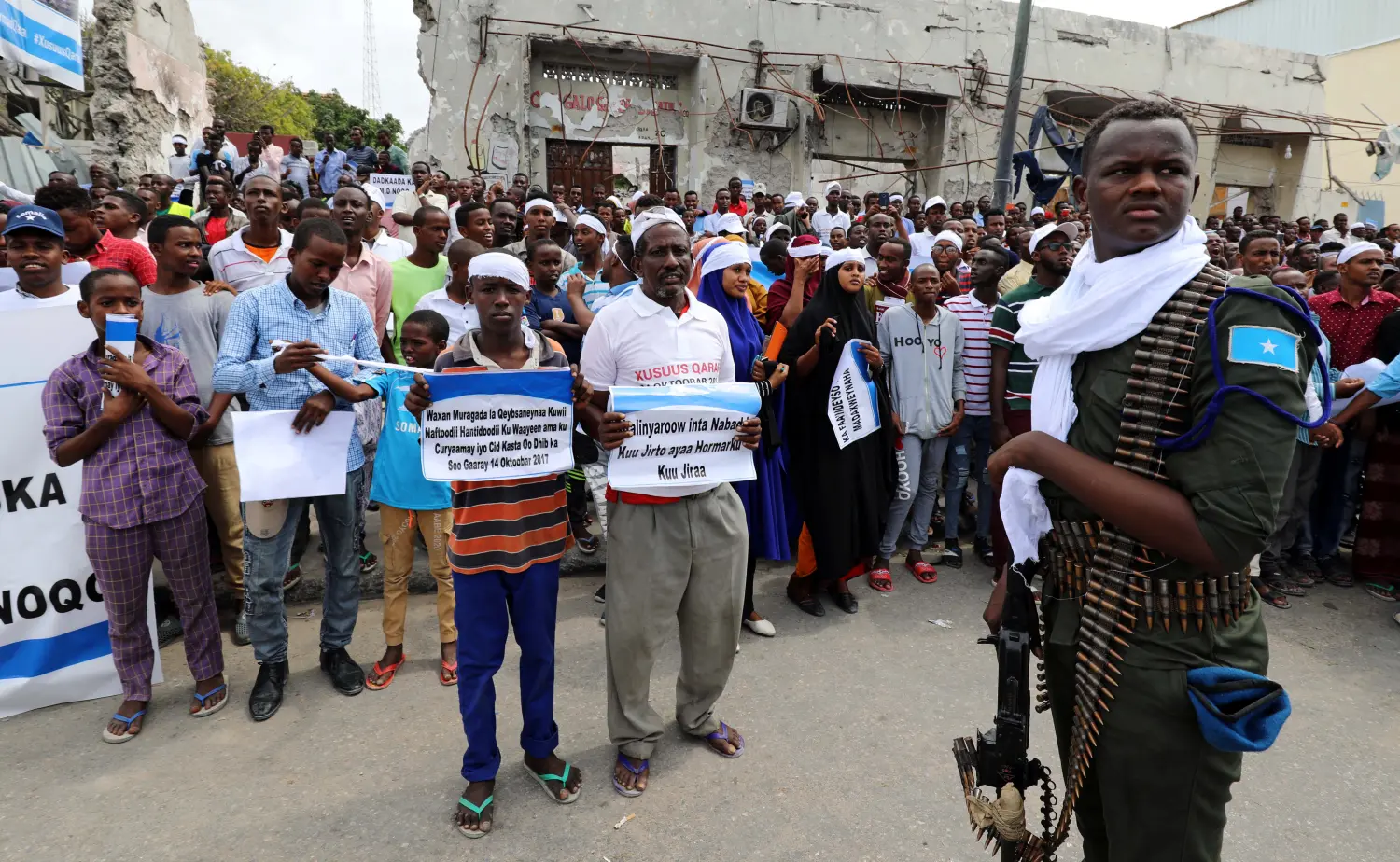

Market traders in Somalia demonstrated for the second straight day on Monday over the implementation of a five percent tax on electronic payments.
[ad]
Some shops in the capital city Mogadishu’s main Bakara market were closed as dozens staged protests over the tax, saying they were already burdened by high tariffs to transport goods into and around the country.
The change would see all merchants irrespective of their business size add a flat five percent extra to electronic transactions, which the government says is needed to fund infrastructure and security.
Somalia is one of the poorest and most corrupt countries in the world, and is also grappling with a long and bloody insurgency by the Al-Qaeda-linked jihadist group Al-Shabaab.
“We are not against the tax, but we need a proper system and a halt to the money being illegally extorted from merchants before we can agree to the government’s instructions,” trader Suleyman Adan told AFP.

Mogadishu resident Fadumo Adan said although a few businesses were open and already implementing the change, she had witnessed dozens of merchants marching “to showcase their dissatisfaction” with the value-added tax (VAT).
Lawmakers have also criticised the levy, which came into effect on Sunday.
“The merchants have already been taxed heavily, imposing more tax on the people without having guiding laws is not fair,” politician Yusuf Gamadid told parliament during a debate on the issue.
[ad]
“We are asking that there has to be a proper law for tax so that the complaints of the public can be addressed,” he said.
MP Faiza Jeyte said the protests also stemmed from a lack of public services.
“The merchants pay tax and when fire catches the market, there is no firefighting services ready to respond to the emergencies, so the question is what has been used for the tax they paid?” she said.
Finance Minister Bihi Iman Egeh defended the VAT which he said was based on a 1984 law, and which had already been passed by parliament.
“This is a transparent tax which goes directly to the ministry account from the payee,” he said.
He said the merchants’ issues had been resolved and that complaints had been based on misunderstandings between them and the government, without giving more details.
Earlier this month tuk-tuk drivers clashed with police as they staged demonstrations in the capital over a proposed increase in licence fees.
[ad]

