 Follow Us on Google News
 Follow Us on Google Discover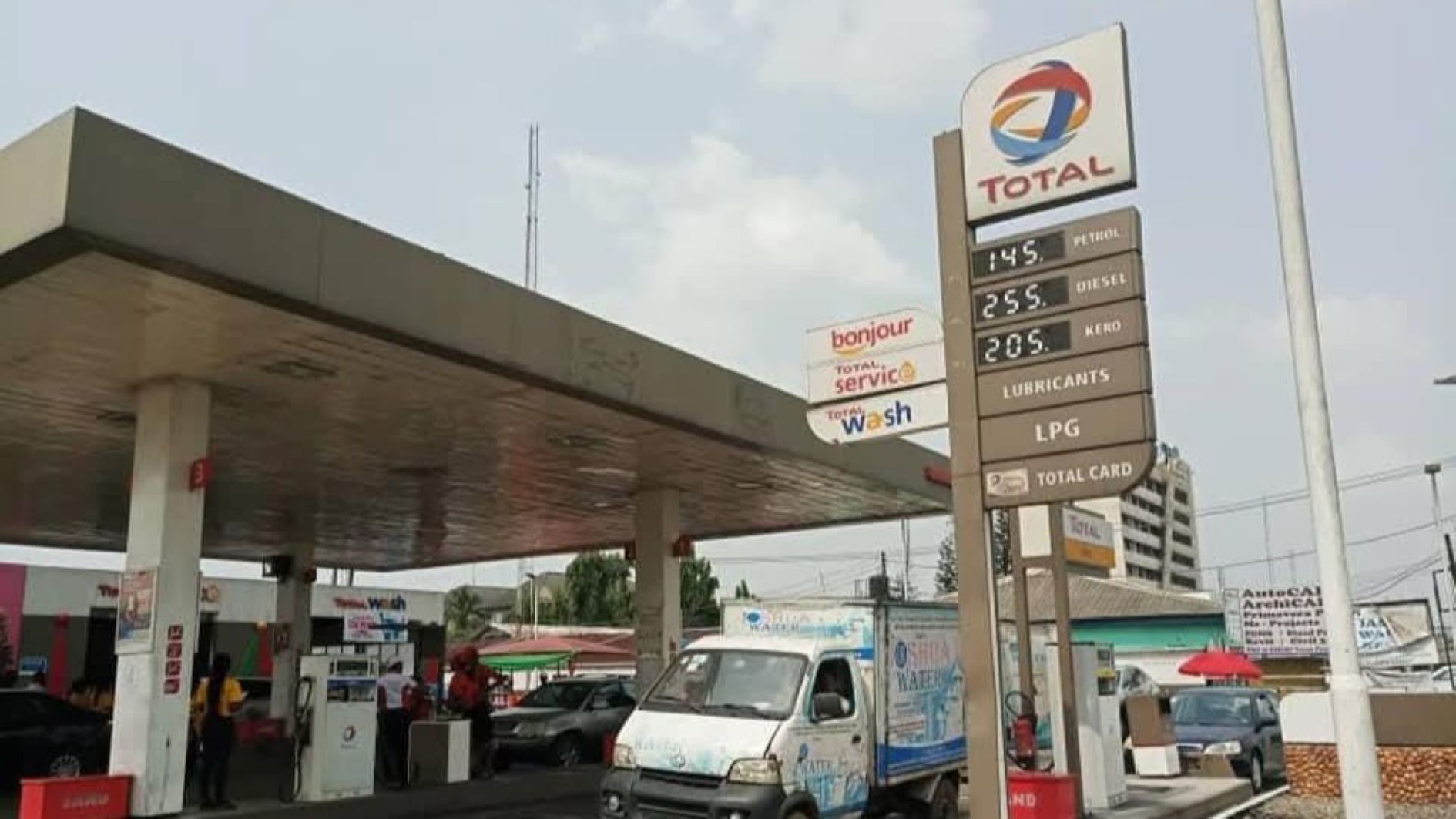
The story of fuel subsidy removal is often told in statistics: billions saved, deficits reduced, revenues increased, inflation accelerated. But behind the figures lies a more complicated national story, one measured not only in economic indicators but also in altered livelihoods, changing business realities, political calculations and public trust. GBENGA SALAU, in this report, x-rayed the gains and pains of subsidy removal by President Bola Tinubu three years after.
When President Bola Tinubu declared that “fuel subsidy is gone” during his inauguration on May 29, 2023, he ended a policy that had shaped Nigeria’s economy, politics and social contract for decades.
Supporters hailed the decision as a bold and necessary reform, arguing that fuel subsidies had become a massive drain on public finances, encouraged corruption and fuel smuggling, and distorted the downstream petroleum market.
Critics, however, warned that millions of Nigerians would bear the burden of a reform introduced without adequate social protections or economic buffers. Three years down the line, both sides can point to evidence supporting their positions.
On one hand, government finances have improved. The World Bank estimates that fuel subsidy payments cost Nigeria about N4 trillion in 2022 and were projected to exceed N6 trillion in 2023 before the policy was scrapped. Since the removal, revenues accruing to the Federation Account have increased significantly, boosting allocations to federal, state and local governments.
The International Monetary Fund (IMF) has repeatedly described the subsidy removal as one of Nigeria’s most important macroeconomic reforms, citing its contribution to fiscal sustainability and investor confidence.

On the other hand, the social cost has been severe. According to the National Bureau of Statistics (NBS), the average retail price of petrol rose from ₦238.11 per litre in May 2023 to above ₦1200 per litre in many parts of the country by 2026. The increase triggered higher transportation costs, food inflation and rising production expenses across the economy.
For many Nigerians, the policy has come to symbolise a period of economic hardship marked by soaring transportation costs, rising food prices, shrinking real incomes and declining living standards.
Development partners estimate that more than 31.8 million Nigerians now face acute food insecurity, with rising costs linked partly to subsidy removal and broader economic pressures.
For Chichi Okafor, a sales attendant at ASPANDA Market in Lagos, the impact has been deeply personal. Okafor said her monthly earning was N45,000 in 2023; although she now earns N60,000 she is not better off as the increase is not commensurate with the hike in prices of other daily consumables between 2023 and now. As a result, she is now more troubled navigating through life and lives on a support system to survive monthly.
According to her, immediately President Bola Tinubu announced removal of subsidy, the pump price of fuel increased and transport fare between Mile 2 where she stays and Trade Fair where her workplace is located got increased by almost 100 per cent. She stated that the U.S.-Iran war has further compounded the situation, disclosing that transport fare between Mile 2 and Trade Fair, which was N200 before subsidy removal, has gone up to between N400 and N500 and occasionally N700 especially during peak period. According to her, the fare increases to N1000 when it rains during peak hours. She added that a plate of rice in the market before subsidy removal was N500 but it is now N1000 with even a smaller meat.
Okafor stated that the removal of subsidy affected her daily cost of living/household finance so much as it did to many Nigerians.
“Imagine buying gas for N900 and now is almost N2000. In Balogun/Trade Fair Market, hardly would you get a plate of fufu for N1500. Even roasted yam is between N300 to N500 per cut,” she said.
One of the things government promised would come with subsidy removal is improved infrastructure. Okafor, however, said not much has been achieved, buttressing it with her experience during a visit to a General Hospital when her late father was ill.
She said: “Imagine visiting the general hospital with my dad in his critical condition and they said no bed. He went to the Neurology Department and he was told the list of patients on appointment is beyond their capacity and so he cannot be attended to immediately. They gave him an appointment to see the neurologist by January 8, 2026, someone who visited the hospital October 20, 2025 and funny enough that was the day my dad was buried.”
Okafor further stated that to cope with the increasing transport fare, she now commutes to work in bigger buses which are cheaper than the small buses called Korope, adding that sometimes she waits for the peak period to slide before leaving for home.
Despite the daily realities of the average Nigerian, the government always bandies the positives of the policy through the data that says before subsidy removal, average GDP was 2.74 per cent but now 3.89 per cent; average inflation rate was 24.66 per cent but now about 15 per cent; minimum wage was N30,000 but now N70,000; total capital inflow was $3.91 billion but now $23 billion; average daily oil output was 1mbpd but now 1.6bpd; gross foreign reserves was $33 billion but now $50 billion, trade surplus was N44 billion but now N7.55 trillion, forex backlog was $7 billion but no more forex backlog.
Commenting on the objective of the subsidy removal, Executive Director, Centre for Social Justice, Eze Onyekpere noted that the principal objective was to free resources previously spent on subsidy payments for investment in education, healthcare and infrastructure.
“Fuel subsidy removal was expected to reduce pressure on public finances and improve budget credibility. However, Nigerians are yet to see commensurate improvements in electricity supply, healthcare delivery, education outcomes or critical infrastructure,” he said.
Also commenting, the Chief Executive Officer, Centre For the Promotion Of Private Enterprise (CPPE), Muda Yusuf, observed that the removal of fuel subsidy remains one of the most consequential economic reforms undertaken in recent years.
According to him, the policy has fundamentally transformed the downstream petroleum sector by dismantling a regime that encouraged corruption, rent-seeking and fiscal leakages.
The reform has also coincided with the emergence of domestic refining capacity led by the 650,000 barrels-per-day Dangote Refinery, which now supplies a substantial portion of Nigeria’s domestic petrol requirements and has helped reduce dependence on imported fuel.
It is reported that the refinery currently supplies more than two-thirds of Nigeria’s estimated daily gasoline demand of 60 million litres.
Supporters of the reform also point to improving macroeconomic indicators. In May 2026, S&P Global upgraded Nigeria’s sovereign credit rating, citing stronger economic fundamentals, exchange rate reforms, increased refining capacity and improving external balances. The World Bank projects Nigeria’s economy to grow by 4.2 per cent in 2026, reflecting improved investor confidence and a more stable macroeconomic outlook.
President Tinubu has similarly argued that the reforms have improved public finances and investor confidence, with over 2,700 kilometres of roads reportedly under construction and increased investments in the oil and gas sector.
To Ifeoma Jackson, a staff of one of the financial institutions, it is a mixed bag of feeling as her salary increased from N77,000 in May 2023 to N250,000, representing an increase of approximately 224.7 per cent.
She, however, acknowledged that the removal of fuel subsidies has significantly increased cost of living as transportation fares, food prices, electricity costs and other basic household expenses have risen considerably, having a massive toll on her salary.
“Although my salary has increased since 2023, the higher cost of goods and services means that a larger portion of my income is spent on necessities, leaving less for savings and other personal goals.
“Personally, I have not seen substantial improvements in public services or infrastructure that directly impact my daily life. While there have been reports of government investments and reforms, many ordinary Nigerians are still struggling with high living costs, making it difficult to feel the benefits of the policy.
“To cope with rising costs, I have become more deliberate with budgeting and spending. I prioritise essential expenses, reduce unnecessary purchases, buy food items in bulk when possible, and look for ways to minimise transportation and energy costs. I also try to save whenever possible despite the economic challenges.
“I believe the policy may have some long-term economic benefits, such as reducing government spending on subsidies and improving public finances. However, many Nigerians are experiencing significant hardship due to inflation and rising living costs. For the average citizen, the immediate challenges have often outweighed the visible benefits so far,” she said.
On his part, Kanayo Chizea said that her net salary in 2023 before subsidy removal was N526,688.86 but it is now N706,317.40 principally as a result of promotion.
According to him, while his salary has increased by 34.10 per cent, the daily cost has risen by more than 400 per cent.
“You cannot even plan with what you earn because prices are not too stable,” he noted, saying he had not observed meaningful improvement in public infrastructure or services.
“Every day comes with its own strategy. If you decide to buy things in bulk, no electricity to store fresh things. Basically, the strategy used depends on what is thrown to the citizens.
“For transport, I have to walk longer distances to reduce cost and use more of public transport which is like moving and suffering. I don’t go out often with my car because it is very expensive to do that due to fuel cost.
“For energy, you pay for power you cannot use because of poor supply; you cannot get fuel easily because of price. Solar is out of reach. I had to get solar energy through loan finance because of the heat period. For food, not much strategy here; I buy what I can afford as the day comes based on what I have left. Some days, I have to skip some meals for the next day,” Chizea said.
He maintained that so far, subsidy removal has not benefited Nigerians.
“The subsidy was being enjoyed by all; now the removal is being enjoyed by a few, mostly elected and appointed politicians and their associates,” he claimed.
According to him, the floating of the naira and removal of subsidy should not have been done at the same time.
“One should have been done first and the impact seen before knowing if the other should follow immediately or not,” he said.
Also sharing his experience, Babatunde Balogun said between 2023 and now his salary has doubled basically because his organisation is more or less linked with oil and gas sector.
“You may not say the same for those in the private sector or in civil service. Subsidy removal also pushed up the inflation figures upwards, since our economy is highly dependent on oil. The cost of basic food items rose by close to 50 per cent within the first six months, same with household items, transportation and all other manufactured goods and services since oil and gas are the major components of production cost.
“It therefore means additional cost of mobility to work, indirect salary reduction. As for households, cooking gas stands at N1,840; the price of kerosine is alarming. Some families have long reduced their meals to twice daily.
“Coming to basic infrastructure, electricity has not improved; same for the health and education sectors. A couple of roads are being reconstructed. However, the cost of living does not make government efforts look impressive if at all there is any effort,” Balogun said.
To cope with inflation caused by subsidy removal, he said he has been cutting down on luxurious goods or items, including reducing expenditure to only necessities.
“A lot of car owners are now using public transport or hired vehicles to mitigate the inflationary impact. The subsidy removal was necessary due to mismanagement of the subsidy regime. Government was unable or unwilling to unravel the theft in subsidy arrangements and it cost trillions of revenues. Removing subsidies means freeing up resources for more pressing national needs. However, the savings made and recovery have not been properly utilised for development purposes.
“The states get more money from FAAC disbursement, yet one sees little or no changes in most of the sub-nationals,” he added.
Commenting on the extent the subsidy removal policy has achieved its stated economic and fiscal objectives, Onyekpere said Nigerians were told that between N6 trillion to N7 trillion saved from subsidy will be invested in education, health, critical infrastructure as well as reduce the sums to be borrowed to fund the deficit.
“However, the Tinubu administration met the debt at N87.3 trillion and increased it to over N159 trillion,” he noted, adding: “Investments in education and health have not improved and Nigerians still enjoy critical darkness as electricity firms fail to power homes and industries. Other critical infrastructure has not been improved since then.
“Fuel subsidy removal was also expected to introduce some measure of credibility and certainty in our budgeting process considering that the quantum of subsidies could not be determined during expenditure forecasts. It fluctuates based on the price of crude and refined petroleum products and therefore inhibits proper expenditure forecasting. With fuel subsidy removal, budget credibility is still not restored.”
On the most significant unintended consequences of subsidy removal for households, businesses, and the broader economy, Onyekpere said that there are no unintended consequences in fundamental policies such as subsidy removal because every policy maker should anticipate the natural consequences of his policy.
Also commenting, Yusuf noted that the policy has fundamentally transformed the downstream petroleum sector by dismantling a regime that for decades encouraged corruption, rent-seeking, fiscal leakages and large-scale market distortions.
“The reform effectively stopped the haemorrhage of public resources through subsidy payments and curtailed the smuggling of petroleum products across Nigeria’s borders. For years, Nigeria was inadvertently subsidising fuel consumption in neighbouring countries at enormous cost to its own economy. That unsustainable chapter has largely been closed.
“Perhaps most importantly, subsidy removal has brought greater transparency, accountability and market discipline to the downstream oil sector. A sector once defined by opacity is now increasingly driven by commercial realities,” he said.
According to him, the fiscal benefits of the subsidy removal have been substantial, as resources previously consumed by subsidy payments are now available for developmental priorities.
“Federal, state and local councils have witnessed significant improvements in revenue flows, creating greater fiscal space for infrastructure, social services and economic development.
“The reform has also strengthened investor confidence. By eliminating a major market distortion, it has improved the attractiveness of investments in petroleum refining, storage, logistics and distribution. Investors are more willing to commit capital when pricing is transparent and market fundamentals are allowed to work,” he said.
Yusuf also noted that one of the most important outcomes of subsidy removal is the emergence of a more viable domestic refining industry with refining investments now operating within a more predictable commercial environment.
“The growth of local refining has reduced dependence on imported petroleum products, lowered foreign exchange demand for fuel imports and strengthened prospects for energy security. This is a major step towards economic self-reliance and a more resilient energy ecosystem.
“The benefits extend beyond the petroleum sector. Reduced fuel imports support foreign reserve accretion, improve the balance of payments and contribute to exchange rate stability,” Yusuf observed.
In response to the economic hardship that followed the removal of fuel subsidy in 2023, both the federal and state governments introduced a range of palliative measures aimed at easing the burden on households, workers, farmers and businesses.
At the federal level, the government announced cash-transfer programmes targeted at vulnerable households, supported in part by an $800 million facility from the World Bank. The objective was to provide direct financial assistance to millions of low-income Nigerians who were expected to be most affected by rising transportation and food costs. The Federal Government also introduced temporary wage awards for federal civil servants, approved funding for mass-transit schemes using compressed natural gas (CNG) buses, and created intervention funds for small businesses, manufacturers, farmers and students. Additional measures included agricultural support programmes intended to increase food production and reduce food inflation.
The Federal Government further released palliative funds and food items to state governments. Each state and the Federal Capital Territory (FCT) received financial support and truckloads of rice to distribute to residents. The National Economic Council approved N5 billion for each state to procure food items such as rice, maize and fertilisers, while additional grants and loans were provided to help states implement local relief programmes.
At the state level, governments adopted different approaches depending on local needs and available resources. Many states distributed food items, particularly rice and other staples, to vulnerable households. Several states provided cash grants or transport subsidies, while others introduced special allowances for civil servants. Some governments reduced working days for public workers to lower commuting expenses, subsidised public transportation or increased support for local transport operators. States such as Delta also paid outstanding salary and promotion arrears, explored CNG-powered transport initiatives and expanded employment opportunities as part of their cushioning measures.
In addition, a number of states implemented programmes for farmers and small-scale entrepreneurs by distributing fertilisers, farm inputs and soft loans.
Speaking to how effectively the government has utilised the fiscal savings generated from subsidy removal, Onyekpere said essentially resources have been freed up to be “mismanaged” as there is increasing predominance of both debt and non-debt recurrent expenditure.
His words: “With more borrowing, debt service obligations have increased while more slush funds have been created for recurrent non-debt expenditure. Capital budget implementation since 2023 has remained less than 30 per cent yearly and even when carried over to the next year has achieved less than 50 per cent implementation.
“Fiscal transparency at the federal and state levels has decreased and the few capital projects that have been started were done without feasibility studies and procurement due process. They are obviously inflated contracts – the Lagos Calabar Coastal Highway.”
On his part, Yusuf noted that every major reform has its costs, stressing that fuel subsidy removal is no exception.
He stated that the sharp increase in petrol prices triggered higher transportation, logistics and distribution costs across the economy.
“These cost pressures quickly filtered into food prices, production costs and the prices of essential goods and services. The result was a significant inflationary shock which eroded purchasing power and aggravated poverty,” he noted.
He stated that for millions of Nigerians, the immediate experience of the reform has been one of economic pain. “This reality cannot be ignored,” he admitted.
On the complementary policies that have been most successful or most lacking in mitigating the impact of subsidy removal on vulnerable populations, Onyekpere noted that unlike previous administration when mitigating policies such as SURE-P, PTF among others that were announced with such reforms, fuel subsidy removal was announced without any mitigating policy.
“The outcry of Nigerians led to half-hearted attempts at mitigation such as the compressed natural gas initiative, etc. Of course, the policy was implemented more on the pages of newspapers than in the life of Nigerians. Again, the continuation of cash transfer policies is still subject to opaque rules and management. It has not improved the livelihoods or purchasing power of the poorest of the poor.
“Health laws and policies on compulsory health insurance and Vulnerable Group Fund have not been implemented,” Onyekpere stated.
However, Yusuf insisted that the challenge is not the reform itself, but the adequacy of measures to mitigate its social consequences.
He argued: “The most effective response lies in aggressive investment in mass transit systems and modern rail infrastructure. Transportation is the transmission mechanism through which fuel prices affect virtually every aspect of economic life.
“Reducing transport costs is therefore one of the most powerful tools for moderating inflation and improving welfare. A modern and efficient rail network can dramatically lower logistics costs, enhance the competitiveness of businesses, facilitate the movement of goods and reduce pressure on road transportation.”
“Similarly, expanded and affordable mass transit systems can significantly reduce commuting costs for households. The ultimate test of reform is not merely the elimination of distortions; it is the ability to improve the quality of life of citizens.”
On key lessons policymakers should take from Nigeria’s subsidy removal experience when designing future economic reforms, Onyekpere said, is the need for sequencing of reforms.
“Fuel subsidy and naira floatation were announced less than six months of each other and they were all hardship inducing. There is the need to sequence reforms based on the hardship absorptive capacity of Nigerians – the level of poverty, purchasing power, other mitigation policies, etc. In medical parlance, this informs the reason for performing surgeries with anesthesia.
“The second is that reforms ought to be implemented within a learning curve that monitors implementation on an ongoing basis, thereby providing opportunities for course correction during implementation. This was lacking in the fuel subsidy reforms.
“The third is that local refining capacity to at least satisfy the domestic market should have been guaranteed before the removal of fuel subsidy. The Nigerian Labour Congress (NLC) made this point over the years in their position papers of fuel subsidy removal but no one listened.
“Finally, the mistake or fallacy of equating or elevating an activity or output as a result, impact or outcome happened in fuel subsidy removal. The reform objectives and results have not been kept in view and appear missing from the overall picture and emerging narrative. Nigerians have harvested suffering but investments in growth and regenerative goods and services as well as public finance management has not improved,” Onyekpere said.
To Yusuf, there is a need to protect domestic refining investments, as it would be economically counterproductive to celebrate billions of dollars invested in local refineries while exposing them to unfair competition from imported petroleum products that enjoy regulatory and cost advantages.
“A carefully designed tariff and regulatory framework is necessary to support domestic refining, deepen backward integration, conserve foreign exchange and strengthen Nigeria’s energy sovereignty. No nation achieves industrial transformation by undermining its strategic investments.
“On balance, fuel subsidy removal has delivered significant fiscal, macroeconomic and investment benefits. It has stopped a major drain on public finances, improved transparency in the downstream sector, boosted investor confidence and created a stronger foundation for domestic refining.
“Yet the reform will be judged ultimately by its impact on citizens’ welfare. The gains are real, but so are the pains. The next phase of the reform agenda should therefore focus on converting fiscal savings into visible improvements in public transportation, rail infrastructure and social welfare. Only then can the benefits of the reform be broadly shared and its long-term sustainability assured.
“Economic reforms may stabilise an economy, but it is inclusive welfare gains that secure public support and enduring success,” Yusuf said.
Recently, the Special Adviser to President Tinubu, Bayo Onanuga, while defending the economic policies of Tinubu during a television interview, said, “I don’t see the level of hunger Nigerians complain about.”
The comments prompted strong reactions across Nigeria with many saying Onanuga was far from the everyday realities of the average Nigerian.

