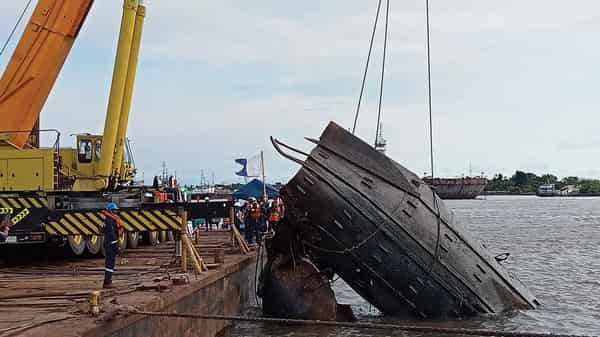
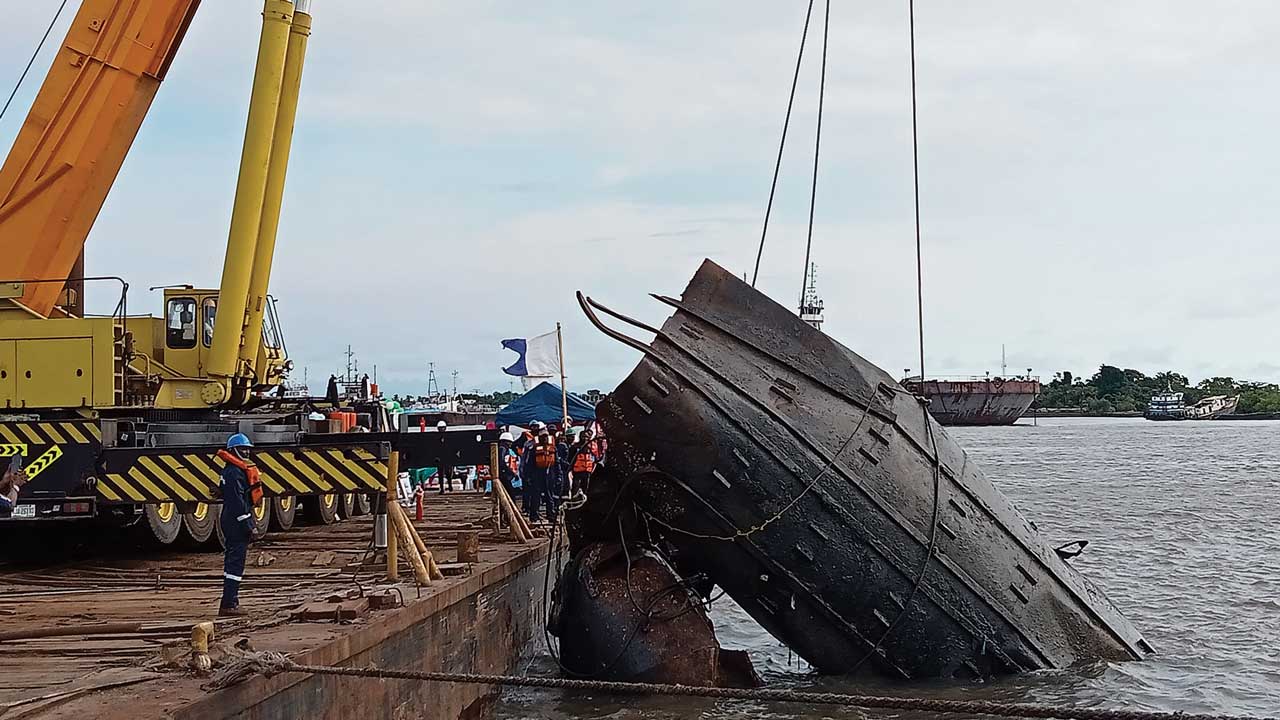
There are concerns over about 3, 000 wrecks and derelicts littering the nation’s waterways. The wrecks, which have been abandoned, threaten the safety of the country’s maritime transportation.
Consequences of wrecks and derelicts include several maritime accidents, which involve human casualties and businesses with huge financial costs to the country.
Other consequences of wrecks include danger to navigation of vessels along channels, damage and degradation from oil leakages from abandoned vessels, which cause additional pollution risks from chemicals and hazardous materials on-board the wreckage.
The International Maritime Organisation (IMO) had mandated coastal states to, as a matter of responsibility, remove wrecks from their waterways.
The IMO adopted the Nairobi International Convention on the removal of Wrecks, 2007, which states, inter alia, “pursuant to the draft convention, the coastal states will have the power to order the removal of wrecks outside their territorial waters.”
However, the various efforts to remove wrecks from the nation’s waters have not been successful over the years as the problem has never been addressed holistically, according to the Director-General of the Nigerian Maritime Administration and Safety Agency (NIMASA), Dr. Bashir Jamoh, in one of his articles published in The Guardian.
This, according to him, is so because the agencies, mandated to carry out this responsibility according to their statutes have acted solo, resulting in a lack of coordination of activities in the discharge of this common responsibility.
The agencies are NIMASA, Nigerian Ports Authority (NPA), and the Nigerian Inland Waterways Authority (NIWA).This is just as 10 months after NIMASA flagged off the removal of critical wrecks from Tin Can to Badagry waters in Lagos, there has been no other wreck removed despite the high expectation that greeted the ceremony.
Recall that NIMASA, Nigerian Ports Authority (NPA), National Inland Waterways Authority (NIWA) and Lagos State Waterways Authority (LASWA) had last year, flagged off the first phase of the National Wreck Removal Exercise to rid the nation’s waterways of over 3,000 identified wrecks and derelicts.
The N30 billion wreck removal and recycling market exercise was divided into four phases including the Badagry-Tin-Can Island axis, Western Zone, Eastern Zone with headquarters in Port Harcourt, and Central Zone headquartered in Warri.
The director-general of NIMASA had also said the agency would issue a marine notice to the owners of abandoned vessels on the waterways to pick them up, noting that failure to remove them after the expiration of the time frame, the agency will remove, auction and recycle them.
But this has not been the case as dozens of abandoned shipwrecks and barges litter Lagos waterways and other coastal waters across the nation, without efforts to remove them.
The Guardian had reported that many abandoned fishing trawlers and barges are littering the Kirikiri Lighter Terminal (KLT) waterfronts in Lagos, thereby constituting danger to moving crafts along the waterways, which play host to a large volume of cargoes from the mother ports, namely the Lagos Ports Complex (LPC) Apapa and Tin Can Island Port Complex (TCIPC).
According to an investigation, most of the vessels have been deliberately abandoned for about a decade while others have been on the spot for years due to court injunctions. Others were moved there for repairs, maintenance and detention by regulatory authorities.
According to sources, some of the vessels are there with nobody questioning the abandonment, which poses danger to aquatic lives and navigation of smaller boats, despite the presence of NIMASA within the Kirikiri Lighter Terminals waterways.
It was also discovered that several calls placed to government agencies on the evacuation of some of the critical wrecks along the waterways were never honoured.
Another is the patrol gunboats in the fleet of Global West Vessels Specialists (GWVS), NIMASA/Barugu, which was acquired 10 years ago, that sank on April 3, 2022 at the Kirikiri Terminal.
The boat has remained in the water as the Assistant Director, Public Relations, Mr. Osagie Edward, had said it had been a subject of litigation with the Economic and Financial Crimes Commission (EFCC), thereby adding to the number of wrecks in the waterways.
Recall that sources at the House of Representatives, had earlier this year alleged that 90 abandoned ships seized by the EFCC were sinking in waters across the country, while many of those temporarily and permanently forfeited by suspected corrupt persons were rotting away due to lack of maintenance.
The sources said the security agency mandated to oversee the seized, recovered or forfeited assets, had no budgetary provision to maintain them, leaving them damaged and eventually submerged in the waters.
The Managing Director, NPA, Mohammed Bello-Koko, had during the flag-off ceremony, said the presence of wrecks on the waterways has been a hindrance to the authority’s operations.
He advised NIMASA to start with the removal of critical wrecks, especially those that are within one kilometer away due to sedimentation, which causes impediments to the water channels.
“It is important that we recognise that there are a lot of abandoned vessels on Nigerian waters. And those vessels that are abandoned today may end up becoming wrecks shortly. Therefore, there should be data, which is already available but needs to be updated. While marine notice should be issued to owners of those abandoned vessels to either take them away or a legal provision made to enable NIMASA to auction them,” he stated.
The General Secretary, Association of Bonded Terminal Operators of Nigeria, Haruna Omolajomo, who is also a barge operator, said these wreckages occupy lots of waterways or space and make manouvering of barges impossible.
He said of all waterfronts in Lagos, that of Kirikiri, running from Tincan port to Mile 2 seems to be the worst as the wrecks pose a looming and serious danger to users and their moving crafts.
Omolajomo said it is a known fact that some of the abandoned barges and trawlers are there because they are abandoned by their owners, some due to court cases, some for repairs and others for maintenance or detention by the regulatory agencies.
He said the wrecks of trawlers and barges that litter Kirikiri waterfronts should be a thing of concern to every stakeholder of the maritime industry, noting that for years, all concerned maritime regulatory agencies have been contacted to do something about this, with no response from any of them.
Meanwhile, an investor in ship recycling, the Managing Director of Raji Industries, Abdulnasir Raji, had disclosed that there are about 200,000 tons of iron and steel presently buried underwater in Nigeria.
Raji, who was present at the wreck flag-off exercise, estimated the value of the wrecks to be worth over N30 billion while soliciting the opportunity to acquire some of it for recycling that would be used for the building of infrastructure in the country.
He said the removal of wrecks will not only ensure safe navigation of vessels on waters but would also enable the creation of thousands of jobs for Nigerian youths if properly harnessed.
“We buy wrecks and old ships and we recycle them and use them to construct other infrastructure like iron doors, pipes which are used in building constructions. If Nigeria would allow, we would like to buy some of the wrecks to recycle and use them internally for Nigerian industries,” he had said.
When contacted on the status of wreck removal and the recycling process, Raji said he was not sure if wrecks have been removed after the ceremony, neither any sale nor purchase of any from Lagos waters by NIMASA. He said his company was not given any contract and as such, cannot ascertain that the wrecks have been removed.
“I am not sure, I was not given any contract, so I can’t speak on that, I don’t know if they have removed the wrecks,” he said.
However, stakeholders, especially ship owners and master mariners have alleged that the flag-off ceremony is yet another phantom exercise.
In a chat, a ship owner, Deji Abegunde, described the flag-off ceremony on wreck removal as a means of siphoning money.
He alleged that this is not the first time the industry will be witnessing such a flag-off, after which he said nothing will be done.
“I think the flag-off is just a means to siphon money, at a point the money will just disappear. I believe whatever NIMASA is doing now is still one of those things.
On his part, another ship owner, Taiwo Akinpelumi, said the industry stakeholders have over the years been hearing about wreck removal, noting that up to date, they are yet to witness any wreck being removed from the waterways.
“We have been hearing about wreck removal, but sincerely up till now, we have not seen any wreck removed,” he said.