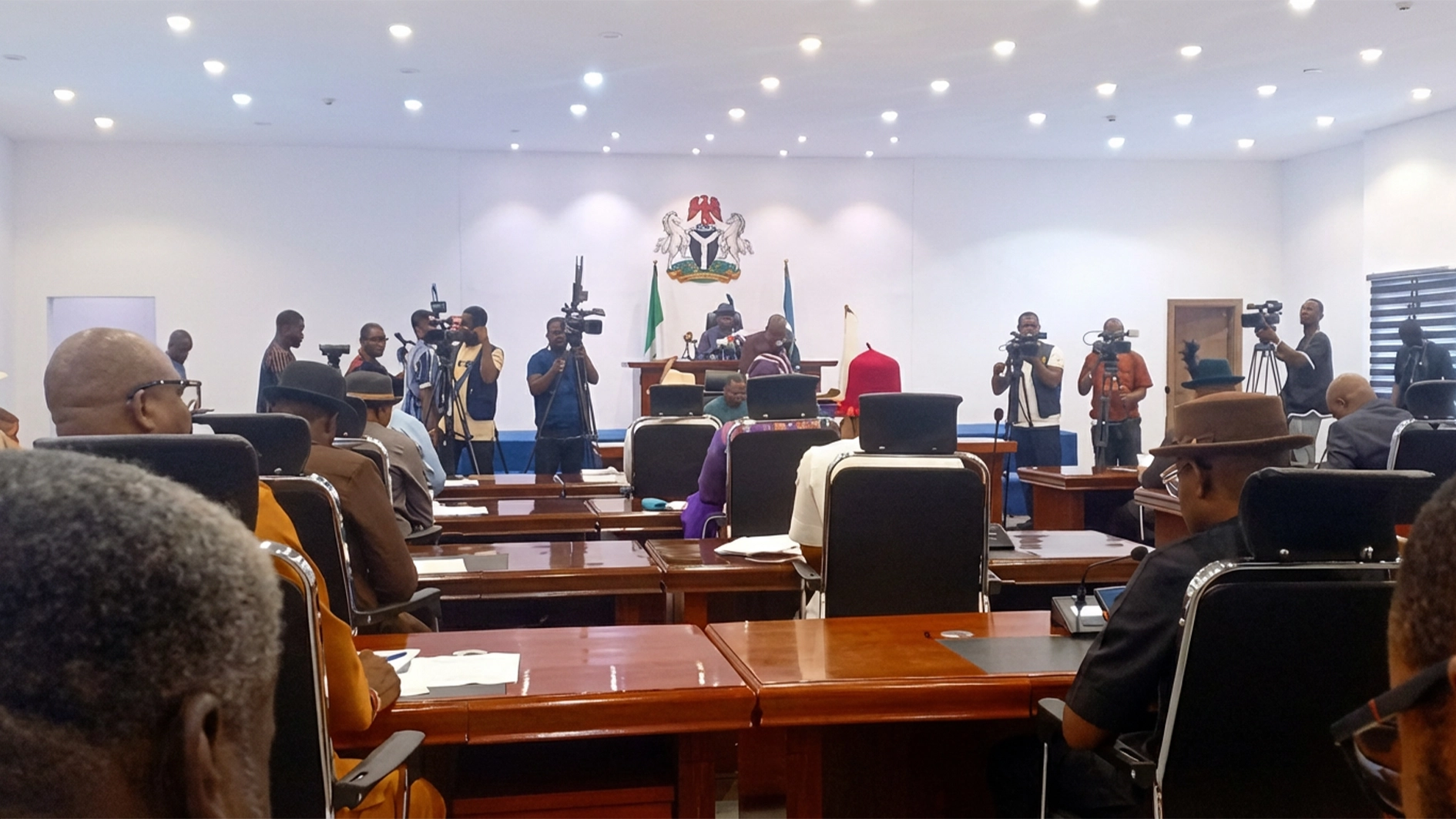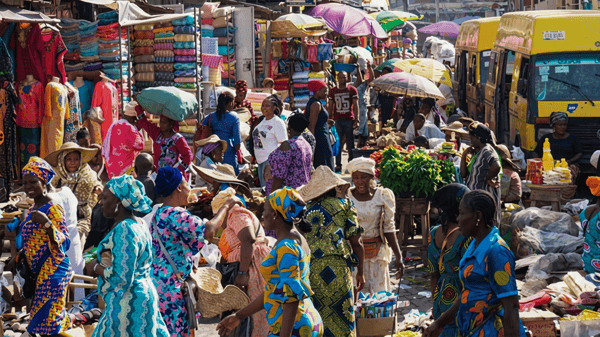
As countdown to the Yuletide season continues, there appears a sigh of relief in all fronts, as the soaring travel and food costs, which made the period expensive and financially draining last year, seemed to have gradually eased, writes GBENGA AKINFENWA.
Mrs Bukola Ojo, a fashion designer based in Egbeda, a suburb of Lagos, is earnestly looking forward to this year’s Christmas celebrations to make up for last year. “Last Christmas was a ‘nightmare;’ it was the worst since I grew up,” she said.
Ojo remarked that her household could only manage to cook the normal meal and had to do away with the yearly ritual of buying cloth, shoes and gifts for children and loved ones.
“We could not engage in the usual trip to our hometown because of the cost of fuel, which jumped from over N100 to about N1000; we decided to stay back. The option of taking commercial buses was also not a reasonable alternative because the average intra-city and inter-city transport fares went up by as much as 45 per cent or more.
“Cost of food commodities and other variables seem to have eased a bit; I am looking forward to celebrating this season with the usual fanfare,” Ojo said.
Like Ojo, Mr Chibuzor Okoh, a native of Oko, Anambra State, and a spare parts dealer in Alaba market also speaks of the possibility of visiting his hometown this year. “Since I relocated to Lagos in 2005, it’s only during the Christmas season that I usually travel home to reconnect with my extended family, where we usually organise a big party,” he said, adding: “I’m preparing to travel, and also, to buy a few things for my people, no doubt, this year’s celebration is going to be better.”
He said: “Last year was an exception, aside from the high cost of transportation, we didn’t make good profit as the prices of goods were high and patronage was low. Unlike in previous years, many of our people opened their shops during Christmas season, yet, there was no difference.”
Felicia Akubundu, a teacher, said: “The soaring high costs of living drained Christmas joy for many families in the country.”
While the cost of transportation, including flight went up astronomically, prohibiting many Nigerian families from travelling home, the cost of foodstuff and other commodities took smiles away from homes. To crown the tragedy of 2024, it was the year many landlords choose to increase rents indiscriminately.
At the period, the most common staple food – rice faced a surge in price, moving up as high as N125, 000, far higher than the minimum wage of N70, 000, and beyond the reach of many families. The same fate befell other commodities, including livestock, which was a no-go area for many households.
For instance, a matured broiler chicken went as high as between N40, 000 and N50, 000, while average-size goat was sold around N120, 000. These made the festive season to lose its cheer.
Basically, these were attributed to President Bola Tinubu’s economic policies that had a mixed and highly debated effect on prices of goods, with initial reforms leading to significant price surge and a cost-of-living crisis.
These policies, according to industry watchers, contributed to the general inflation rate climbing to over 40 per cent and food inflation reaching a high of 40.53 per cent in April 2024, pushing millions of Nigerians into deeper poverty.
Ojo, Akubundu and Okoh may have reiterated what many people across the country felt last year, the atmosphere is putting on a sprightly appearance this year. The jingle bell song began echoing earlier than expected.
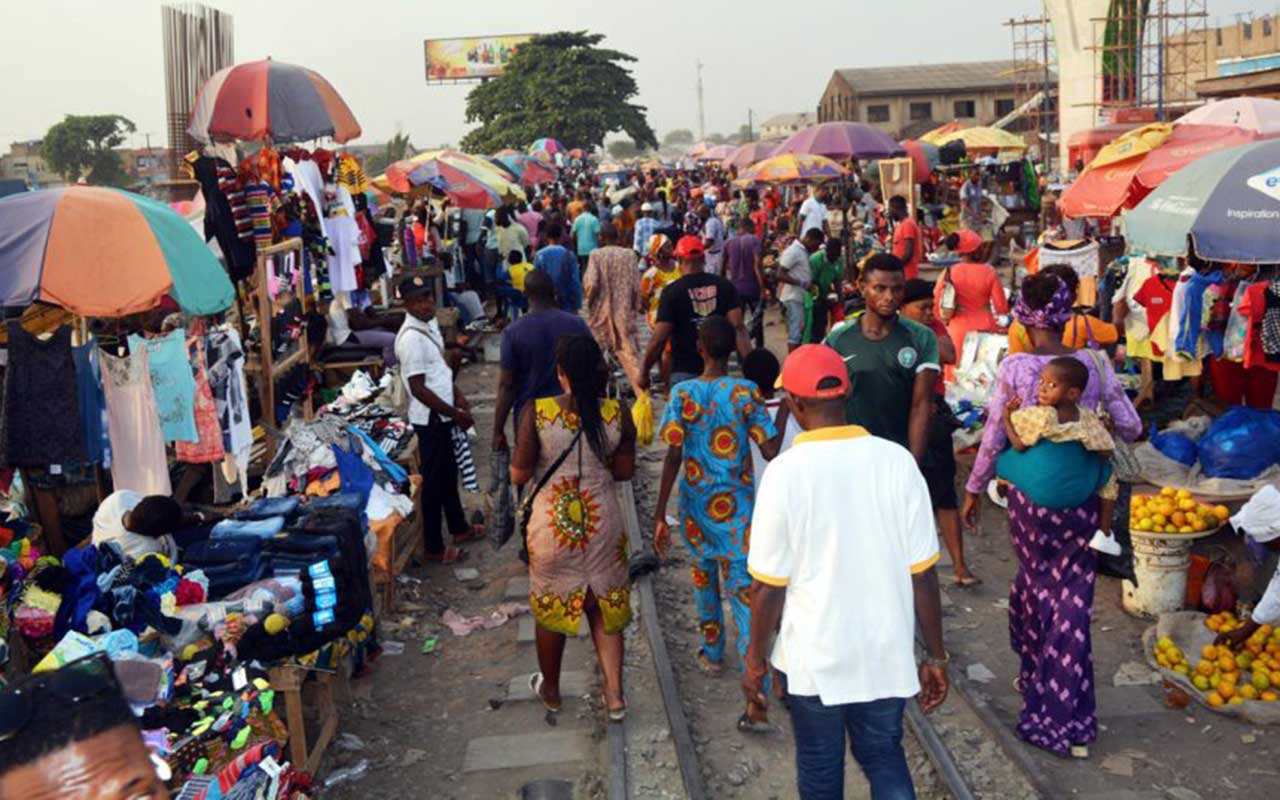
From Oshodi to Abeokuta, Ibadan, Port Harcourt, Uyo, Onitsha, Owerri Abuja and other parts of the country, available statistics across markets in the country show there is a drop in food prices compared to last year.
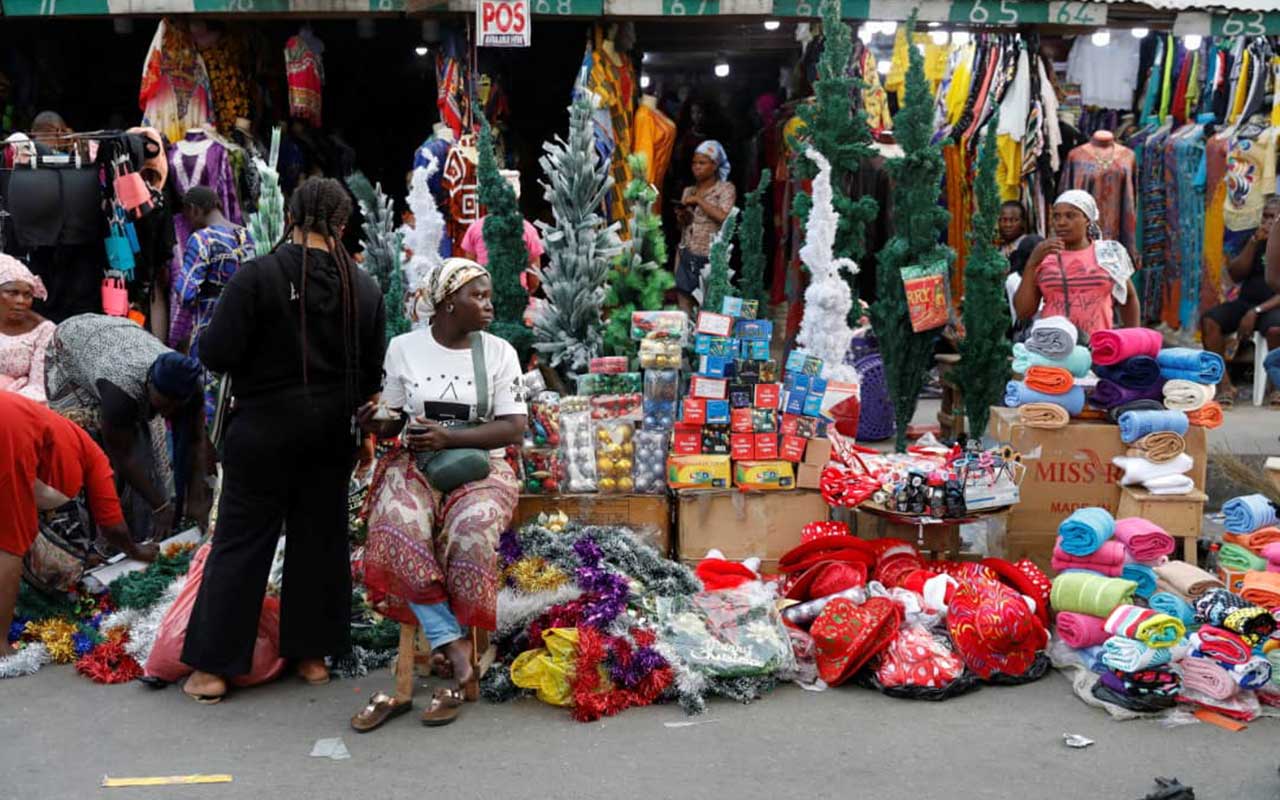
But what seems a paradox is that despite cheap commodities, traders are lamenting there are no buyers, as a lot of Nigerian homes lack the purchasing power.
An economist and policy analyst, Dr Muda Yusuf, who is founder of the Centre for the Promotion of Private Enterprise (CPPE), confirmed to The Guardian that while Nigeria has recorded signs of relief from price pressures since the start of the current administration’s reforms in 2023, the cost of living for citizens remains high and requires stronger structural interventions from government at all levels.
 He explained that the economic reforms introduced in 2023 has had a “significant impact” on household welfare, particularly, in the areas of feeding, basic goods and general living expenses.
By August 2024, there were hunger protests to end bad governance across the country, despite government boasting it had invested N9.74b to procure and distribute food to hungry citizens. Government responded with more palliatives: duty-free importation of maize, husked-brown rice, beans, wheat and cowpeas, for 180 days.
Despite these seemingly humanitarian efforts, food inflation was 39.84 per cent by December 2024. In response, the Federal Government doled out hefty sums to members of the National Assembly to make food available to their constituents – two trucks of food items for each member of the House of Representatives and four trucks for senators.
It was also noted by industry analysts and stakeholders in the agriculture sector that the price drop was also caused by importation of food commodities.
The sharp rise in imports followed the Federal Government’s introduction of a 180-day duty-free window in July 2024, which allowed licensed millers and firms with backward integration programmes to import staple foods such as maize, husked brown rice, wheat, beans, and millet without paying duties, tariffs, or related taxes.
According to Yusuf, though the early months of the reforms were marked by intense pricing pressure, the situation has begun to ease gradually.
The analyst noted that inflation had been decelerating over the period, describing the trend as “disinflation,” and added that some commodities were already experiencing outright price drops, which he classified as “deflation.” He pointed to food items as an example, saying certain food prices had fallen compared to the previous year.
He cited rice as a major indicator, explaining that a bag, which sold for over N100,000 around this time last year now sells between N60,000 and N80,000 depending on the brand and quality.
He added that the moderation in the exchange rate had contributed to the drop in prices of imported goods, with volatility in the market reducing compared to previous years.
Yusuf noted that despite the improvements, prices were still high and had not returned to pre-reform levels. He maintained that while progress had been recorded, Nigerians were still dealing with significant hardship, making it necessary for government to intensify efforts to address the cost of living crisis.
According to him, many of the challenges were structural and required long-term solutions. He identified insecurity and its impact on agricultural production, logistics constraints affecting the movement of food and goods, and high import costs as key drivers of persistent price pressure. He suggested that government may need to review import duties on certain items, particularly manufacturing inputs, to support local production.
The analyst further highlighted rising energy costs, including cooking gas prices, and said these areas required “targeted, specific policy intervention” to reduce the burden on households. He noted that addressing these entrenched issues could not be achieved within two years, given the “legacy challenges” inherited by the administration.
He also called for increased support to farmers through inputs such as fertiliser, improved seedlings, machinery and irrigation schemes, stating that although some of these interventions were ongoing, they were not yet sufficient. He emphasized that sub-national governments must play a more active role in tackling structural and productivity issues rather than leaving the responsibility to the federal government.
With states now receiving higher allocations, he said he expected more of them to introduce measures such as subsidised transportation to cushion the impact of the remaining hardship on citizens. He concluded that while gradual progress had been made, “a lot more needs to be done” to ease price pressures for ordinary Nigerians.
According to the National Bureau of Statistics (NBS) December 2024 report, the average price of 1kg of brown beans sold was N2, 501.32 nationally. This represents a significant year-on-year increase of about 187 per cent from December 2023 prices.
Compared to this time last year, when a 50kg bag of rice sold from around N95, 000 to N120, 000, currently, the same size of 50kg sells for between N52, 000 and N60, 000, depending on the brand and area.
Data from the NBC revealed that agricultural imports stood at N1.04tr in the first quarter of 2025, before climbing to N1.18tr in the second quarter. The second quarter figure represented a 32.6 per cent year-on-year increase from N893.25b recorded in Q2 2024, and a 14.35 per cent rise from Q1 2025.
The policy, designed by President Bola Tinubu’s administration as a stopgap measure against worsening food inflation ended in December 2024. While the government said it aimed to crash food prices, stakeholders insist the initiative failed to deliver relief.
The former National President of All Farmer Association of Nigeria (AFAN), Kabir Ibrahim, argued that the waiver policy triggered massive importation without addressing Nigerians’ weakened purchasing power.
“There must be a rise in imports because there was a 180-day duty-free window. People rushed to import food, but Nigerians have no money to buy it. Even though prices are going down, purchasing power is low, and that is the reality,” Ibrahim said.
The Guardian survey showed that in Mushin and Daleko markets, Lagos, the price of a 50kg bag goes for N53, 000; N52, 000 in Sango, Ogun State; in Delta State – between N60, 000 and N65, 000; Sokoto State – 50kg of foreign rice is sold between N55, 000 and N57, 000, while a 100kg bag of local rice is sold for N92, 000. For Akwa Ibom State, a bag is between N70, 000 to N80, 000, while in Plateau State, a bag of foreign rice goes for N80, 000.
Beans has also experienced a reduced price. Currently, a bag of the commodity is around N70, 000, as against between N90, 000 to over N150, 000 in December in 2024, though the price varies depending on the type of beans and specific market location.
A 25-litre gallon of palm oil is currently ranges from N35, 000 to N65, 000. This varies significantly in price, compared to this time last year, when the same size was sold between N50,000 to over N70,000 with some markets showing figures around N58,000 and others implying higher costs for branded oils, influenced by market fluctuations, brand, and location. Further checks showed that some buyers prefer purchasing in smaller bottles at N4, 500 each instead of big gallons.
A paint-bucket measure of tomatoes that sold as high as N9,000 and above last year now costs N4,000 and below, depending on the area.
Looking at other commodities, for instance, new tubers of yam, which now sell between N2,000 and 3,000 in Benue and Plateau states, were sold as high as between N4,000 to N4,500 in December 2024. In Lagos and Ogun, a sizeable tuber of new yam now sells for between N4, 000 and N4, 300 as against between N6, 500 and N7, 000 last year. In Delta State, the price remains stable, ranging between N1, 800 and N2, 000 per tuber.
Industry watchers give many reasons as responsible for the price slash that has eased the pressure on many Nigerians. Some of the factors listed include –fall in naira to dollar exchange rate, import of more commodities, and many more.
 During the celebration of the World Food Day last October, the Minister of State for Agriculture and Food Security, Aliyu Sabi Abdullahi, attributed the price drop to the various incentives introduced by the Tinubu administration to boost local production.
Recall that two months after President Bola Tinubu assumed office, August 1, 2023 to be precise; the sale to the households at moderate prices of 200, 000 metric tons of grains from the Strategic Reserve was announced.
To boost farming, the Federal Government also promised to disburse 255,000 metric tons of fertiliser and other inputs to farmers who are committed to supporting the administration’s food security agenda. There was to be disbursed, N50b each to cultivate 150,000 hectares of rice and maize, cassava and wheat farms.
Be that as it may, many Nigerians will want more improvement in the cost of living, They noted that the cost of living is still very high. Prices of commodities like groundnut oil, livestock, especially beef and chicken have refused to come down.
A cattle dealer at Gudugba, Ogun State, Alhaji Mufutau Mohammed, told The Guardian that an average size cow is now between the range of N450,000 to N600,000, almost the same price the size was sold last year, noting that the price of livestock generally has remained moderate.
A beef dealer in Oko-Oba abattoir, Agege, Lagos State, Mrs Morenike Bello, who also confirmed the development, said a kilogram of beef, previously sold for N6,000 has increased to between N7,000 and N7,500 because the price of cow kept increasing on daily basis, especially as the yuletide is approaching.
Also, market survey on chickens showed that the price of live chickens is still increasing, majorly due to high cost of feeds. Currently, a matured broiler is selling between N30, 000 to N35, 000, Noiler breed – N20, 000, while old layers sell for between N12, 000 and N14, 000.
Though there was a slight price shift, the price of groundnut oil is still a bit on the high side. A 25-litre keg approximately sold between N90, 000 to N120, 000 on average in December 2024, currently sells between N75, 000 and N100, 000, depending on the brand.
Currently a litre sells for between N2, 000 and N3, 000, 2 litres N3, 800 – N5, 500; 3 litres N5, 800 –N7, 000; 5 litres N9,000 – N12,000; 10 litres N17,000 – N23,000; and 20 litres N33,000 – N45,000.
Though it may be difficult to generalise living expenses of Nigerians, reports have it that the cost of living in Nigeria is yet to be moderate. It is estimated that half of the country’s population lives on less than $2 a day, any slight price increase puts a significant strain on household incomes.
According to the NBS, Nigerians spend about half of their income on food and another 20 per cent on transportation, putting millions in what many described as multi-dimensional poverty.
The Guardian gathered that the cost of living varies wildly by location and lifestyle: from a basic survival level of N150,000 plus, for a family without rent in cheaper areas to needing N300,000 to N400,000 plus per month for a single person in cities like Lagos for a decent living, covering rent between N50, 000 to over N100,000 for a room, food -N30,000 to N50,000, transport, and utilities.
The report indicated that major expenses are housing and food, with significant differences between urban and rural areas, and Southern cities being pricier than Northern ones.
According to analysts, an average monthly estimate varies significantly based on locations. It is estimated that a single person, who lives in Lagos or Abuja for instance, may need between N300, 000 to N400, 000 to survive on a monthly basis.