

For many firstborn daughters, leadership begins long before they understand what it means to lead. They become caregivers, problem-solvers, emotional anchors, and dependable figures within their families, often carrying responsibilities they neither requested nor consciously accepted. Birth order and family responsibilities can shape the expectations placed on children as they grow.
While society celebrates their strength, resilience, and accomplishments, little attention is paid to the emotional demands, personal sacrifices, and unspoken expectations that come with being the first child, born female.
Behind professional achievements, thriving businesses, and seemingly fulfilling lives are a unique demographic of women (by virtue of their birth position alone) learning to navigate family obligations, establish healthy boundaries, embrace vulnerability and, perhaps most importantly, prioritise themselves without guilt.
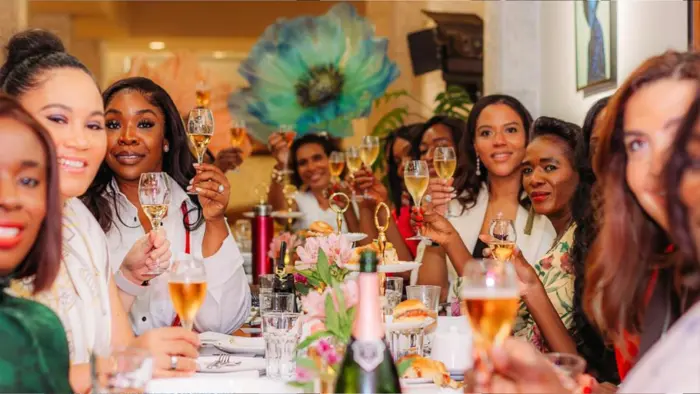
It was against this backdrop that women from diverse professional, cultural and personal backgrounds gathered for The First Conversations, convened by Anita Athena Ibru, Founder, Investing In Women, co-created with Michelle Nwoga at Federal Palace Resort, Lagos, on Sunday, November 8, 2026.
Sponsored by luxury champagne brand Bollinger, the intimate gathering provided a welcoming space for women to unwind, share their experiences, reflect on their journeys and engage in meaningful conversations about identity, responsibility, relationships, personal growth and self-care. Other women’s gatherings have similarly created spaces for shared experiences and conversations about identity and personal growth.
More than a networking event, the conversation offered an opportunity for women accustomed to being everything to everyone to pause, breathe and recognise that their own emotional wellbeing deserves as much attention as the needs of those who depend on them. The importance of caring for caregivers remains an important part of conversations about women’s wellbeing.
For Ibru, the initiative was inspired by her personal journey of understanding what it means to be a firstborn daughter and the expectations that often accompany that position.
Reflecting on her experiences, she recalled how discovering the term firstborn daughter helped her better understand certain patterns in her life, particularly her tendency to offer support to others while struggling to ask for help herself.
Although she had often been perceived as kind and dependable, Ibru admitted that constantly being called upon to resolve family challenges sometimes left her emotionally exhausted, even fed up and impatient because there are just not enough hours in the day to attend to so many matters on behalf of others. She also expressed the juxtaposition of a firstborn daughter being more likely to be branded as having masculine energy than any other female member of the family (if any), having no male sibling ahead of her. Yet she is also expected to be the “mother of the house”? Why not the second father? Surely, that means the expectations of that one particular person in the family are so far-fetched and extreme. This can be confusing and can lead to mixed messages and mixed emotions.
“I realised why I am the way I am, why I don’t seek help when I should, but I’m always helping others, I can’t help it. As a male friend once observed, “I was built to do this,” she shared.
She explained that her desire to explore different countries and cultures had, in some ways, also reflected a yearning for independence from the responsibilities associated with being the family’s dependable daughter.
For her, the much-needed conversations were about encouraging these women to move beyond the expectation of always being strong and instead to embrace a healthier balance between caring for others and caring for themselves. Conversations about burnout and the need to rethink constant exhaustion have also highlighted the importance of personal wellbeing.
Nwoga, who is also a finance professional and the eldest of six children, reflected on more than three decades in the financial sector. She described her career as both challenging and rewarding, particularly as a woman occupying senior leadership positions and navigating the demands of being a firstborn daughter.
The gathering brought together accomplished women across business, finance, media, design, philanthropy, entrepreneurship, international development and the creative industries, whose stories revealed that the experiences of firstborn daughters often transcend geography, culture and professional status.
One of the participants, Joelle, offered a deeply personal perspective on the sacrifices that can accompany being the firstborn daughter. Recounting how her family’s circumstances changed after her father lost his factories during a war when she was 16, she explained that she had to adjust quickly to a new reality in which supporting her family became a significant responsibility.
For years, she prioritised the needs of others, often at the expense of her own wellbeing. However, she said a turning point came when she recognised that continually supporting everyone else without extending the same compassion to herself was no longer sustainable. “To love everyone, you need to love yourself more,” she said.
She challenged the notion that a firstborn daughter’s worth should be measured by how much she sacrifices for others, noting that even highly successful women often struggle with guilt when they are unable to meet every family expectation. “We don’t need to prove anything. We are good. We don’t need to prove anything,” she stressed.
For Joelle, creating a supportive community where firstborn daughters can speak openly about their challenges without fear of judgment is essential. Women-led communities and sisterhood initiatives have increasingly provided spaces for women to share experiences and support one another.
Similarly, founder of Exquisite Magazine and the ELOY Awards Foundation, Tewa Onasanya, shared how the responsibilities of being the firstborn of seven daughters became more pronounced as she grew older.
Unlike women who assumed significant family duties during childhood, Onasanya said she enjoyed a relatively carefree upbringing until adulthood brought new expectations.
Now approaching 50, she finds herself increasingly responsible for navigating family decisions, particularly as her father experiences health challenges.
She explained that family members often turn to her for direction on matters involving caregiving, family assets and other important decisions. While she recognises the need for leadership, she also believes that responsibility should be shared rather than placed entirely on one individual.
Another participant, Abiola Dicoya, who spent over 25 years in financial services, described her current season as one of reinvention, reflection and learning to embrace change. Having lost her mother five years ago, Dicoya said she has been navigating a changing family identity while reassessing long-held patterns of independence and responsibility. She acknowledged that being the firstborn had contributed to her tendency to solve problems independently, even when support was available.
“I am trying to be less hyper-independent,” she said, explaining that she was consciously learning to ask for help and establish healthier boundaries. According to her, saying “no” has become an important personal development goal, particularly after years of automatically agreeing to requests despite competing personal needs. Now on a career sabbatical, Dicoya is exploring opportunities beyond financial services, including her interest in food and entrepreneurship.
At 48, she said she is increasingly embracing her individuality, personal style, and the possibility of beginning a new chapter without fear.
For interior designer and real estate entrepreneur Lola Emeruwa, being a firstborn daughter has also involved unlearning conventional expectations that no longer serve her.
However, she graciously acknowledged that her experience has been shaped by a supportive family, particularly siblings whom she described as thoughtful, generous, and considerate.
Emeruwa, who recently expanded into entertainment entrepreneurship, noted that personal growth sometimes requires women to challenge familiar narratives and explore interests beyond their established careers.
However, listening to the accomplishments of other participants prompted her to reflect on the possibility of transitioning from corporate life into a new chapter centred on impact and supporting other women.
Global speaker and social impact entrepreneur Myriam Sidibe, founder of Brands on a Mission, brought an international perspective to the conversation.
A firstborn daughter and mother of three, she shared aspects of her professional and personal journey, including her experiences across different countries, family transitions, and work advancing social impact.
Of Malian heritage and now based in Kenya, she expressed enthusiasm about extending the conversations and connections beyond Lagos, suggesting the possibility of establishing a similar community for firstborn daughters in Kenya.
Other participants included Dr. Jennifer Chukwujekwe, an interior designer and president of the African Confederation of Interior Designers, who observed that firstborn children often assume leadership positions they never actively sought.
Despite their diverse backgrounds, a recurring theme is the need to redefine strength beyond endurance, sacrifice, and the ability to carry everyone else’s burdens.
The conversations also challenged the expectation that accomplished women must always appear composed, capable, and emotionally available, regardless of their personal circumstances.
