 Follow Us on Google News
 Follow Us on Google Discover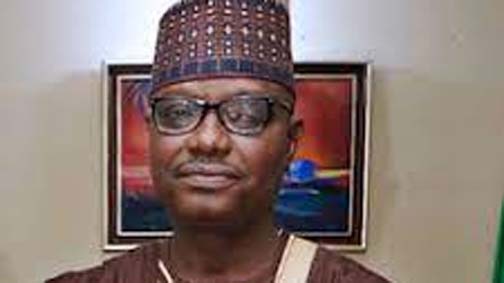
 The Executive Secretary, National Institute for Cultural Orientation (NICO), Mr.Ado Mohammed Yahuza, has no doubt, brought a lot of innovations to the institute.
Within two years in office, he has succeeded in opening three state offices, moved the training school out of the office premises and has engaged the institute in several activities at states and federal levels. In an interview with Bridget Chiedu Onochie, the E.S spoke on the enormous task facing the institute and how poor budgetary allocation is hampering the campaign for cultural rejuvenation, especially among youths.
How would you describe your experience as the E.S of a cultural institute in the last two years?
It has been an interesting experience. Although the field is not new to me, having been working in the culture sector for about 34 years before my appointment. I have also known NICO as an institute and I have been involved in their programmes during the administration of the late J.B Yusuf as the Executive
Secretary.
[ad]
I can say that my transition in NICO since I assumed duty seems to be very smooth because coming as a Director, Human Resources, I have to relate very
well with management and staff, Also, I have to bring in a lot of changes that I felt would be good for the operation of the Institute. In a nutshell, I think it has not
been too challenging but rather interesting because we hit the ground running because of my experience in the sector. The hitches one would have experienced
was due to the fact that there are people who are accustomed to one style of administration and if anyone is coming with something different, of course, the tendency for resistance would be there but generally, it has been very good.
The Training School was operating from the office premises, how was the relocation made possible in a short time?
I believe that a leader should think outside the box. If you truncate your thinking and ideas to the normal or conventional approach, definitely, you will not break new ground.
So, you need to think outside the box and see possibilities in impossibilities so that you will be able to achieve what others have not been able to do. About the relocation of the Training School, the Head of Service agreed to give us the building. We inspected it and discovered that it was very big and a solid
building, only about 30 per cent of it was occupied. So, we did the application and a Memorandum of Understanding (MoU) was signed, and the Head of Service
graciously allowed us to use it.
[ad]
We did the renovation, bought tables, chairs, computers and other necessities and then, moved to the place. Currently, we have offices for the director in charge of the training school and other officers, lecturers’ offices and classrooms. I even have an office there. Now, everybody is happy because that place is more conducive for learning. Before, we had both the training school and offices together under one building and when rehearsal was going on,
there was always a lot of distractions. Right now, the space we have is very convenient for the training school.
Are you hoping to complete the institute’s permanent structure anytime soon?
We would have loved to finish it and move in but the area is yet to open up. There is a bridge that needs to be built in the area which is yet to be constructed. Until it
is built, we might not be able to spend money on the structure. Even the work done on the building in the past has been vandalized. So, we are still hoping that
government will visit the area. Once the bridge is built, we move to work because we have a very good structure there which we can utilize, and which we can do a lot in. We have that in mind, the only constraint is the resources and we are hopeful about that.
With the prevailing socio-cultural challenges facing the country, especially with regards to youths, there is need for expansion of your campaigns for cultural reorientation. How are you going about it currently?
When we came in, we looked at this idea of expansion and we found out that some of our zonal offices were not properly situated because we were supposed to engage in cultural orientation and we need to go to areas where there are lots of activities about culture. So, I looked at our zonal offices and discovered that some of them were very far from actual arena of actions. For instance, in the South-South, Bayelsa State is good but it is a bit far from the centre and since Benin City, Edo State is also South-South, and everybody knows that it is a cultural hub, we decided to open a state office there because South-South supposed to have both zonal and state offices but they had only zonal office in Bayelsa. So, a lot of cultural activities have started in Benin, including school culture clubs.
[ad]
It was the same with Kano State. We did not have state office in the North West, we had only a zonal office in Katsina State. We looked at both Katsina and Kano States; we all know that Kano is the centre of culture. In fact, Kano is a melting pot of Nigerian diversity. So, we felt that there was need for office in Kano and we opened one there. Also, we hit the ground running. Currently, we have already established culture clubs in schools. The third one was Jos, Plateau State.
If you look at that as well, Jos is in the North Central and our zonal office is in Ilorin, Kwara State, which is very nice but a very sleepy town compared to Jos, which is a multi-cultural area. Jos connects other parts of the north and it is also a tourism centre. So, there was need for an office there to enable us reach out to as many people as possible. When we talk about understanding one another, you know what I mean. With our office there, we will do a lot of cultural advocacy, educating
people on the need for cultural mix, peaceful coexistence and tolerance.
That was the reason for opening the three offices and they have started working. This is our mandate and we need to know where the mandate is best utilized. I believe that the three offices will make a lot of contributions to other parts of the country. Unfortunately, the sector is contending with smaller and smaller budgets and we cannot do much with finance. We have made a submission to the National Assembly and I believe that the new government under President Bola Ahmed Tinubu, will look at this challenge and help us out.

What we are trying to do is to make maximum utilization of the resources we have but if we can have more, we will do a lot because logistics is very important. For instance, the Culture Clubs; we have very enthusiastic schools, students and principals who want us to establish it in their schools across the country but that takes a lot of money in terms of travel and stipends that we give them to organize events. Sometimes, we provide costumes. Most of the schools we visited showed a lot of interest, especially the children.
[ad]
Aside from the remote areas, even the cities also require cultural orientation because increasingly, our children are hooked to social media and the negativities that come with it. Majority of the school children in the cities don’t speak their native languages and as such, do not benefit from values that come with it. So, we need to do a lot because these are the leaders of tomorrow and if we don’t train them well, they will rely on foreign cultures either in their dress, language or food. There is need for proper cultural orientation to enable them dress well and also learn local cuisines.
Even with the Japa syndrome, some of them can establish Nigerian restaurants abroad if they know how to cook well. We have resources in this country that can be utilized even by young ones to make money and make the country rich. Of course, we are trying to expand our activities with our lean resources but definitely, we can do more with improved resources.
What is the status and acceptability of NICO cultural programmes?
NICO currently offers Diploma and Post-Graduate Diploma in Cultural Administration. When I came on board, the diploma was there but not accredited. The first thing we did was to make serious effort to get the diploma programme accredited by the National Board for Technical Education (NBTE) so that it would be equivalent to any diploma program in any Polytechnic.
Luckily, we did that and our Diploma is like any other certificate that can fetch one job or higher education. The only problem then was low number of students but interestingly, the number has improved greatly now as a result of the campaign we carried out. We had to educate the people about the programme. Sometimes, I have to talk to chief executives.
Now, private students and those from cultural agencies are coming for the programme. This year, we have a lot of people registering and it is very encouraging. About the indigenous language programme, I must tell you that people want to learn languages of other tribes, which helps in building bridges of friendship. People are showing enormous interest and NICO is leveraging on that to do more.
We are also trying to experiment with the online edition because we are in a digital age. This will enable people to learn any Nigerian language of their choice wherever they are. Learning additional languages other than your own is very beneficial. For instance, if you are Hausa and you happen to be in Owerri, Imo State, and you communicate in Igbo language, you will break ice. People, there would be excited to hear you speak their language. Same thing happens in the North and any other tribe across the country.
Also, if you are a trader and someone from another tribe speaks your language, there is an immediate rapport. A businessman who understands three or more local languages is likely to have more customers. So, there are bonds of unity with languages; they break ethnic and religious barriers in this country.
[ad]

