 Follow Us on Google News
 Follow Us on Google Discover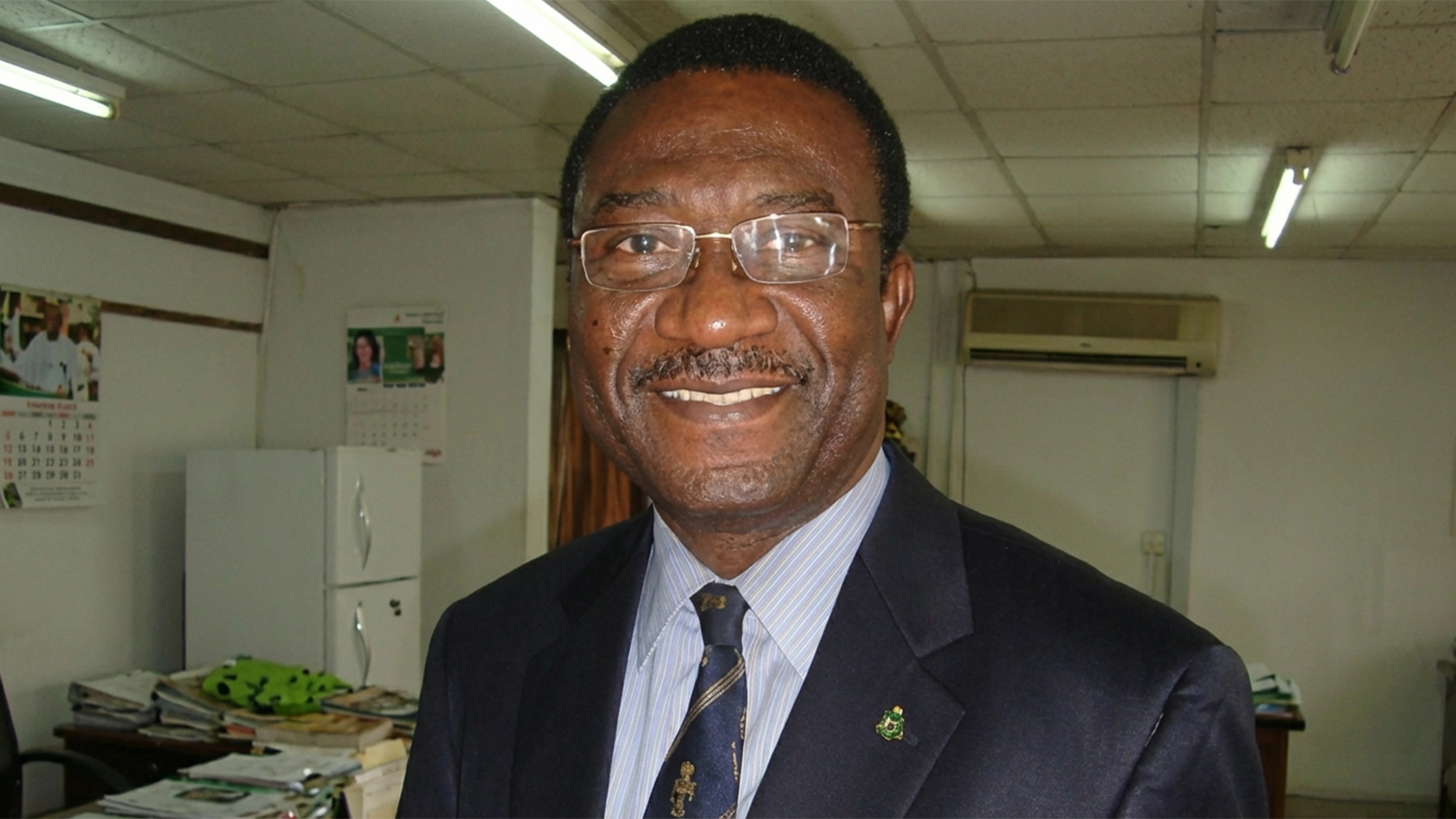
• Nigeria Has Dual Epidemic Of Communicable, Chronic Diseases
• 80m Nigerians Aged 18-65 Living With Hypertension
• Country Producing Only 4,000 Doctors Yearly
Akin Osibogun is a distinguished Professor of Medicine, a Consultant Public Health Physician and Epidemiologist. Osibogun was immediate past President of National Postgraduate Medical College of Nigeria and former Chief Medical Director of Lagos University Teaching Hospital (LUTH). Osibogu, in this chat, warns on alarming increase in cases of cancers and hypertension in the country and what must be urgently done to stem the tide. He also spoke on how to improve primary healthcare delivery in local government authorities from 30 to 70 per cent as well as reduce frequent falls in the elderly.
The University of Lagos recently celebrated you as one of its most illustrious scholars and conferred on you the title of Distinguished Professor during the 56th convocation ceremonies. What does this award mean to you?
The University of Lagos at its yearly convocation ceremonies may make awards to retired and serving academics, non-academic staff and eminent personalities in industry, commerce, the arts and culture, and other areas of human endeavour. Deserving retired Professors may be honoured with the Emeritus Professor Award while Professors who are still in service and who meet specified strict conditions may be honoured with the Distinguished Professor Award. Both academic and non-academic staff may also be honoured with the Gold Medal Award. To be nominated for either the Emeritus or the Distinguished Professor award, a nominee must have been a Professor for not less than 15 years of which at least 10 years must be at the University of Lagos, in addition to other specified conditions and requirements. All awards are based on nominations from candidates respective Faculties and are not to be applied for. The university also award honorary degrees to eminent personalities who have made remarkable contributions in different areas of human endeavour such as business, arts and culture, industry, medical care etc. All awards subsequent to nominations are processed through the University Senate and Governing Council.
Given the rigour of the nomination process and the value attached to the award in the academic community globally as well as among discerning citizens, I can not but be extremely excited by the honour done to me by my appointment as a Distinguished Professor by my University, the University of Lagos which we proudly refer to as the University of First Choice and the Nation’s Pride.
As the President of National Post Graduate Medical College of Nigeria, you were once quoted to have said that Nigeria needs to produce at least 100,000 doctors yearly to meet national demands. Did you achieve that? If yes or no, what have you achieved in that regards? What is the solution to shortage of doctors in Nigeria?
Your question about the nagging problem of brain drain in the health sector is pertinent. As the President of the National Postgraduate Medical College of Nigeria between 2022 and 2023, I must have made not less than four public statements to draw national attention to this problem and the need for urgent action. The severe shortage of medical manpower is being worsened by the emigration of medical doctors who are being attracted out of the country by seemingly better offers of remuneration and other conditions of service. Bearing in mind the gestation period and resources required for training doctors, I have suggested we found resources to expand training opportunities and increase our annual production at about 10,000 instead of the current 3,000-4,000 per annum. The Federal Government is currently taking steps to double the production of medical graduates through investments infrastructure and medical educators. Production of quality manpower requires funding and the government must be encouraged to do more.
February is the world cancer month. Cancer can be said to be as common as malaria now in Nigeria. Why is that? What are the solutions?
Globally, we are marking the month dedicated to draw attention to the burden of cancers. As countries succeed to some extent in curbing the prevalence of communicable diseases and life expectancy improves, then the prevalence of non-communicable diseases is bound to increase for several reasons and the country will experience an epidemiologic transition in which both communicable and non-communicable diseases (NCDs) will be highly prevalent. Nigeria is currently having that dual epidemic. Cancers constitute one of the major categories of NCDs that the country is worried about. The incidence of cancers at 130.6/100,000 for women and 66.4/100,000 for men has become so alarming that urgent actions are required to control this epidemic. There are identified genetic, environmental and lifestyle factors associated with cancer incidence and we need to intensify action on control measures addressing these issues. We also need to intensify efforts at improving access to cancer care including early detection and treatment.

You were also the chairman of primary health care in Lagos State. What were the and achievements? Would you say primary health centres in Lagos are working? Put in percentages, how many are functioning properly?
I was Chairman of the Lagos State Primary Health care Board till January 2023 but my response will be on how the system can improve in all parts of Nigeria. We must encourage Local Government Authorities (LGAs) to invest more in the delivery of quality primary healthcare services given that the health centre is the closest level of care to communities. Recent reports of assessments would suggest that roughly about 30 per cent of health centres nationally meet stipulated standards of service. Bearing in mind the responsibility of LGAs for primary healthcare, LGAs can deliberately invest in making more health centres to meet functional standards.
Functionality, of course is beyond infrastructure alone and must include human resources, equipment, consumables and critically, quality processes. We need to put in place a mechanism that ensures that every health centre has defined geographic and population responsibilities. Each health centre will thus be able to draw up programmes that will enable it to follow up on the health of the population in its defined area of service. If this is then coupled with a reliable two-way referral system in which the staff of health centres are able to quickly refer to the General Hospital or appropriate higher facility, any detected condition that is beyond the scope of the health centre, the we will begin to see rapid improvements in health outcomes. Fortunately, the National Health Insurance Act of 2022 has mandated health insurance for all Nigerians and this should bring additional funds to complement the Basic health Care Provision Fund in the Nigerian Health Act of 2014 and the traditional health budgets of governments at all levels.
As a professor of public health, are you not so worried that hypertension has become an ‘epidemic’ and a death sentence. Children and young adults are now hypertensive. Why? What are the solutions?
Hypertension and other non-communicable diseases are on the increase as I have explained. We are going through an epidemiologic transition. Hypertension is one of the nagging non-communicable diseases. Its prevalence among Nigerians aged 18-65 years in 1992 was below 10 per cent but its prevalence in the same age group today is 35-40 per cent. So, it is indeed a major health and economic problem. One major strategy to address the prevalence of hypertension is to emphasise the need for physical activity, reduction of salt intake and promotion of healthy diet and lifestyles. This must then be couples to early detection and prompt treatment strategies.
As a distinguished professor, what is your advice to Nigerians?
My advise to Nigerians with regards to health promotion and disease prevention is to avoid sedentary living, adopt healthy diet including reduction of salt intake, inculcate healthy social and psychological habits, and well as enjoy fresh air as often as possible.
Why has falls in the elderly become so common and so complicated in Nigeria? What are the solutions?
Falls in the elderly are common because the bones are becoming frail and the muscles weak. There are also the vestibular issues developing which affect their ability to maintain their sense of balance. Some dietary limitations also predispose to anaemia and dizziness. As we get older, we may have to avoid rushing to get things done and slow down a little bit without going into sedentary living. Adequate diet or the use of supplements may assist bone health and reduce anaemia.

