 Follow Us on Google News
 Follow Us on Google Discover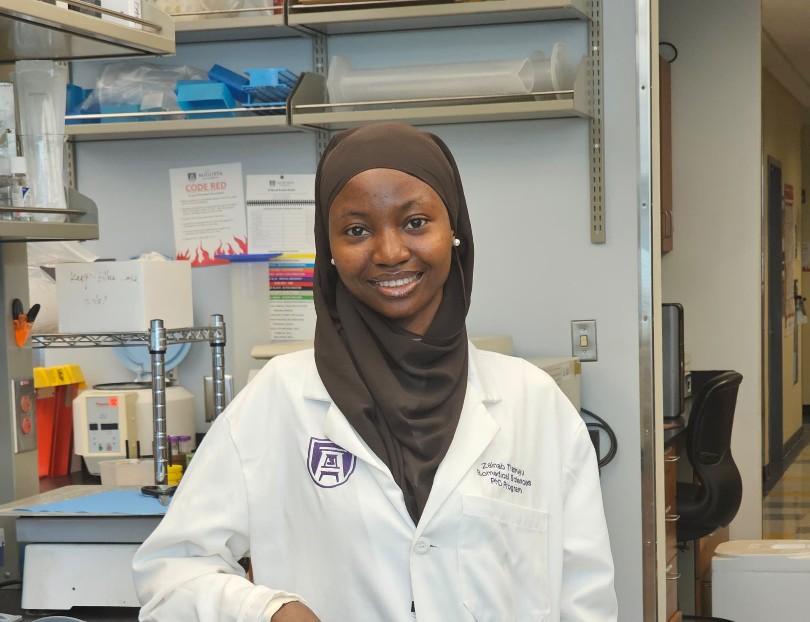
United States–based Nigerian scientist Zainab Tiamiyu is pioneering a breakthrough approach to cancer immunotherapy by uncovering a powerful epigenetic pathway that could help the immune system outsmart tumours. In this interview with ‘Sola Akinsanmi, she shares how her research is shaping innovative strategies to combat one of the world’s deadliest diseases.
Tell us about your groundbreaking research on the SUV39H1 and SUV39H2 H3K9me3 pathway. What inspired this line of inquiry, and why is it important in cancer immunology?
My research focuses on how the SUV39H1 and SUV39H2 H3K9me3 epigenetic pathway regulates immune responses within the tumour microenvironment. These enzymes enable cancer cells to evade immune detection, highlighting a critical mechanism that tumours use to survive. Understanding this pathway opens avenues for developing therapies that can reverse immune evasion and improve patient outcomes.
My inspiration stems from both personal experience and public health observations, particularly in Africa. Growing up in Nigeria, I witnessed firsthand the devastating toll cancer takes, often diagnosed late and treated with limited options. Recent global cancer statistics show that low and middle-income countries now account for over 70 per cent of cancer deaths, yet these regions remain underrepresented in cutting-edge research and therapeutic advances. This disparity deeply moved me and motivated my pursuit of answers at the intersection of immunology and epigenetics, fields with the potential to transform cancer care. My goal is to contribute to solutions that are not only scientifically innovative but also accessible to underserved populations, starting with Africa. This commitment to addressing both the scientific and accessibility challenges of cancer treatment shapes every aspect of my work
How does your work contribute to understanding or potentially treating complex diseases like cancer?
Cancer is a complex disease because it not only grows uncontrollably but also tricks the immune system into ignoring it. My research investigates specific genes—SUV39H1 and SUV39H2, that cancer cells use to cloak themselves from immune attack.

By selectively disabling these enzymes in immune cells in mouse models, I study how the immune system can better recognise and combat tumours. This approach helps us find new ways to “turn the lights back on” so immune cells can detect and destroy cancer more effectively. In the future, these insights could lead to therapies that empower patients’ own immune systems to overcome cancer’s disguise, offering hope for more effective treatments where others have failed.
These findings are not just theoretical; they open practical avenues for therapies that go beyond current limitations, which is why my approach stands out in the broader fields of tumour immunology and epigenetics.
Can you explain how your research stands out in tumour immunology and epigenetics?
What distinguishes my work is its interdisciplinary approach, combining epigenetics, the study of gene regulation beyond DNA sequence changes, with tumour immunology, the study of how the immune system interacts with cancer.
Most researchers focus on either gene regulation or immune cell behaviour separately. I explore both at the same time, investigating how SUV39H1 and SUV39H2 enzymes influence immune cells within tumours and facilitate cancer’s evasion. Of course, pushing into this interdisciplinary space has not been without its obstacles.
What challenges have you faced as a young scientist breaking new ground, and how have you overcome them?
One of my greatest challenges was securing funding and access to cutting-edge cancer research facilities in the United States, coming from Nigeria, a country with limited biomedical research infrastructure. Realising my dream required persistence to navigate complex funding landscapes and build networks within top laboratories.
Another hurdle was mastering powerful new techniques transforming cancer research and immunotherapy. CRISPR-Cas9 gene editing allows me to precisely knock out genes like SUV39H1 and SUV39H2 to uncover their roles in tumour immune evasion—a level of precision unimaginable just a few years ago and vital for next-generation therapies.
Additionally, I have learned to use CUT&Tag, a groundbreaking method that maps where regulatory proteins bind DNA in immune cells, enabling unprecedented insight into gene regulation. These techniques are technically demanding but crucial for advancing our understanding and treatment of cancer.
With determination, mentorship from my Principal Investigator, and support from scientific and institutional communities, I have gained the expertise and resources necessary to push the boundaries of cancer immunotherapy research and move closer to more effective treatments. Overcoming these hurdles has positioned me to make contributions that resonate far beyond the laboratory.
Your work has attracted international attention. What do you believe is the global relevance or potential impact of your research?
Cancer is a leading cause of death worldwide and is no longer confined to wealthy nations. In Africa, especially Nigeria, cancer deaths are rising sharply due to late diagnosis, limited treatment access, and a lack of locally led research. Unfortunately, advanced therapies like immunotherapy and gene editing remain out of reach for most developing countries.
This urgency underpins my research’s global importance. By studying how SUV39H1 and SUV39H2 enzymes suppress immune responses through epigenetic mechanisms, I aim to “switch off” this suppression, enabling immune cells to attack cancer more effectively. Epigenetic immunotherapy is a promising frontier because it can reprogram immune cells with fewer toxic side effects than conventional treatments. The pathways I study are universal across human populations and cancer types, meaning the resulting therapies could benefit patients worldwide.
For Africa, my work offers hope, not only in advancing cancer treatment options but also in bridging the innovation gap. It shows that African scientists can and should be central to developing global solutions, promoting equity in science and healthcare. Yet, the global relevance of my research is matched by a deep personal motivation that keeps me moving forward.
What motivates your dedication to cancer research, and what keeps you going even when experiments don’t go as planned?
My drive comes from a deep personal commitment to fighting cancer’s growing impact in resource-limited settings like Nigeria, across Africa, and worldwide
Research has its challenges: experiments fail, progress can be slow, and timelines shift. Yet every result, positive or negative, brings us closer to life-saving insights. I feel a strong responsibility, as a woman scientist from Africa, to contribute to global breakthroughs.
Equally vital is my support network. My Principal Investigator’s mentorship, the encouragement of my friends and family, and the love of my husband and son inspire me daily. Their belief fuels my perseverance, especially when the path forward feels uncertain.
What advice would you give to young researchers, especially women or students from underrepresented backgrounds, who want to follow in your footsteps?
Never give up on your dreams, no matter how distant they may seem. The path to becoming a scientist, particularly from underrepresented or resource-limited backgrounds, is rarely linear but always possible with courage, consistency, and creativity.
Start from where you are and grow step by step. Don’t wait for perfect conditions; actively pursue opportunities both online and offline. Apply for international scholarships, attend virtual seminars, and take free courses. Use social media platforms like LinkedIn and X (formerly Twitter) not only to connect but also to increase your visibility and find mentors, laboratories, and collaborators worldwide. This network was essential to my own journey. Embrace interdisciplinary exploration—powerful ideas often emerge at the crossroads of fields like epigenetics and immunotherapy. Surround yourself with people who believe in you and support your growth.
With bold ideas, relentless effort, and a strong support system, you can create impact far beyond your circumstances. That same forward-looking spirit will guide my next steps as I plan the future of my research
Looking ahead, what are your goals for the next phase of your research, and how do you hope to make an even bigger impact?
My ultimate goal is to make a lasting impact on cancer immunology by advancing research that results in more effective, durable, and accessible cancer treatments worldwide. I am passionate about discovering epigenetic targets such as SUV39H1 and SUV39H2 that can lead to new drugs, enhancing existing immunotherapies or serving as standalone therapies. By understanding how these targets modulate immune cell function within tumours, I hope to contribute to treatments that improve survival, overcome resistance, and improve quality of life not only for underserved populations but for people around the world.
In the years ahead, I aim to push the boundaries of cancer immunology by translating discoveries on epigenetic targets like SUV39H1 and SUV39H2 into therapies that redefine how we fight cancer. My vision is a future where patients everywhere, from the most advanced hospitals to the most underserved clinics, can access treatments that are effective, durable, and tailored to their immune system’s unique potential.
Beyond scientific breakthroughs, I hope my work will inspire a generation of scientists from Africa and around the world to lead at the forefront of discovery, ensuring that innovation is not limited by geography, but driven by global collaboration and shared humanity.

