 Follow Us on Google News


 Follow Us on Google Discover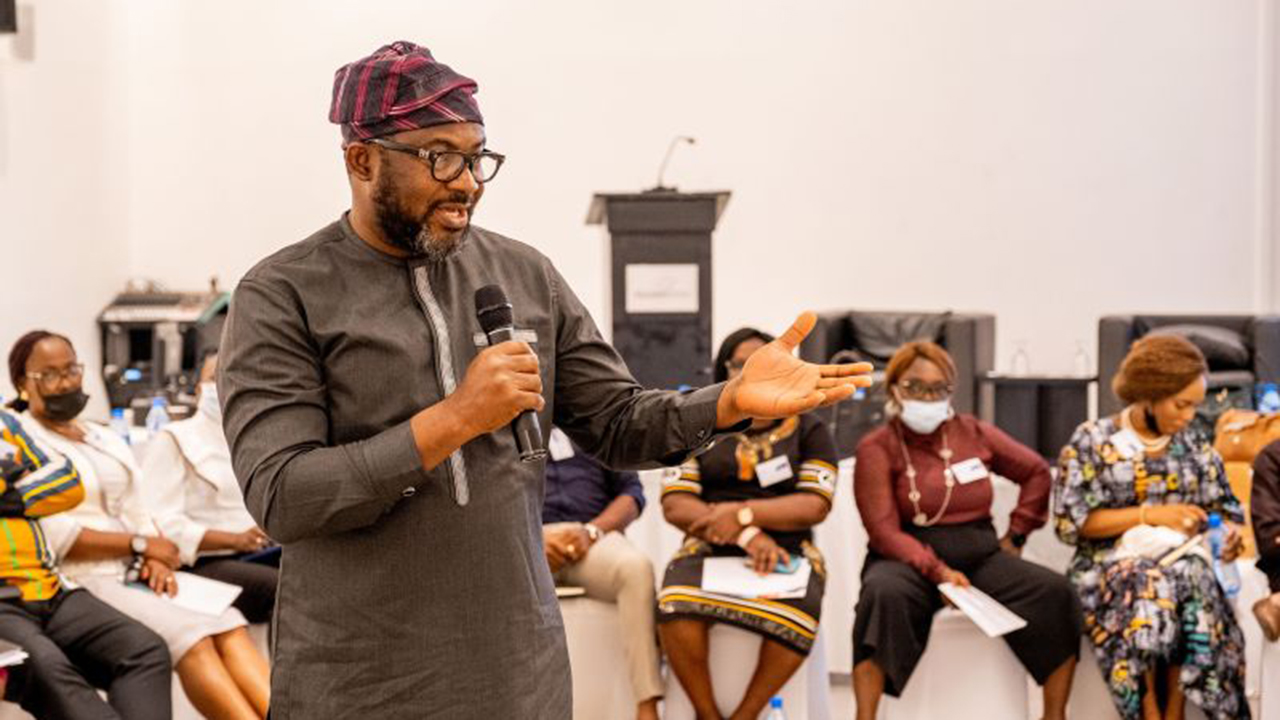

Education is critical to development whether at the individual level or collective level as a state. Why some persons have all it takes to access education including finance, others despite being intellectually sound, cannot gain admission or sustain their admission due to lack of finance.
Understanding this, some state governments institute programmes to help indigent students access education. In Lagos, the State Scholarship Board is saddled with that responsibility. Despite the noble idea behind the setting up of the boards, across many states the boards often grapple with fraudulent activities.
[ad]
But the Executive Secretary of the Lagos State Scholarship Board, Abdul Rahaman Lekki, said that since he came in, he has been working to promote a transparent and accountable bursary and scholarship scheme, where the government and the beneficiaries are not shortchanged. This, he said, led to a review of its activities for proper documentation of its processes.
He added that the board decided to separate some functions within the agency as well as expand opportunities of bursaries and scholarships through private sector engagement.
“Before now, when students apply for scholarships or bursaries, we have a scholarship department which advertises it, and people apply. They do the processing and the four levels of verification: indigenship, studentship, academic status and assessment in the case of scholarships,” said Lekki.
“All of that is conducted by the department, which is very cumbersome. So we felt a need to separate the auditor from the accountant to make the process tidier.”
The board also created the partnership and assessment department, saddled with the responsibility of handing over the applicants’ processed documents to a separate department that will carry out assessment for verification.
Lekki added: “So, when they finish the verification, they will hand it over to another department to continue managing them. The department has been fully approved by the Head of Service and currently in operation. As we speak, we have the bursary, partnership and assessment departments. They handle assessment and verification and we are trying to build with organised private sector, governments and organisation to see if they can partner with us as far as scholarship and bursary is concerned.”
[ad]
He further added that the board had to complete the digitisation process of application that would ensure that students can apply, pay and complete their application processes online compared with the old analogue processes.
“We are happy that students don’t have to come here again for the processes but they can finish the whole process within one hour online. We also introduced virtual application process to ensure that the system has some levels of integrity.
“Before now, students bring their results here for verification, but we agreed that as a board, we will not go through that route to avoid fake results being brought, but verification will be done by the school directly. So the schools send us reports of all of them.”
Other initiatives, Lekki revealed include the special scholarship category. “We inaugurated a special scholarship for people with disabilities and multi-dimensionally poor and vulnerable. We have sent that to the Ministry of Economic Planning,” he stated.
“For you to get a scholarship, you must have a distinction or first class. We will continue to pay you once you satisfy all the requirements, such as being a student and maintaining your CGPA, then you now become a subsequent beneficiary, but for the poor, we have to relax the rules. Someone who is poor may have intellectual capacity, but they may be hindered because of the condition that they find themselves in. We would continue to support them and relax the rules for them to enable them benefit from government scholarship,” Lekki noted. He, however, expressed optimism that by next year, the governor will make funds available for the special categories of scholarships that the board plans to introduce to enable indigenes access education.

“The governor prioritises social services. The size of education funding, as of today, should not be less than N30 billion, but about 50 per cent of students in tertiary institutions are not able to fund their education,” Lekki added. “If you want to support them to fund their education, you need a huge resource base to do that and that is one of the reasons we established the partnership and assessment department to look at how can we bring in the private sector to be a part of it.”
[ad]
Lekki said under him, the Board, has been steadily performing this responsibility, with about 20,000 students benefiting from scholarships and bursary awards. He added that Governor Babajide Sanwo-Olu has within the same time period approved a 100 percent bursary increment for tertiary institutions students.
Providing details, Lekki said: “N164,500,000.00 has been earmarked for 792 students under the 2021/2022 fresh scholarship award for undergraduate, masters and PhD (Batch B), 2021/2022 subsequent scholarship award for undergraduate and PhD, and 2022/2023 subsequent scholarship award for undergraduate and PhD recipients as well as the 2022/2023 Governor’s Discretionary Awards.
“Furthermore, an allocation of N210,955,000.00 has been approved for 4,375 students under the 2021/2022 fresh bursary award for undergraduates and Law School (Batch B), 2021/2022 subsequent bursary award for undergraduates, and 2022/2023 subsequent bursary award for undergraduates.
“Earlier in the year, in March 2023, N171,100,000 was approved for 799 for the 2021/2022 fresh scholarship award for undergraduate, Masters and PhD (Batch A), as well as N303,000,000 for 2,509 students under the 2021/2022 fresh bursary award for undergraduates (Batch A). In all, N678,455, 000.00 has so far been released this year 2023 for 8,475 scholarship and bursary beneficiaries.”
Lekki said though it has been challenging since he took over the mantle of leadership of the Board, they have been fortunate to have a governor that prioritizes education.
On the process of granting scholarships/bursaries in the state, he said: “The first is to verify whether you are an indigene of Lagos State or not, while the second (studentship) is to verify and assess whether you are truly a student of a tertiary institution or not. Once this is confirmed, the bursary can be accessed. We also have some special bursaries for about two institutions, one for Law students, the Law School, and also for the School of Maritime Studies.”
Dwelling on the process of securing a scholarship through the Lagos State Scholarship Board, Lekki said: “For scholarships, the process goes a step further than the earlier two mentioned. It is meant for indigenous students with cumulative average grade points of second class upper or first class. So, we need to verify your academic standing. That is the third verification for the scholarship and the fourth step is writing an assessment test. So, all of these steps are the qualifications.”
To restore people’s confidence in operations of the board, he said they had to tackle the challenge of a backlog of scholarships and bursaries as well as applications that were yet to be attended to frontally.
[ad]
“There was also a dearth of crucial data. We did not have enough data to make an informed decision on the scholarship screening process. It became a very big challenge.
“But we came up with an idea. We designed a Google form and sent it out to all students to furnish us with their essential details such as matric number, year of admission, NIN, BVN, and LASRRA among others. We later secured the service of an expert whose task was to help verify the information from the respective tertiary institutions. With this, we were able to make reasonable progress. The system was sanitized. It is a tough process, but it is worth the while.”
To raise the bar of scholarship awards in the state Lekki said the board came with new initiatives, especially as it relates to foreign scholarship that had been suspended in the state. He said: “In the twilight of Mr. Babatunde Raji Fashola’s administration, foreign scholarship was suspended. So, we have been brainstorming on how to revive it through creative means. We decided to research foreign-funded admissions and discovered that there are thousands of foreign admissions across the globe. All you need to do is prepare your students’ proof for those funded admissions.
“There are processes to it. There is also expertise in those admissions. Once you master the process, you can begin to churn in students for admissions. We discovered through online research that there are a few non-governmental organizations that train Nigerian students pro Bono. In fact, they sponsor some of the process.”
[ad]

