Nigeria’s capital market is quietly undergoing a major transformation that is redefining how capital is raised, managed, and allocated. After years of volatility shaped by currency swings, subsidy reforms, and global economic shifts, the market is entering a new phase of structural renewal. This is not a routine cycle but a broad-based change anchored on policy reforms, digital advancement, and the growing participation of domestic investors.
Over the past few years, the equity and fixed-income markets have witnessed renewed activity and performance. Market capitalisation has expanded significantly, reflecting new listings, improved prices, and a return of investor confidence. Trading activity has also become increasingly dominated by domestic flows, even as foreign portfolio investors have begun to reappear cautiously in some segments. The third quarter of 2025 delivered one of the strongest results in recent times, with the Nigerian Exchange All-Share Index gaining 18.95 per cent and pushing the year-to-date return to almost 39 per cent. Market capitalisation approached ₦90 trillion during the period, showing a broad improvement in market sentiment and liquidity.
Performance across sectors reflected the mixed nature of the economic recovery. Industrial goods companies posted substantial gains on the back of strong earnings and renewed demand. The oil and gas sector recorded mild improvement as investors adopted a cautious approach amid global price uncertainty, while banking and financial services companies benefited from higher interest income and foreign exchange revaluation gains. Market confidence was reinforced by an increase in foreign reserves to about 42 billion dollars and a mild disinflation trend that eased pressure on the macroeconomic environment.
As Nigeria enters the final quarter of 2025, the outlook for the capital market remains one of cautious optimism. Interest rate movements, exchange rate stability, and oil price direction are the most significant factors to watch. High domestic interest rates could continue to attract portfolio flows into fixed-income instruments but may suppress valuations in the equity market. A gradual moderation in rates, however, would be positive for listed equities and could reduce borrowing costs for businesses. Continued reforms in the foreign exchange market are expected to improve transparency and liquidity, although external headwinds may still test the naira’s resilience. Oil price volatility will remain a key risk factor, but improved production levels could strengthen fiscal buffers and support overall market sentiment.
Amid these economic dynamics, regulators are introducing key policy reforms aimed at deepening transparency and investor confidence. Beginning in November 2025, the Central Bank of Nigeria will take full control of the settlement and trading infrastructure of the fixed-income market. The reform is designed to create unified oversight, enhance market efficiency, and improve the transmission of monetary policy. The Securities and Exchange Commission has also introduced a new transparency requirement mandating all capital market operators to display their SEC licence numbers on official documents and websites. This measure seeks to reduce impersonation, promote compliance, and restore public trust in licensed participants.
Reforms are also underway in the pension industry, where the National Pension Commission is implementing recapitalisation policies to strengthen the balance sheets of pension fund administrators. The initiative is expected to improve solvency, enhance governance, and provide stronger risk management frameworks. At the same time, the Investment and Securities Act 2025 is reshaping market structure and disclosure practices. It has triggered the creation of new funds and financial products that align more closely with global standards while improving enforcement powers across the market.
Despite these reforms, Nigeria’s capital market continues to face persistent challenges. The economy’s sensitivity to oil prices and foreign exchange volatility means that investor sentiment can change rapidly in response to external shocks. The market for corporate bonds remains shallow, limiting the scope for large-scale infrastructure or project financing. Operational issues such as slow product approvals, fragmented regulation, and limited digital onboarding remain constraints that require urgent attention to unlock the full potential of the market.
Nonetheless, there are opportunities for investors who are willing to take a long-term view. Blue-chip equities in industrial, financial, and consumer sectors with strong earnings, currency hedges, and consistent dividend records remain attractive. The assumption of control of fixed-income trading systems by the Central Bank is expected to improve transparency and liquidity, offering more stability to investors seeking predictable returns. The recapitalisation of pension fund administrators and the implementation of the Investment and Securities Act are likely to stimulate new collective investment schemes that will broaden product diversity and deepen participation from both retail and institutional investors.
The expansion of digital platforms has made access to the capital market easier than ever before. Retail investors are encouraged to explore legitimate channels such as the FSDH Capital online trading platform at www.fsdhcapital.com, where they can begin their investment journey with a clear understanding of risk and financial literacy. As technology simplifies onboarding and participation, the inclusion of more domestic investors could become one of the most defining features of the next phase of the market’s evolution.
As the year draws to a close, Nigeria’s capital market stands at a crucial intersection. It is no longer merely a frontier defined by volatility and external dependence but a maturing ecosystem grounded in reform and innovation. The combination of regulatory renewal, structural reform, and digital participation is laying the groundwork for a more resilient and inclusive marketplace. While macroeconomic risks persist, particularly in relation to currency stability and commodity price swings, the direction of policy and investor engagement suggests a gradual transition towards sustainable growth. For investors, the final quarter of 2025 presents an opportunity to participate in a market that rewards prudence, diversification, and informed decision-making.
Nigeria’s capital market is steadily moving from uncertainty to consolidation, and in this shift lies the promise of long-term value creation. The foundation is being laid for a financial system that is stronger, more transparent, and better positioned to support the country’s economic ambitions.
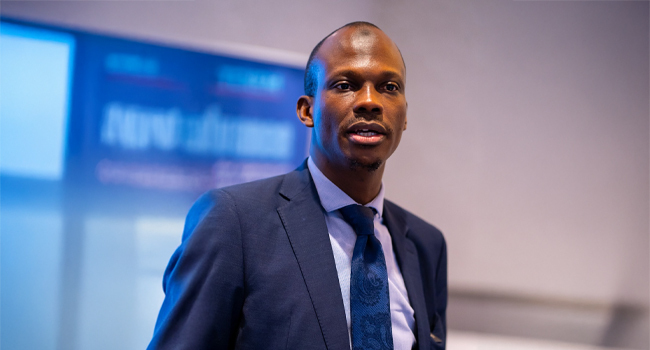
Adedoyin Allen is Chief Growth Officer (CGO) of FSDH Capital