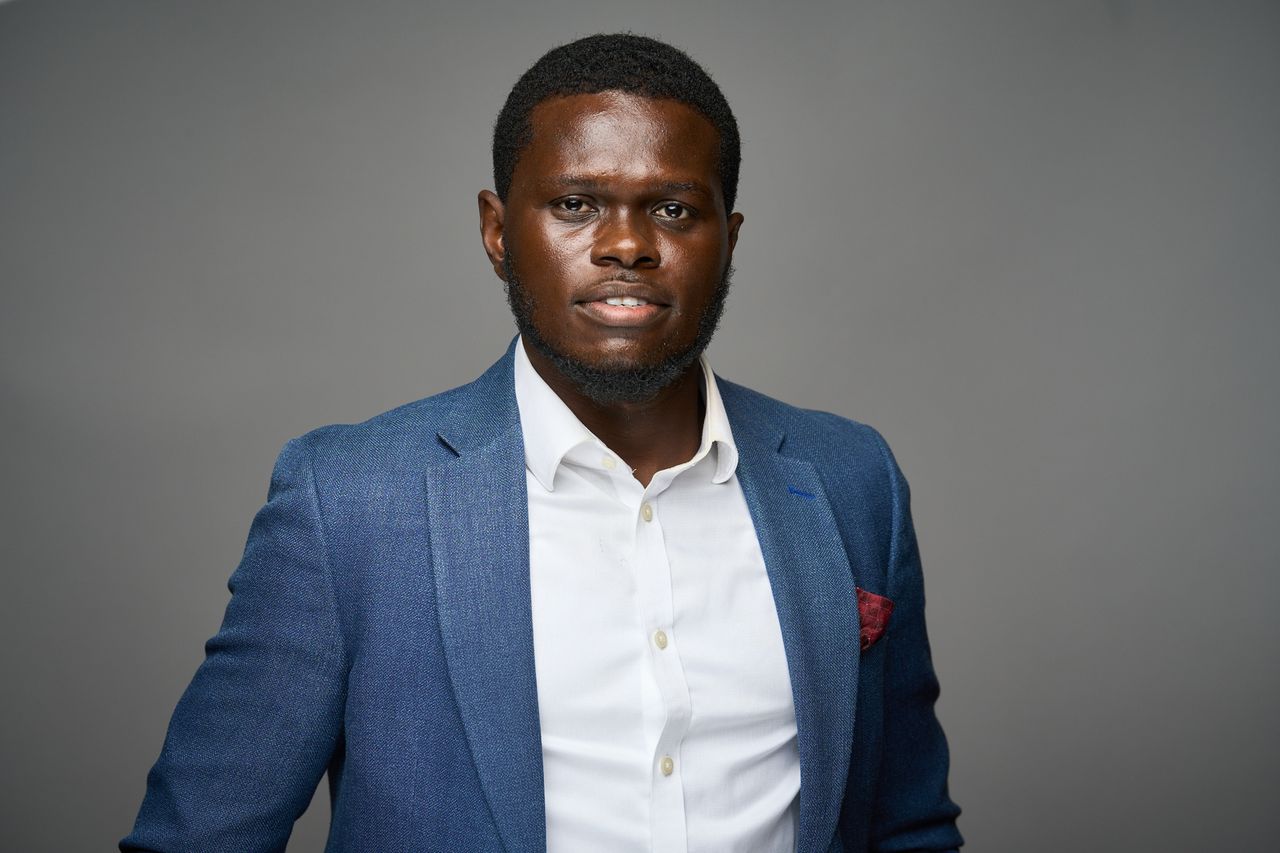
 Renowned financial analyst and data-driven strategist, Oluwatobiloba Alao, has urged policymakers to integrate deep learning techniques into financial modeling to enhance economic decision-making and long-term investment strategies. Drawing from his extensive research in applied statistics and decision analytics, Alao emphasised that artificial intelligence (AI) could revolutionise financial systems, ensuring accuracy, efficiency, and adaptability in today’s volatile economic landscape.
Alao, who holds a Master of Science in Applied Statistics and Decision Analytics from Western Illinois University and is a Chartered Accountant (ACA, Nigeria), presented his recommendations in a recently published research paper, “Integrating Business Analysis with Deep Learning Algorithms to Enhance Financial Modelling and Long-Term ROI Strategies.” His study highlights the limitations of traditional financial models and the urgent need for AI-driven methodologies to mitigate economic risks.
“Conventional financial modelling relies heavily on historical data and linear regression techniques, which are not sufficient for capturing the complexities of modern financial markets,” Alao stated. “Deep learning algorithms, such as recurrent neural networks (RNNs) and long short-term memory (LSTM) networks, offer predictive accuracy that can help businesses and governments make more informed decisions.”
His research underscores the potential of AI in financial risk assessment, investment forecasting, and resource allocation. By leveraging deep learning models, financial institutions can gain real-time insights into market dynamics, reducing uncertainties and improving strategic planning.
Alao’s recommendations come at a critical time as governments worldwide grapple with economic fluctuations caused by geopolitical tensions, inflation, and technological disruptions. He argues that integrating AI into financial policy frameworks can help institutions identify high-value opportunities while minimising potential risks.
“By incorporating AI into financial modelling, policymakers can improve fiscal planning and ensure long-term sustainability,” he explained. “For example, AI-driven algorithms can assess economic trends in real-time, allowing governments to allocate resources efficiently and respond proactively to market shocks.”
His advocacy for AI-enhanced financial strategies aligns with global trends, where major economies increasingly adopt AI-driven solutions for economic forecasting. Countries like the United States and China have already integrated AI into their financial systems, improving their economic resilience and investment planning.
Beyond research, Alao’s impact extends to leadership and mentorship. As President of the African Student Association at Western Illinois University, he actively promotes financial literacy and data-driven decision-making among students and professionals. His initiatives focus on equipping the next generation of financial experts with AI knowledge, preparing them for the evolving financial landscape.
Financial analysts and policymakers have lauded his contributions, recognising the significance of merging business analysis with AI. “Alao’s insights provide a roadmap for transitioning from outdated financial models to dynamic, AI-powered systems,” said Dr. James Reynolds, a professor of financial analytics. “His research offers practical applications that can be adopted across industries, from banking to fintech.”
Industry leaders have also expressed interest in his findings. Fintech firms and investment banks are increasingly exploring AI adoption to optimise their financial operations. With Alao’s research serving as a reference point, many organisations are now considering implementing deep learning in their risk assessment and investment strategies.
Despite the promising outlook, Alao acknowledges the challenges of AI adoption in finance. Data privacy concerns, high computational costs, and regulatory compliance issues remain major hurdles. However, he believes that with proper governance and collaboration between the public and private sectors, these challenges can be addressed effectively.
To ensure successful AI integration, Alao calls for increased investment in AI education and training. “It’s crucial that financial professionals understand how to leverage AI tools effectively,” he said. “Training programs and academic curricula should incorporate AI-driven financial modelling to bridge the gap between traditional finance and modern technological advancements.”
As governments and financial institutions consider adopting AI-driven strategies, Alao’s recommendations serve as a timely blueprint for economic stability and growth. His work reinforces the need for continuous innovation in financial analytics, emphasising that AI is not just a tool for the future but a necessity for present-day economic resilience.
Through his expertise, research, and advocacy, Oluwatobiloba Alao continues to make a lasting impact in the financial industry, inspiring a shift towards smarter, data-driven financial decision-making.