GDN SIDEBAR
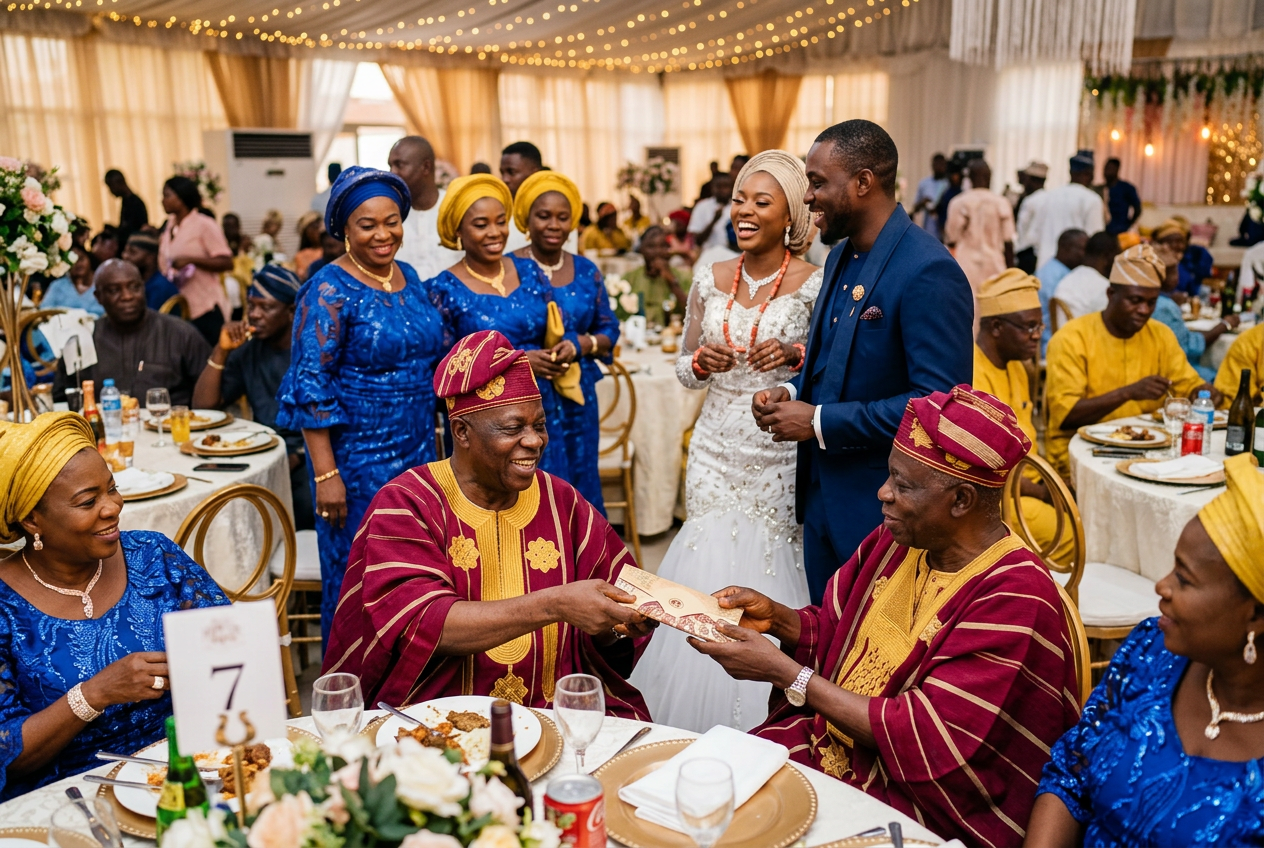
Food, clothes, decoration, photography and family expectations are pushing wedding bills into millions. For many couples, the celebration now demands serious financial choices long before they reach the altar.
There is a moment in almost every wedding plan when the numbers stop behaving. The first budget looks reasonable. Then the guest list grows. A relative introduces another ceremony. The dream decoration appears on Instagram. Food prices change. A vendor sends a fresh quotation. Suddenly, what began as a celebration of two people has become a large financial operation.

Oluwadamilola Oloyede is living through that moment. As a husband-to-be planning his wedding, he has watched estimates expand as quickly as the plans around them.
“As someone currently planning a wedding, I have realised that there is no fixed budget. You may set a figure at the beginning, but the expenses keep increasing as the planning progresses,” he said.
He has heard couples discuss budgets between N15 million and N20 million. At first, those figures can sound excessive. Break the wedding into food, drinks, venue, clothes, decoration, photography, music, makeup, cultural obligations and transport, however, and the total begins to look less like luxury and more like arithmetic.
INFLATION WALKS DOWN THE AISLE
Nigeria’s rising cost of living does not pause because two people are getting married. The National Bureau of Statistics (NBS) put headline inflation at 15.43 per cent in July 2026, down from 15.91 per cent in June. Food inflation, however, rose from 17.52 per cent to 20.31 per cent.

Monthly food inflation also climbed from 3.75 per cent in June to 5.56 per cent in July, showing that food prices increased faster during the month.
Couples see that pressure in the caterer’s market list, the decorator’s transport bill, the tailor’s fabric costs and the money required to move workers and equipment.
Oloyede has also noticed what he describes as the “wedding price”. Some services appear to cost more once the vendor learns that the booking is for a wedding.
“Wedding vendors have built a major industry around ceremonies. Once some vendors hear the word ‘wedding’, their prices increase. The same thing happens with hairstylists and makeup artists,” he explained.
MODEST LAGOS WEDDING STARTS AT ₦20 MILLION
Founder and creative director of Lavish by Endowed Events, Funmi Adisa places the cost of a modest 200-guest Lagos wedding between ₦20 million and ₦23 million.
Her estimate rises with the level of service. She places affordable luxury between ₦27 million and ₦30 million, premium luxury between ₦38 million and ₦40 million, and first-class premium luxury between ₦75 million and ₦85 million.

The venue, decoration, food, entertainment, and experience the couple wants determine where the final figure lands. Adisa also identifies logistics, power, transport, technical production, service charges, overtime, security, accommodation and last-minute additions as costs couples often overlook.
She advises couples to reserve another 10 to 15 per cent for unexpected expenses and to work with current quotations rather than old estimates.
“The biggest advice I have for couples basically is don’t plan with yesterday’s prices.”
For Adisa, a high budget alone does not make a wedding luxurious.
“Luxury basically isn’t about spending the most. It’s about intentionality, exceptional execution and experience that feels truly yours.”
FEEDING 200 GUESTS NOW COSTS MILLIONS
Food is one of the largest expenses in a wedding budget. Chief Executive Officer of Bowlands Foods, Adebusola Ogunbiyi, estimates that feeding one guest now costs about ₦35,000 for a modest but properly catered celebration.
“Before, ₦15,000 would give you food, small chops and even drinks. Now, if you want to keep things minimal, feeding each guest is about ₦35,000.”
At that rate, food for 200 guests comes to ₦7 million. That equals 100 months of Nigeria’s ₦70,000 national minimum wage. Decoration, venue, clothes, photography, music, makeup and drinks have not entered the calculation.
The guest list has therefore become one of the first places couples cut costs. Ogunbiyi now sees more invitation-only weddings, while some couples settle for 200 guests or fewer.
One of her clients reduced a planned celebration from 150 people to 50 after reviewing the cost.
“As a caterer, it was saddening, but I understood why. Before, we could go shopping with ₦300,000, but now it has tripled.”
Her experience reflects the pressure in Nigerian markets. The SBM Intelligence Jollof Index found that the average cost of cooking a pot of jollof rice for a family of five reached ₦29,578 in June 2026, an increase of 14.6 per cent within one year.
At Trade Fair Market in Lagos, the cost rose by 49.6 per cent over the same period.
THE DECORATION BILL
When 31-year-old Olatunji Adams planned his wedding, decoration was one of the bills that surprised him most.
Vendors quoted the newly married man between ₦1.7 million and ₦2 million or more for what he considered a standard setup.
For Adams, the difficult part was paying so much for something that would disappear once the celebration ended.
“What surprises me is that the decorations are only used for the event. You cannot take them home, and the decorators still take their materials away afterwards.”
The decoration market stretches far above ₦2 million.
Event decorator, Azu Francis explained that elaborate decoration for a 200-guest wedding could start from ₦15 million. The final bill depends largely on the couple’s preferred design.
“Designs generally cost a lot. There are more fabrics, more flowers and more builds. There is always something new to add because people want to be different. The pace of change is really fast.”
Fuel prices affect the cost of moving workers, materials and equipment. Imported fabrics, flowers and other items make the bill even higher.
A ₦2 million quotation and a ₦15 million quotation may both cover decoration, but they rarely offer the same experience. One vendor may dress an existing hall, while another rebuilds the space with flowers, fabrics and custom installations.
LOOKING GOOD COMES AT A PRICE
Nigerian wedding fashion often includes traditional attire, a wedding gown, the groom’s outfit and a reception change. Shoes, jewellery and clothes for the bridal party add their own costs.
Fashion designer and creative director of Olola Stitches, Ololade Oni explained that fabric, finishing and the amount of handwork determine the final price.
“The fabric, quality of finishing, level of embellishment, beadwork, hand embroidery, customisation and the reputation of the fashion brand can significantly influence the final cost.”
At the luxury end, one customised outfit for either the bride or groom starts from about ₦1.5 million. Dressing both partners for traditional and white ceremonies could run into several millions.
Imported embellishments, labour, fittings and delivery also affect the final cost. Oni, however, believes couples do not need the most expensive designs to look good.
“You do not have to wear the most expensive outfit to look luxurious. A well-thought-out design, quality fabric, excellent tailoring and a perfect fit can make even a relatively simple outfit look exceptionally elegant.”
Bridal makeup adds another six-figure expense.
Makeup artist and founder of Facesbymo, Matilda Olagunju, places the cost of makeup for traditional and white wedding ceremonies between ₦600,000 and ₦1 million. Touch-ups and travel attract additional charges.
A basic package usually covers one look for one ceremony, with the artist leaving after the makeup is completed. Premium packages may include a consultation, trial, high-end products, makeup changes, touch-ups and several hours of support.
“Bridal makeup must survive hours of heat, photography and video coverage. The cost may also cover assistants, transport, backup products and support for the bridal party.”
PAYING TO PRESERVE THE MEMORY
Photography, video and music also take a share of the budget. Photographer and videographer Demola Aderinde charges about ₦700,000 for a standard package. It includes a two-outfit indoor pre-wedding shoot, coverage of the white or nikah ceremony, traditional wedding and reception.
The couple also receives a 50-page photobook, a framed photograph, a highlights video, the full video and soft copies of the pictures.
His basic package starts at about ₦550,000. A premium package with a bridal shower, drone coverage and a 360-degree video booth costs about ₦1.4 million. Pre-wedding shoots, drone coverage and social media videos increase the final bill.
MUSIC COMES WITH ANOTHER BILL
Wasiu Aliu, known as DJ Kred, charges from ₦500,000 for a wedding. Guest size and sound requirements determine the final amount.
Other DJs, especially those with bigger profiles, charge between ₦2 million and ₦5 million. Sound may cost another ₦150,000, ₦200,000 or more.
“Some couples spend more on their decorations than DJ and Sound!”
HOW THE BILL REACHES ₦20 MILLION
The figures supplied by couples and vendors interviewed for this story show how quickly a 200-guest wedding approaches Funmi Adisa’s estimate. Food costs about ₦7 million, standard decoration ranges from ₦1.7 million to ₦2 million, and venue rental adds about ₦1 million. Drinks take another ₦1.4 million, photography and video cost about ₦700,000, and the DJ and sound add between ₦650,000 and ₦700,000. One luxury outfit each for the bride and groom costs about ₦3 million, while bridal makeup ranges from ₦600,000 to ₦1 million. The total already sits between ₦16.05 million and ₦16.8 million.
The calculation is not a national average, and it still excludes an event planner, rings, invitations, souvenirs, transport, security, accommodation, cultural rites, overtime, last-minute changes and the honeymoon. Once those costs enter the budget, the ₦20 million to ₦23 million estimate for a modest Lagos wedding becomes easier to understand.
SMALLER WEDDINGS, FIRMER CHOICES
Rising wedding costs have not weakened Nigeria’s love for celebration, but they are changing how couples plan. Invitation-only weddings are becoming more common, along with combined ceremonies, fewer outfit changes, weekday events and smaller vendor packages.
For some couples, inviting 50 guests is not a sign that they cannot afford more. It is a deliberate decision to control spending.
A lawyer, relationship and marriage counsellor, Dolly Ohanyere, believes couples should agree on their priorities and financial limits before family expectations take over.
“Couples must first agree on what they want, what they can afford and what they are willing to reject. They should set a budget that works for both of them and does not require debt. If relatives want something outside that budget, they should pay for it themselves, or the couple should politely decline.”
For Ohanyere, the financial choices made before the wedding can shape the early years of the marriage.
“The wedding is one day, but marriage is for a lifetime. It is not wise to spend the first years of marriage paying for one day. When the hall is empty, the music stops, and the guests are gone, the couple will be left with the financial decisions they made. A wedding should celebrate the beginning of a marriage, not compromise it.”