 Follow Us on Google News


 Follow Us on Google Discover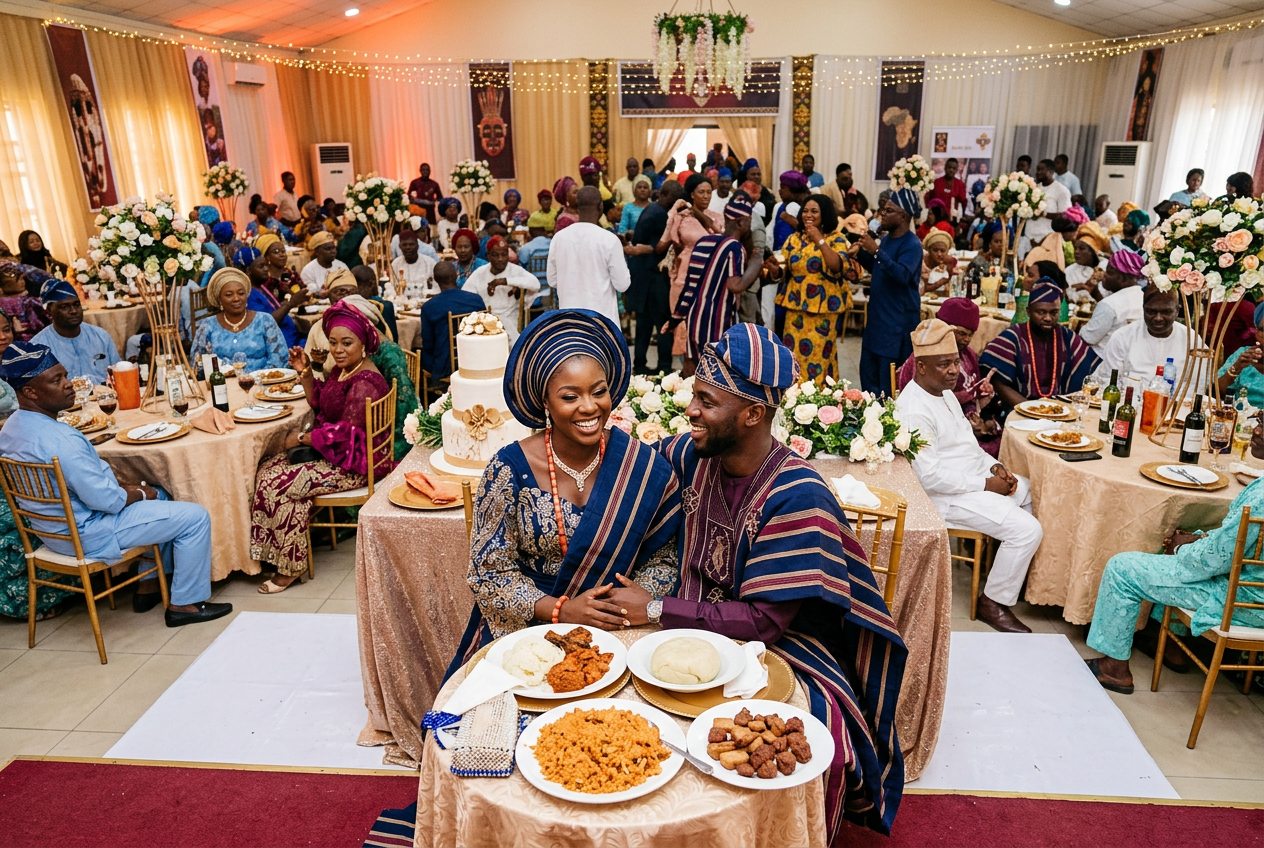
Welcome, and thank you for pulling up a chair for this one. If you have ever quietly wondered what Nigerian weddings are like, you have landed in exactly the right place, because I have spent years attending them from Lagos to Kano and the better part of the last year gathering all of that experience into a single guide. The short version is that Nigerian weddings are joyous, loud, gloriously colourful, days-long family affairs that fold ancient custom into thoroughly modern celebration, and no two are ever quite the same.
Let me be honest from the start.
The very first Nigerian wedding I covered as a young reporter completely overwhelmed me. I arrived expecting a ceremony and found what felt like a small festival, with hundreds of guests in matching fabric, a live band, mountains of jollof rice, and an aunty who insisted I dance before she would let me sit down. I have been fascinated ever since, and I hope by the end of this piece you will understand not just what happens, but why it matters so deeply to us.
So, shall we begin? Grab a plate of small chops. This is going to be a warm, honest walk through one of the most beautiful traditions in the world.
The Main Marriage Practices in Nigeria
Here is the first thing to understand, and it trips up almost every newcomer. A Nigerian wedding is rarely one event. It is usually a sequence of them.
Most couples move through an introduction, a traditional (or customary) ceremony, a religious ceremony in a church or mosque, and a grand reception that we affectionately call an owambe. Some families spread these over weeks. The truly ambitious manage them across a single exhausting, wonderful weekend.

The flavour of each stage depends enormously on ethnicity, because Nigeria is home to more than 250 ethnic groups, each with its own rites. The Yoruba have their engagement led by a witty mistress of ceremonies called the Alaga. The Igbo have the Igba Nkwu, the wine-carrying ceremony, where the bride searches a crowd of guests to find her groom and offer him palm wine. The Hausa, predominantly Muslim, centre their celebration on the Fatihah and the payment of a modest dowry. The National Bureau of Statistics documents these varied forms of marriage alongside how near-universal marriage remains across the country.
If you want to see just how spectacular tradition can get, look at the annual mass Awon wedding held in Shao, Kwara State, where dozens of brides parade in their finest under blue umbrellas to the rhythm of drums. It is tourism, heritage, and matrimony all at once.
To make sense of the whole thing, here is the order most Nigerian weddings tend to follow.
- The introduction. The groom and his people visit the bride’s family to declare their intentions formally. Kola nuts, drinks, and warm speeches do the diplomatic heavy lifting.
- The bride price and the list. The bride’s family presents a list of items, and the two families negotiate the bride price. This is symbolic honour rather than a literal purchase, whatever outsiders assume.
- The traditional wedding. This is the cultural heart of it all, full of drumming, dancing, prostrating, and ethnic attire. For many families, this is the wedding that truly counts.
- The religious ceremony. A white wedding in church or a Nikkai in the mosque follows, adding a spiritual seal to the union.
- The registry signing. Couples who want legal recognition register their marriage under the law, often quietly, sometimes on the same day.
- The reception (owambe). The party everyone waits for, with catering, a live band or DJ, and money-spraying that can go on for hours.
- The thanksgiving. The following Sunday, many couples attend a thanksgiving service to close the celebration with gratitude.
Not every couple does all seven, mind you. But this rhythm is the backbone, and once you recognise it, any Nigerian wedding suddenly makes sense.
The 5 Conditions of Marriage in Nigeria
Beneath all the colour sits a legal framework, and it is worth understanding if you want the marriage to be recognised by the state rather than by custom alone.
Nigeria recognises three broad routes to marriage: statutory (under the Marriage Act), customary, and Islamic. A statutory marriage is the one most couples pursue when they want a certificate that banks, embassies, and courts will honour. You can begin the whole process through the Ministry of Interior’s marriage registration portal, and customary unions are handled locally through each Local Government marriage authority.
For a statutory marriage to be valid, five conditions generally need to be met.
- Marriageable age and consent. Where either party is under twenty-one and not previously widowed, written parental or guardian consent is required.
- No subsisting marriage. Neither party may already be married under the Act or by custom to anyone else, since statutory marriage is strictly monogamous.
- No prohibited relationship. The couple must not fall within the prohibited degrees of consanguinity or affinity, meaning they cannot be too closely related.
- Free and genuine consent. Both parties must consent willingly, without duress or fraud, and understand exactly what they are entering into.
- Proper form and place. Notice must be given, and the ceremony must take place before a recognised registrar or licensed minister, in a licensed venue, with witnesses present.
Rather like the foundations of a house, these conditions are invisible on the wedding day itself. Nobody at the owambe is discussing prohibited degrees of affinity. But get them wrong, and the marriage can be declared void, which is a headache no couple wants years down the line.
So, What Are Nigerian Weddings Like?
Let me answer the question directly, because you have been patient.
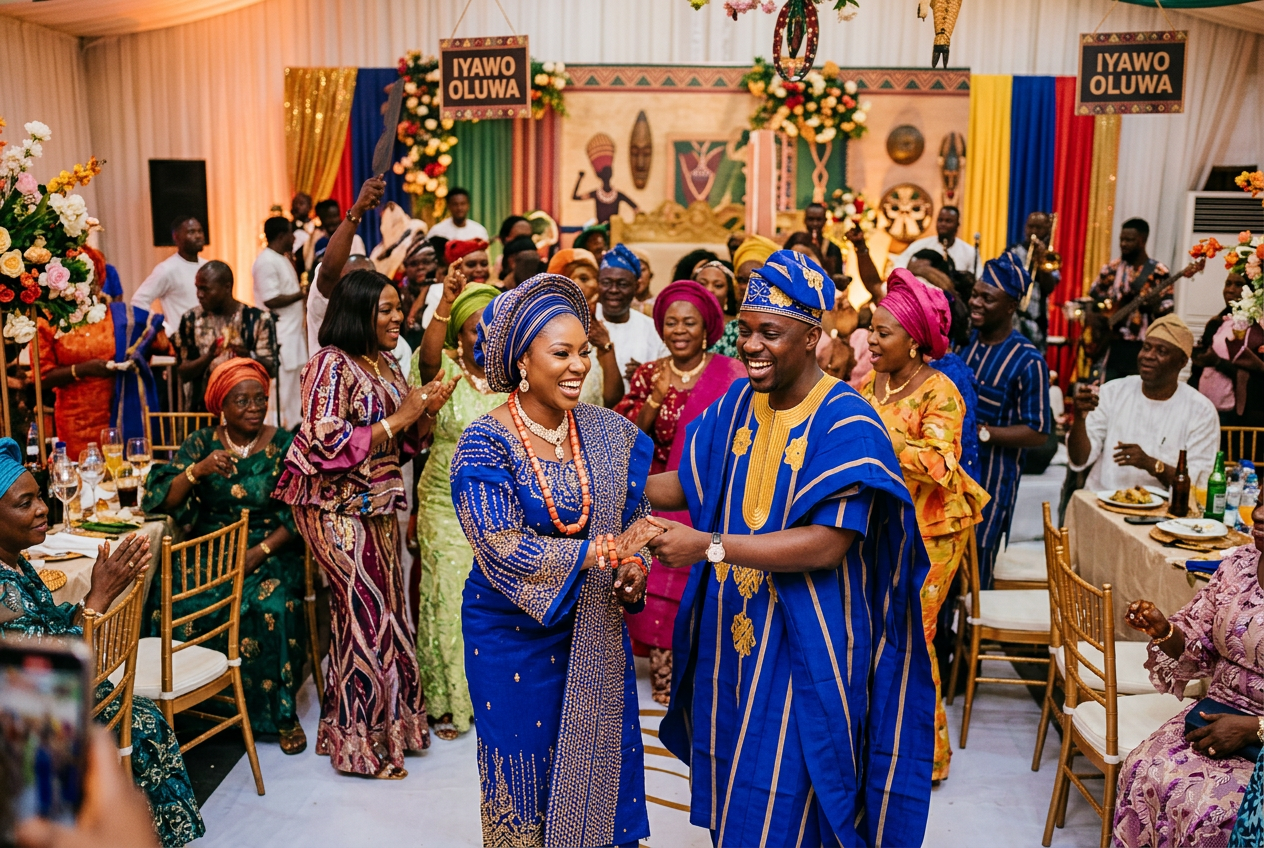
Nigerian weddings are communal, multi-stage celebrations that unite two entire families rather than just two people, blending traditional rites, religious ceremony, and lavish partying into an event defined by colour, food, music, and generosity. Picture the essential ingredients together: matching aso-ebi fabric worn by guests, a bride in an ornate gele head-tie, a groom in flowing agbada, palm wine and kola nuts exchanged between elders, hundreds of guests, jollof rice by the cauldron, an Alaga heckling the groom for laughs, spraying money raining onto the dancing couple, and a live band pulling everyone to their feet.
That is the essence of it. A Nigerian wedding is less a private vow and more a public festival of belonging, where the community shows up to witness, feed, bless, and celebrate the couple into their new life together.
And here is what genuinely moves me after all these years. Beneath the extravagance sits something tender, which is a whole community declaring, loudly and expensively, that these two people are loved and are not walking into marriage alone.
Who Pays for What at a Nigerian Wedding?
Ah, the money question. Nobody wants to raise it, yet every family whispers about it constantly.
Traditionally, the bulk of the financial weight falls on the groom and his family. They pay the bride price, fund the traditional ceremony, and often carry a large share of the white wedding too. It stems from the old idea that a man should demonstrate he can provide for his new household.
But the bride’s family are far from idle spectators. They typically host the introduction, buy their daughter’s trousseau, and cover her aso-ebi and a good portion of her attire. These days, increasing numbers of couples simply pool resources into a joint wedding fund, which older relatives grumble about but younger pragmatists rather sensibly prefer. If you want a proper walkthrough of the planning and budgeting side, this ultimate Nigerian wedding guide covers the logistics beautifully.
Estimated Nigerian Wedding Costs by Category in 2026
| Wedding Element | Typical Cost Range (₦) | Usually Paid By |
|---|---|---|
| Bride price and gift list | 100,000 to 2,000,000 | Groom’s family |
| Traditional ceremony | 1,000,000 to 4,000,000 | Groom’s family |
| White wedding and venue | 1,500,000 to 6,000,000 | Shared or groom |
| Aso-ebi and bridal attire | 300,000 to 3,000,000 | Bride’s family |
| Catering, drinks and small chops | 2,000,000 to 8,000,000 | Shared |
| Photography and video | 300,000 to 2,500,000 | Couple |
| Reception hall and decor | 1,000,000 to 5,000,000 | Shared |
The figures make one thing plain. A middle-class Nigerian wedding comfortably runs from ₦5 million to ₦10 million once every element is added together, and elaborate society weddings sail well past ₦20 million.
Is There Alcohol at Nigerian Weddings?
This one genuinely depends, and the answer reveals a lot about our diversity.
At most Christian and traditional weddings in the south, yes, absolutely. Palm wine is not merely present at an Igbo ceremony, it is essential, since the bride uses a cup of it to publicly identify her groom during the Igba Nkwu. Beer, wine, spirits, and the beloved Chapman cocktail flow freely at the reception.
At Muslim weddings, particularly in the north, the picture flips. In keeping with Islamic teaching, these celebrations are typically alcohol-free, and hosts serve zobo, kunu, chapman, and soft drinks in glorious abundance instead. Nobody goes thirsty, I promise you.
So whether alcohol appears comes down to religion, region, and family preference rather than any single national rule. If you are attending your first owambe and unsure how to conduct yourself around the drinks, the dancing, and the spraying, this cheerful guide to the dos and don’ts of Nigerian owambe parties will save you a great deal of embarrassment.
A small tip from experience. If you are offered palm wine by an elder at a traditional ceremony, accept it graciously even if you only sip. Refusing outright can read as a snub, and you never want to snub the person controlling the jollof.
Final Thoughts on What Nigerian Weddings Are Like
If you take one idea away from all of this, let it be this. A Nigerian wedding is a community event dressed up as a couple’s celebration, and that is precisely what makes it so special.
We have walked through the sequence of ceremonies, the legal conditions underpinning a valid marriage, the delicate question of who pays for what, and the regional truth about alcohol. Underneath every one of those details runs the same current, which is family, belonging, and unashamed joy.
So what should you actually do with all this? If you are invited to one, say yes without hesitation. Buy the aso-ebi if it is offered, dress a level smarter than you think necessary, bring cash for spraying, arrive with an open heart and an empty stomach, and prepare to dance. And if you are the one getting married, plan early, budget honestly, talk money with both families before emotions run high, and remember that the guests came for you, not for a flawless timeline.
Nigerian weddings are not perfect. They are long, expensive, and occasionally chaotic. But they are also among the most generous, life-affirming gatherings you will ever attend, and I would not trade a single one of them.
Related Articles
If this has whetted your appetite, I have explored the money side of all this in far greater depth in my guide to who pays for a wedding in Nigeria, where I break down the shifting financial expectations between families and the rise of the joint wedding fund.
And because the question of how many spouses our laws and customs actually permit comes up at nearly every wedding table, you may also enjoy my piece on how many marriages are allowed in Nigeria, which untangles the differences between statutory, customary, and Islamic marriage.
Key Takeaways
- A Nigerian wedding is usually a sequence of events (introduction, traditional ceremony, religious service, and reception) rather than a single ceremony, and the details shift by ethnicity and region.
- The groom’s family traditionally carries the heaviest costs, but shared funding is now common, with a full middle-class celebration typically costing ₦5 million to ₦10 million.
- Whether alcohol is served depends on religion and region, with southern Christian and traditional weddings usually offering it and northern Muslim weddings typically alcohol-free.
What Are Nigerian Weddings Like? Frequently Asked Questions
What are Nigerian weddings like?
Nigerian weddings are vibrant, multi-day, family-centred celebrations that combine traditional rites, a religious ceremony, and a lavish reception known as an owambe. They are defined by matching aso-ebi fabric, abundant food, live music, spraying money, and the involvement of the entire extended community.
How long does a Nigerian wedding last?
A single ceremony usually runs between six and sixteen hours, but most couples hold several ceremonies spread across days, weeks, or even months. The traditional wedding, the white wedding, and the reception are frequently held on separate occasions.
How much does a Nigerian wedding cost in 2026?
A middle-class Nigerian wedding typically costs between ₦5 million and ₦10 million once every ceremony and element is combined. Elaborate high-society weddings routinely exceed ₦20 million.
Who pays for a Nigerian wedding?
Traditionally the groom and his family shoulder most of the cost, including the bride price and the bulk of the ceremonies. Increasingly, however, couples and both families contribute jointly through a shared wedding fund.
What is aso-ebi at a Nigerian wedding?
Aso-ebi is the matching fabric chosen by the celebrating family that guests purchase and sew into outfits to show solidarity and belonging. Wearing it signals that you are an honoured, supportive guest rather than a passing observer.
What does spraying money mean at a Nigerian wedding?
Spraying is the joyful custom of sticking or showering banknotes on the couple or dancers during the reception. It celebrates the couple, entertains the crowd, and is considered a warm gesture of goodwill rather than a tip.
Do Nigerian weddings have a guest list?
Traditional weddings often follow a come-one, come-all spirit, so numbers can swell far beyond the official invitations. Modern couples increasingly manage guest lists to control catering costs, though a few uninvited relatives always seem to appear.
What is the difference between the traditional and white wedding?
The traditional wedding celebrates the couple’s ethnic customs with drumming, native attire, and family rites, and for many families it is the ceremony that truly seals the union. The white wedding is the religious service in a church or mosque that adds a spiritual and often legal dimension.
Is there alcohol at Nigerian weddings?
Most Christian and traditional weddings in the south serve alcohol freely, and palm wine is culturally essential at Igbo ceremonies. Muslim weddings, especially in the north, are typically alcohol-free and serve zobo, kunu, and soft drinks instead.
What should guests wear to a Nigerian wedding?
Guests should dress smartly in traditional attire, wearing the designated aso-ebi if one has been provided by the couple. When unsure, overdress rather than underdress, because Nigerians deeply appreciate visible effort in dressing for a celebration.
What is the bride price in Nigeria?
The bride price is a set of gifts and money the groom’s family presents to the bride’s family as a mark of honour and commitment. It is a symbolic gesture that formalises the union between the two families, not a literal purchase of the bride.
What are the 5 conditions of marriage in Nigeria?
For a valid statutory marriage, the parties must be of marriageable age with consent where required, free of any subsisting marriage, and not within prohibited degrees of relationship. They must also give genuine consent and marry before a recognised registrar or licensed minister in a licensed venue with witnesses.

