GDN SIDEBAR
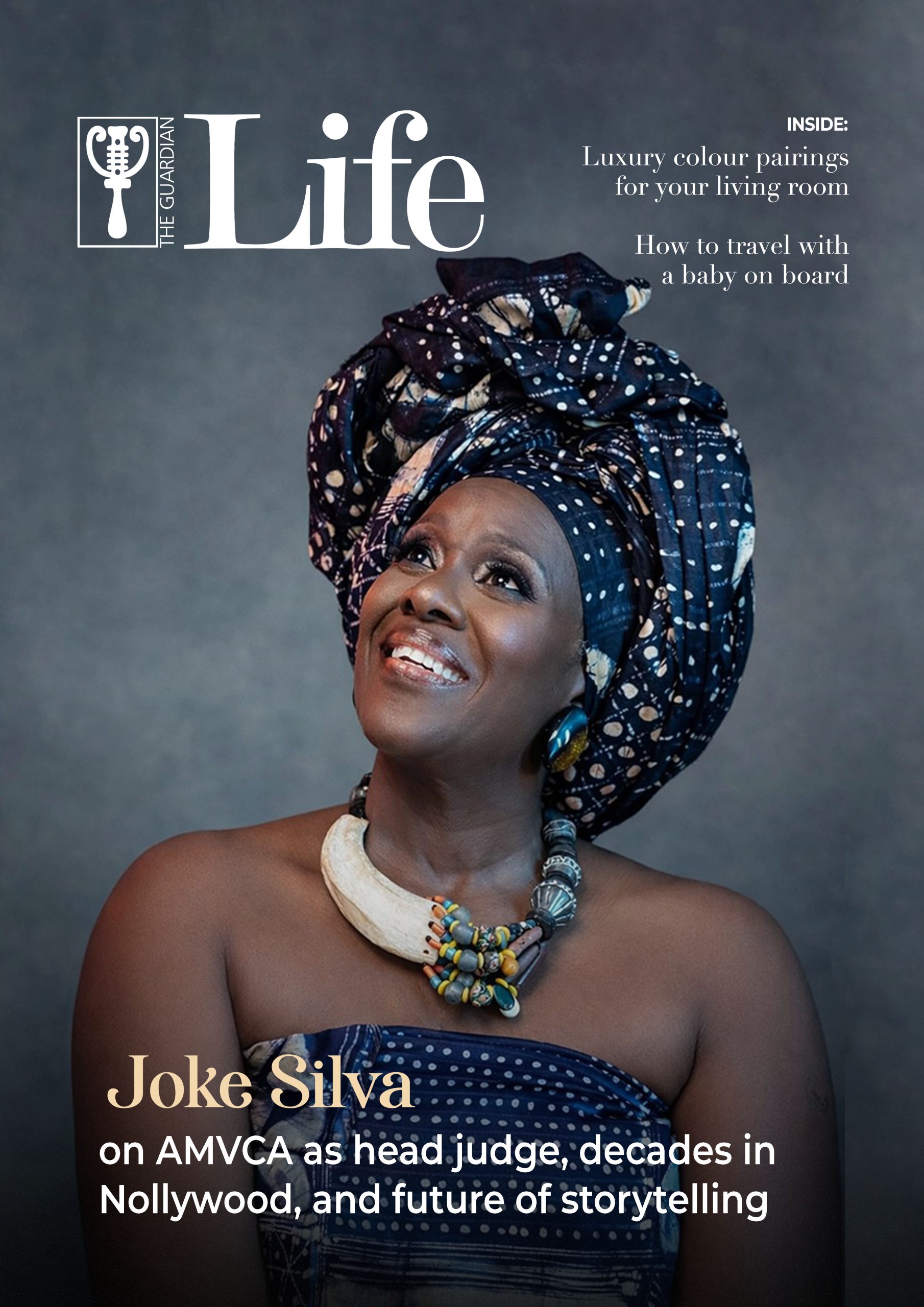
Few actors have remained as steady and respected in Nigerian storytelling as Joke Silva. For more than four decades, she has moved through theatre, television, and film with a presence that does not depend on reinvention to remain relevant.
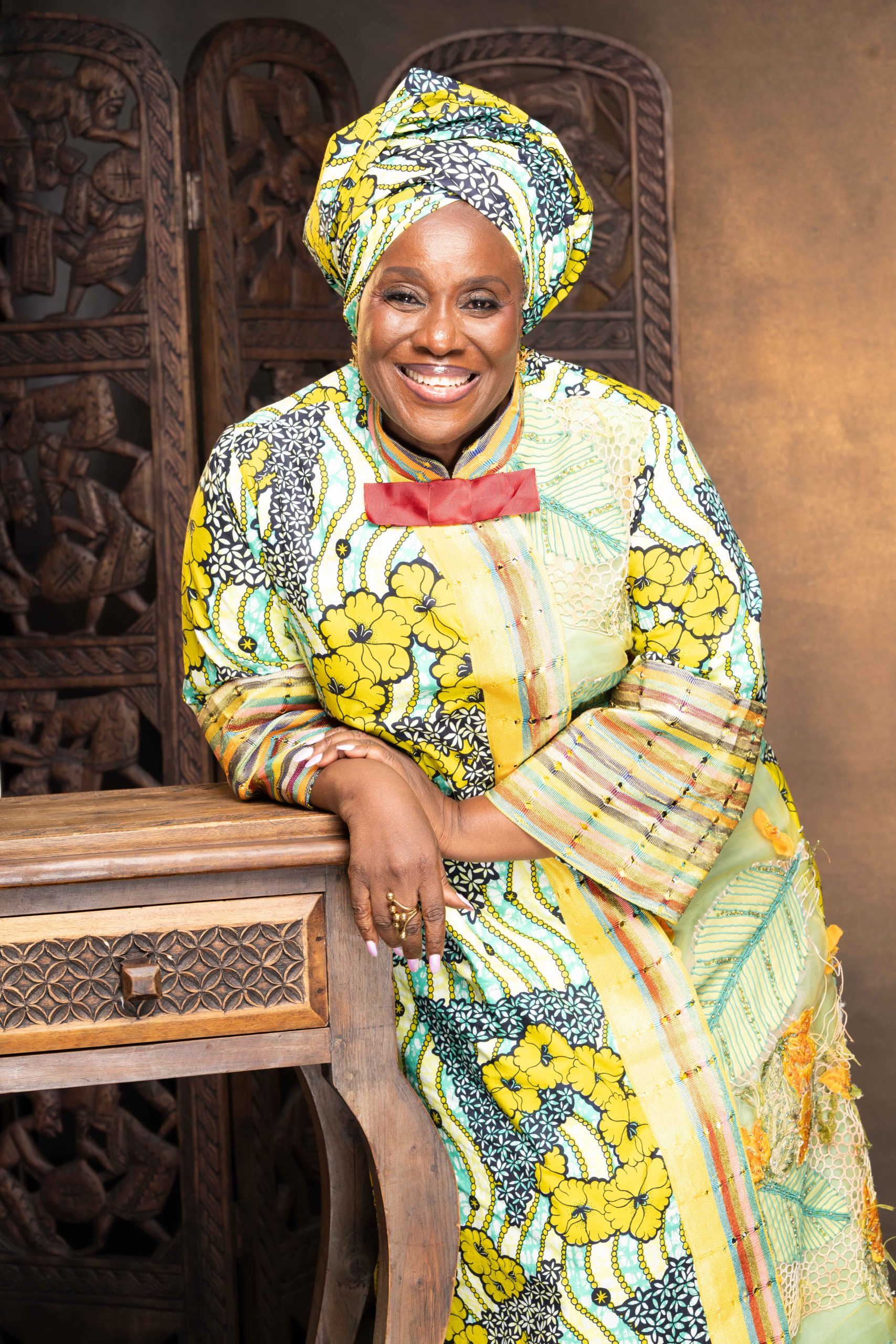
Her journey runs alongside the evolution of Nollywood itself. She has watched the industry stretch, shift, and open up to the world, while holding firmly to the values that shaped her as a performer.
Speaking with Guardian Life, Silva said theatre and television played the biggest roles in shaping her as an actress. “Theatre, because that’s where I started as a classical actor, and television, because that’s where I really cut my teeth in camera work.” Film, she added, came in “spurts” and was never as consistent a part of her career.
What AMVCA role means to her
With her appointment as head judge of the 12th Africa Magic Viewers’ Choice Awards, Silva once again finds herself at the centre of a defining industry moment. Yet she does not approach the role as a badge of prestige. If anything, she speaks of it with a deep sense of responsibility.
“I am honoured by it,” she said. “And it means that people who asked me to be the head judge seem to have confidence in my ability to resolve issues, because that’s really the job of the head judge.”
For her, the role goes beyond overseeing a panel. It is about judgment, balance and the ability to make difficult decisions when they arise. It is also about protecting the standards that the awards must uphold.

“There is a team of judges made up of highly skilled people who understand film. So, in the non-voting categories, I believe we have some really good nominations. As for the voting categories, that is left to the audience. They will decide their pick in those categories.
“As I said in my speech, the awards, especially in the non-voting categories, are not necessarily a popularity contest. They are more about craft and skill.”
What makes a performance award worthy
“What separates a good performance from an award-winning one is the ability to portray a character so convincingly that the audience believes it. An award-winning performance is one in which the actor fully becomes the character,” she explained.
It sounds simple, but in an industry that often works under tight deadlines and limited time, she knows it is not easy to achieve. That is why, when it happens, it matters.
Nollywood’s growth and pressure beneath it
For all the global attention Nollywood now enjoys, Silva believes its growth must be understood within the realities it operates in. She is neither dismissive nor blindly celebratory. Her view is measured.
“I do believe Nollywood has done well, especially with the challenges it faces,” she said, pointing to the difficulty of producing films on what she described as “almost cutthroat budgets” while still being compared to international standards.
That tension, she explained, sits at the heart of many of the industry’s struggles. Expectations are rising, but the structures to support them remain weak. For Silva, the issue goes beyond funding. It is also about the broader economy around the industry.
“The middle class has shrunk so much that most Nigerians do not have disposable income, so where is your return on investment?” she asked.
It is a simple question, but it carries weight. For filmmakers to do better work, they need stronger distribution systems and a real chance to recover their costs. Without that, budgets remain tight, choices become limited, and quality often competes with conditions that make better work difficult.
Still, she believes Nollywood deserves credit. “With the challenges Nollywood is facing, we have to appreciate what practitioners have done over the years. To keep the industry alive, keep it buzzing and maintain global attention is no mean feat.”
Why research matters
Research, for Silva, is not optional. It is foundational.
“Research is very important, whether for a historical or contemporary film. It helps you place your work properly within the context of the time the story is set,” she said.
For her, research must run through every layer of production. The writer needs it. The actor needs it. The art department, sound team and music team need it too. Every element must serve the truth of the story.
Streaming platforms and who controls the story
Silva, who won Best Actress in a Supporting Role at the 4th Africa Movie Academy Awards in 2008, understands that streaming platforms are businesses and that filmmakers need returns. But she is uneasy about how much of the storytelling space is being shaped from the outside.
“I’ve always been a bit nervous that Nigeria’s media is outside of Nigeria’s hands,” she said.
For her, this is not just about distribution deals or platform tastes. It is also about influence, identity and who gets to shape public thinking through the stories people consume. “If there is no platform that is fully Nigerian, then who is dictating the stories that our people hear? Who is shaping mindsets?” she asked.
That concern feels even more pressing now that global platforms such as Netflix and Prime Video are rethinking their strategies. Yet Silva does not speak about that shift only as a setback. She sees it as a chance for Nigeria to think differently and build more of its own.
“I think it honestly gives Nigeria the opportunity to then create its own,” she encouraged.
She even pointed to older platforms like NTA as possible spaces for renewed thinking, if the right conversations are had around advertising, investment and audience value.
Hope in today’s Nollywood
“The standard of the stories, the scripting, wow! I am so impressed,” she said.
What excites her most is the growing complexity of Nigerian storytelling. She believes films are beginning to reflect life more honestly and with more depth. “We are beginning to show more complexity, which reflects the lives we live,” she added.
She sees that growth across comedy, drama and horror. In her view, stories are becoming tighter, and filmmaking is becoming better. If she has one concern, it is editing. “I’m still not too happy with our editing,” she admitted. “I sometimes think that the editing tradition is a bit slow.”
Even then, her criticism does not come from cynicism. It comes from wanting better, and she believes better is possible.
Legacy, youth and question of hope
At this stage of her life, Silva’s thoughts extend beyond personal success. She is increasingly concerned about young Nigerians and the country they feel they are inheriting.
“Right now, I am more concerned when I hear many young people whose minds seem focused on leaving the country in everything they do,” she said.
What troubles her is not that people want to leave, but what that says about trust, belonging and hope. “So what do we do for those who believe they should not leave the country? What do we have to do?” she asked. “What kind of stories do we tell that give hope?” she added.
Why Mothers of Chibok stays with her
Among the recent works she spoke about was Mothers of Chibok, a documentary directed by Kachi Benson and produced by her. She was drawn to the film not only by its technical strength, but also by the way it approached pain without reducing the women in it to pain alone.
“The grief was always in the background,” she explained. “But it was the minute way of their living, that is shared with us.”
What moved her was their humour, their routines, their labour, and their determination to keep life going. She spoke of women ensuring their children still go to school, of harvest seasons, of anxiety about rain, and of the quiet dignity with which they carry on.
The project, she said, reinforced rather than changed her understanding of motherhood, grief and resilience. On motherhood, she said, “Motherhood is almost like an office, it’s beyond being bearer of children. Mothers have this sense of responsibility that they carry till they can no longer carry it.”
On grief, she pushed back against the exaggerated ways it is often portrayed on screen. “Grief is not always melodramatic,” she said. In many cases, she explained, it is quieter than people think, sometimes just a face turned away or “just a little tear” falling.
And on resilience, her words widened beyond the documentary itself. “I think there are very few Nigerians that you will find who are not resilient. Nigerians find a way, and it’s such an incredible characteristic that we have.”
Advice for aspiring filmmakers
Asked what she would say to young people who want to follow her path into storytelling, she said, “Anybody who wants to go into storytelling should get trained and become highly skilled.”
She distinguished between basic skilling and deep professional training. “It is those who are highly skilled, well-trained and thoroughly grounded in their craft who rise to the top. We need a critical mass of people who can stand toe-to-toe with our international colleagues.”