GDN SIDEBAR
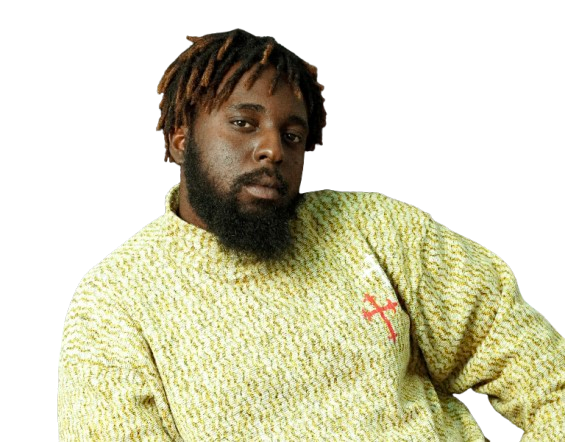
Before the hits, sold-out shows and growing influence of Afro Pluto, ZerryDL was a teenager recording songs on his phone and betting on a future only he could see.
“I started recording music on my phone, because I couldn’t afford studio sessions.” – ZerryDL
There’s something magical about starting with what you have. Right now. Right away. It’s worked for several successful people across the world, especially Nigerian rapper ZerryDL.
“I started writing bars in primary school,” he tells Guardian Music. “I later started recording music on my phone, because I couldn’t afford studio sessions.”
Somehow, his strong self-belief, sheer talent and dedication battery-powered his breakout into the Nigerian music mainstream. Since 2023, he’s been recognised as one of the country’s most prolific emerging storytelling rappers and hitmakers. A member of the Uzama household, alongside Shallipopi and Famous Pluto, he’s also a major force in the evolution of the ‘Beninpiano’ wave, the Amapiano-tinged pop fusion soundtracking Nigerian nightlife.
Raised in Benin City, ZerryDL was already freestyling over beats his brother downloaded from local websites by age 11, piecing words together on his phone long before he nursed any full-blown career ambition. By high school, the hobby had grown into a small music group with friends, while family expectations pulled him toward medicine.

His breakthrough eventually arrived at the crossroads of pursuing university admission and committing fully to music. Today, he’s signed to Plutomania Records, the Shallipopi-founded imprint where he has continued to grow as one of the flagship voices of the Uzama household.
After clinching the Rookie of the Year award at the Headies last year, ZerryDL has continued in his streak of hit singles, with his latest titled Follow My Lead. From his 2023 debut tape, Danger Zee, to his 2024 statement-making Wara Wara SZN, he’s continued endearing fans to his soundscape rife with punchlines, storytelling, flow and groove.
Catching up with Guardian Music, he opens up on growing up in Benin City, finding his voice through freestyle culture, building the Afro Pluto sound with his brothers, surviving pressure, and why his next album will carry everything from the journey back home to where he stands now.
When did you actually discover your talent?
I was like 11 years old. I think 2015.
Okay, what was happening in your life at that time?
I mean, I was still young. I was still schooling, so I didn’t understand it at first, but I just tried. The first time I ever did a freestyle, it was on a beat my brother downloaded from these local websites. I used to have these beats on my phone, just trying to put words together, trying to create a song. But I used to do only one verse of a song. I didn’t really believe that it was real until I started trying. I did one song then, but I didn’t go to any studio. I was just recording on my phone. So that’s where it all started.
At what point did you discover that you were really good at it?
It was the same year I discovered I knew how to rap. I was just rapping words, I was just rhyming words, and I don’t know, it was just making me think that I’m smarter. Just putting words together and creating a bar or a line or a verse just made me feel like I’m smarter, because I never knew that that was possible.
I used to listen to people. I was inspired by a lot of people. Before then, I used to listen to hip-hop and Nigerian hip-hop too. I just felt like you had to be in a certain age for you to rap, because the people I used to listen to were way older. So, I discovered I knew how to rap at a very young age. I didn’t know that was possible. It felt like a spiritual gift.
Where did you go to school?
I attended CFA Primary school in Benin City. When I moved to another school for my JSS1, that’s when I started taking rap seriously. In primary school, the only thing I was doing was writing bars at home. But when I got to JSS1, I started seeing people, and I started telling my friends in school that I could rap. When I got to JSS2, some new students came in, and they were also rapping. So, I created a music group called Jazz Music. We were just doing it low-key because some people were doing it for fun or just because we were doing it.
Was Shallipopi ever part of the music group?
When Shallipopi got to JSS3 or SS1, that’s when he came to the school. We were doing the music together, though, but we weren’t in the same class. We were just doing it from home. People knew that we were brothers and we were doing music, but in school, we just had this music class in school that we used to go and learn how to play instruments.
Interesting. Did you learn anything?
I was trying to learn how to play guitar one time, but I was left-handed, so I would always turn the guitar to the other side. I also tried the violin and the saxophone. I came from this royal family and traditional home where you use your right hand for everything. I was using my left hand to shake elderly people, to eat, but they weren’t taking it. So, I had to learn to use my right hand.
Were you having pressures when choosing to face music?
There was pressure back home because my parents always wanted me to do medicine, to go into science and do medicine. But actually, that wasn’t my calling. I didn’t want to do that. One time, when it was time for me to pick either going into science or the arts, I didn’t even tell them I was going for the arts.
How did they take it when they found out?
One thing about my parents, they didn’t really believe in music at first. I had an aunt who studied theatre arts, and when she came out of school, she struggled to find a job even though she was very talented. So, my mum always used to say the arts would not give me a job, and that I needed to look for something that would give me another life. But I just said I didn’t really believe that. I was sticking to my thing because if the opportunity was meant for me, it would come.
What inspired you to start music professionally?
I started getting to know a lot of people and talking with them. I came from the trenches. Back then, when you saw anybody older than you or a group of people gathering, you could just tell them you knew how to freestyle, and you would start rapping for them. I didn’t have money for studio sessions, so I used my phone to record. I first had a button phone, and the only thing I could do with that was make calls or play games. When I got an Android phone, I downloaded apps like Tune Me and Voloco. That was what I used to record my music. I also discovered Audiomack later that year. That was when I started uploading my music for free, sharing links with people I knew and people on my WhatsApp. Sometimes, I just shared the links to random people, and some of them used to cuss me out. I did not pay for my first-ever studio session. It was through somebody I met when I was about to go to university.
Did you end up pursuing university admission?
When I was about to go to university, that was when I blew up.
How did you navigate the pressure of choosing between school and music?
I knew the one I was going to pick. I knew the one that was going to change my life, and that was music. I had already passed all my exams. I wrote JAMB, WAEC, and NECO, and passed all of them. I was trying to go into study Mass Communication because it is a social science course, and they didn’t believe the arts were paying. But that was when I started trending, so I just decided to leave.
You have a strong storytelling ability. Who were you listening to back then?
I used to listen to a lot of hip-hop, including street-hop. I used to listen to J. Cole, Kendrick Lamar, Dave, J Hus, Tupac and the OGs.
What is one song that feels most personal to you?
If you listen to my first EP, there is one song called “Pressure.” I think it was the last track on the EP. That is a personal song. I wrote that song when I was down and depressed in Benin. When I came to Lagos, I recorded it, and I told my management back then that I needed to put this song on the project. They didn’t really want me to put it there, but the song made it. I recorded it the same day I recorded “Puff & Pass.” The song had been on my phone for a long time, but I just wanted the opportunity to record it. So, when I came to Lagos and had the chance to have a studio session, I recorded it.
Would you prefer people to see you as a hitmaker or a storyteller?
They can see me as anything they want to see me as. Sometimes I just want to impart knowledge, and sometimes I just want to make people dance. I want to give people morality. So, it depends on the song. People call me a storyteller. People can call me anything.
Let’s talk about what many people call Beninpiano. You call it Afro Pluto. How did that sound come about?
It is natural. It came from back home. If you go to Benin City, anybody can freestyle as long as they hear a fast beat. You can freestyle. It is like we used to talk on beats. It is something everybody does. This one started on TikTok. I used to have Amapiano playing in the background, and I would just sing funny stuff. People used to tell me, “Drop this one. Why don’t you want to drop this one? Why are you taking it as just a freestyle?” I didn’t want to drop it because I thought it wasn’t serious. One time, I did this freestyle on Amapiano, and a popular blog posted about me. Then a popular producer sent me a DM that I should drop the song. So I said, ” Okay, I would drop the song if I had the chance. That was when I recorded “Puff & Pass.” From the roots, it is something we just do effortlessly.
How did you get the name ZerryDL?
I was looking for a good name, because you need to have an easy name that people can call. Not too long, not too short. I was trying to use my government name, but maybe it was not matching with the kind of music I was making or the kind of music I was trying to make. One time, I just thought of Zeri randomly. It came to my head, and I was like, ” What does this word mean? I searched it on Google, and it said the meaning was somebody who is creative and has an idea of making money. I was like, okay, let me use it. But when I searched again, a lot of people were already bearing the name. I felt like it would be a problem if I were trying to use that name, because I might just disappear if anybody searched for me. So, I wanted to add something to Zeri so people could differentiate. So, I changed it to Z-E-R-Y. At first, I used Zery San X. Then, one time in school, a guy called me a legend because many people in the school were freestyling and rapping. He was like, “Zery the Legendary.” So, I removed the San X and turned it into Zery the Legendary. Later, I shortened it to ZerryDL. With time, it started making sense to me.
How is it working with your siblings?
It is very natural. It is a no-stress type of thing. Sometimes we are not in the studio together. Maybe Famous or Shalli can send me a song and say, “I want you on this song.” We might not even be in the studio together, but when I hear the song, I already know what to do. So, it is not hard at all. The chemistry is different because we are blood brothers. We understand ourselves. So, working with them is easy.
When you are not making music, who are you?
I’m just this crazy, funny guy that everybody misunderstands sometimes. In my personal life, I like having fun. I like playing basketball because I’m like 6’4. I like playing lawn tennis and table tennis. I like going outside and experimenting. I like adventure stuff, even if I can’t really go outside like that sometimes. I don’t like boring times. I want every day to be productive, so I just like doing stuff. I’m a sports guy. If the music didn’t work out, maybe sport would have worked out.
What do you want people to experience from your artistry in the long run?
I’m here to inspire a lot of people. My lifestyle, my personality, my music, how I talk, how I dress, my influence. All my influence will be crazy. If I’m not doing music anymore, I want to be a leader. In the long run, I want them to remember me for something. I want to be different. Being myself is being different, because there is nobody like me, and there is nobody like you, too. The more I’m being different and doing my thing, maybe I’m going to set a record one day. If I stop doing music, people are going to remember me for something, even if it is not music-wise. I just want to do something.