GDN SIDEBAR
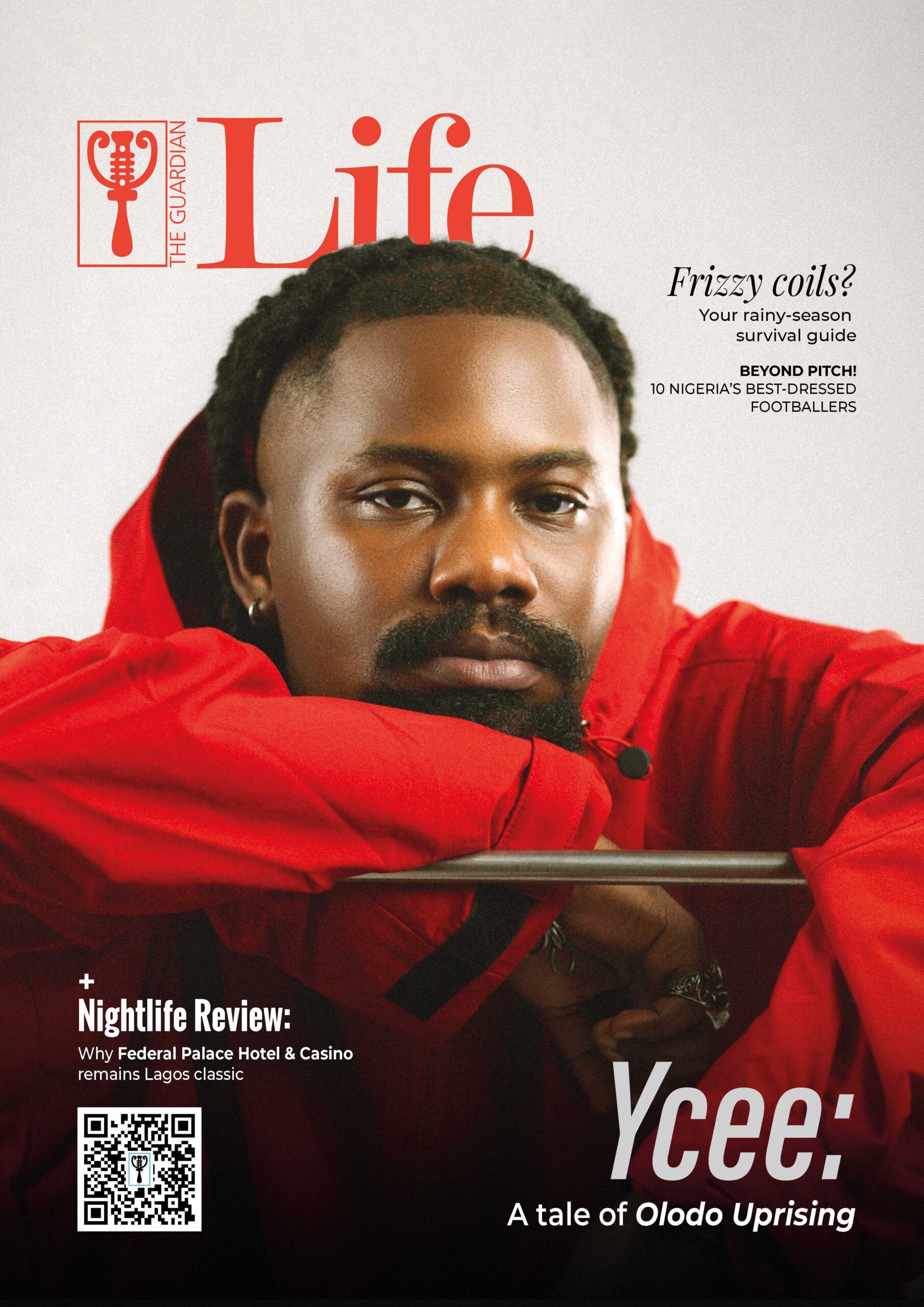
Nigerian rappers rarely go viral for their ideas. The conversation often centres on music, scandal or money. So, when Oludemilade Alejo, popularly known as Ycee, sparked debate with Olodo Uprising, critique of intellectual decline, it felt bigger than another trending podcast clip.
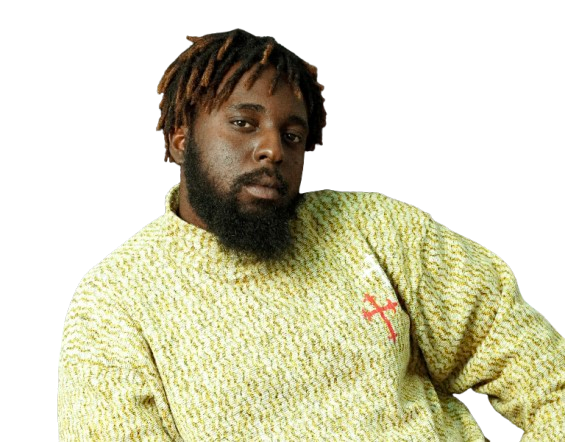
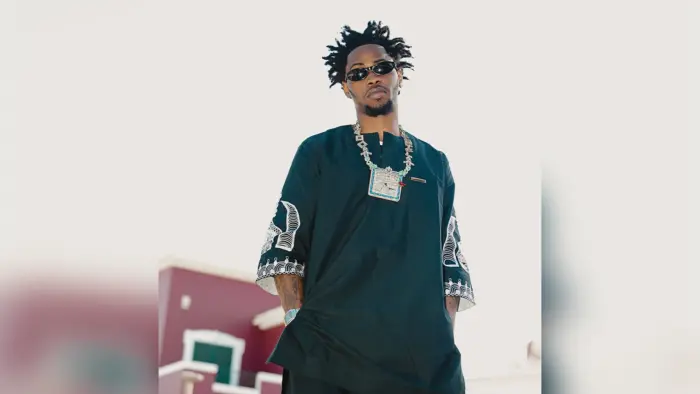
That willingness to speak his mind was clear when Ycee arrived at Guardian Life Studios in a yellow Aloha shirt, showing little sign of fatigue from a week of media rounds. “People don’t know this, but I’m a yapper. I like to express,” he says, adjusting his microphone. That candour has shaped the 33-year-old rapper’s decade-long career and his second studio album, Out of Sight, Out of Mind.
Released through his ANBT label, the 14-track album draws from his life during a hiatus marked by mental health recovery. In this conversation with Guardian Life, the Lagos-bred rapper and Nigerian music’s Jagaban discusses the story behind Out of Sight, Out of Mind, his inspirations, creative process, mental health journey and campaign against dependence on brain rot content.
How did you get the name Ycee?
When I was in primary four, I had a little accident and cracked my wrist. I went to school with a POP around it, and the other kids kept saying, ‘You broke your arm.’ I said, ‘No, my arm didn’t break. It just cracked.’ They started calling me Cracker. As I got older, I got into Fat Joe’s music, and he was Joey Crack. Obviously, I wasn’t going to keep calling myself Cracker, so I shortened it and became Young Crack. When I started making music, Ycee meant Young Crack. Then I got my deal with Tinny Entertainment, and the name had to change.
At what point did you realise you had made another album?

The recording process started as far back as 2022 and continued until around February this year. It wasn’t until last year that I said, ‘Okay, this is actually an album.’ Initially, the plan was to release two EPs simultaneously on the same day. One was going to be Out of Sight, and the other was going to be Out of Mind.
So, why did you decide to call it Out of Sight, Out of Mind?
Definitely. It was a play on the phrase ‘out of sight, out of mind.’ In my own case, the contrasting opinion was that, as much as I was out of sight, I was still very much top of mind. There were many instances over the last four years when I wasn’t even present on social media, but I was trending. People were asking about me — ‘Where is Ycee?’ and all of that.
At the time, I was still dealing with some things. When I decided I wanted to release music again, one reason I considered the double-EP route was that I already had the vision and title for my next album. I had already announced Heavy Rain, and some fans knew that was supposed to be my next album. The challenge is that Heavy Rain is supposed to be my first hip-hop-dedicated project.
What’s your creative process like? Do you constantly keep a pen, paper or notes around?
The funny thing is that I mostly write when it is a rap song. When I am making Afrobeats or R&B records, those songs are emotionally driven. I find it too easy. The main challenge is getting the melodies, harmonies and the bass of the record. Once I can hum it, filling in the lyrics is easy because it is like having a conversation.
Out of Sight, Out of Mind arrived after a long period away. How did you handle the pressure of staying connected to music while also taking time for yourself?
One thing about the last four years is that even though I wasn’t releasing music, I was actively consuming or creating it. Music is a large percentage of everything I do. Even when I am sleeping, music is playing.
Music has gotten me through so much. I used to be one of those people who would hear a fan say, ‘Ycee, your music helped me through a difficult time,’ and I would think, ‘What did I say on Jagaban that had that effect?’
In 2020, I was diagnosed with a mental health condition. I was in London during peak lockdown, and I was in and out of hospital for about three months. There were three songs I kept on rotation that lifted my spirit: Omah Lay’s Bad Influence; DRB LasGidi’s Trouble featuring Tems; and Life by Slimmz, featuring me and Del B.
When I returned to Lagos, I still had to deal with a lot of mental health issues. Music remained a constant. Even when everything else wasn’t making sense, I knew that pressing play on a particular song and hearing those lyrics could do something for me.
That experience pushed me away from consuming or creating music only because a sound was trending, because I wanted a hit, a Top 100 record or something for the clubs. I make music now as a therapeutic release. If I am feeling a certain way, it should reflect in the music.
I have always had that tendency. During my first major breakup, I made Late Night Vibrations, the EP with Bella Alubo. I was going through a terrible breakup throughout that project.
You recently made comments about an intellectual decline. Was that something you only realised recently?
Not really. Maybe I recently found a name for it. The phrase Olodo uprising is not something I coined. I had seen it on social media since 2025.
Mr Dele Farotimi said that what I called the Olodo uprising was something he had spoken about during the Abacha era: weaponised ignorance. That explains what I was trying to say even better.
A lot of people missed my point and tried to make it seem as though I was being classist or elitist because I have some level of education. Mind you, I only have my secondary-school certificate. I don’t have a university degree.
When I spoke about intellectualism or intelligence, I was not basing it solely on educational background. There is something wrong with our moral fabric as a society and a country. I don’t even know whether schools still teach Moral Instruction. When we were in primary school, we had Moral Instruction and Social Studies. As you progressed academically in Mathematics and English, your character was also being developed.
I hate what the pursuit of money has done to us as a society. A lot of Nigerians are operating out of survival. People are struggling to get basic amenities. That is why leaders feel comfortable entering a community and sharing rice or spaghetti, or announcing that they will empower 2,000 women with N50,000 each, rather than building a functional system.
It is sad because Nigerians have shown what we can achieve when we are exposed to a functional society. Put a Nigerian in a system that works and give that person time.
We should be a beacon of greatness to the African continent because we have the ability. Alex Onyia set up the South-East Mathematics Olympiad and recently took three students to Rome. They won gold medals. Those are the kinds of achievements we should celebrate.
I have nothing against what anyone else is doing to survive, but as much as you celebrate Big Brother Naija and viral entertainment, let people see achievements like that, too. The prevailing conversation is, ‘I have a degree, and I don’t have anything, so what is the point?’ That is dangerous.
Is that what you meant when you tweeted, ‘I have seen what makes you cheer; your boos don’t mean anything to me’?
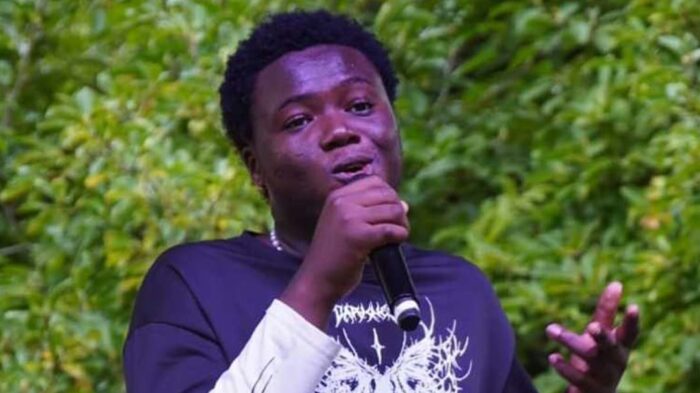
That was because the fans of the guy (Peller) came after me and had a lot to say. I had seen what they celebrated, so their insults didn’t carry much weight for me. I was never trying to attack him personally.
A lot of these people do not even exist in my worldview. Sadly, because of the algorithm and social media, if you are online long enough, you come across brain-rot content. I am chronically online, so I consume brain-rot content every now and then. Life is about balance. The problem comes when the sole channel of entertainment in the country is brain rot.
You also appeared on Carter Efe’s livestream around that period. What was that experience like?
I only went there to close out the live stream. It wasn’t until I watched the stream back that I said, ‘Okay, never again.’ It was fun at the moment.
He had been trying to get me to come on the stream since I did Man to Man with Dremo around February. I didn’t originally want to go. My guys and my team said I might as well do it.
I didn’t think his audience was the target audience for my new album, but there could still be people on his side who would listen and connect with it.
Before I watched any of his content, the first thing I saw was the follower count — seven million, 15 million. The more I watched, the more I realised the kind of content it was. Even some other skit makers were saying similar things.
I don’t have anything against streamers. I understand that everybody has a lane. My concern is the culture that rewards shock value and empty virality above substance.
Now, what does fulfilment look like to you?
For every year that passes, I want anything I released in the previous timeline to receive a new level of appreciation. There are people who made music when I made music, whose work you cannot listen to today. There are also people discovering my music for the first time now.
Finally, if you could change one thing about the music industry today, what would it be?
Stan culture. It was born from a beautiful place, but what it has become is terrible. Even with newer artists, you have one fan base fighting another fan base. What are we doing? People need to return to enjoying music as a beautiful thing and being lovers of music.