 Follow Us on Google News


 Follow Us on Google Discover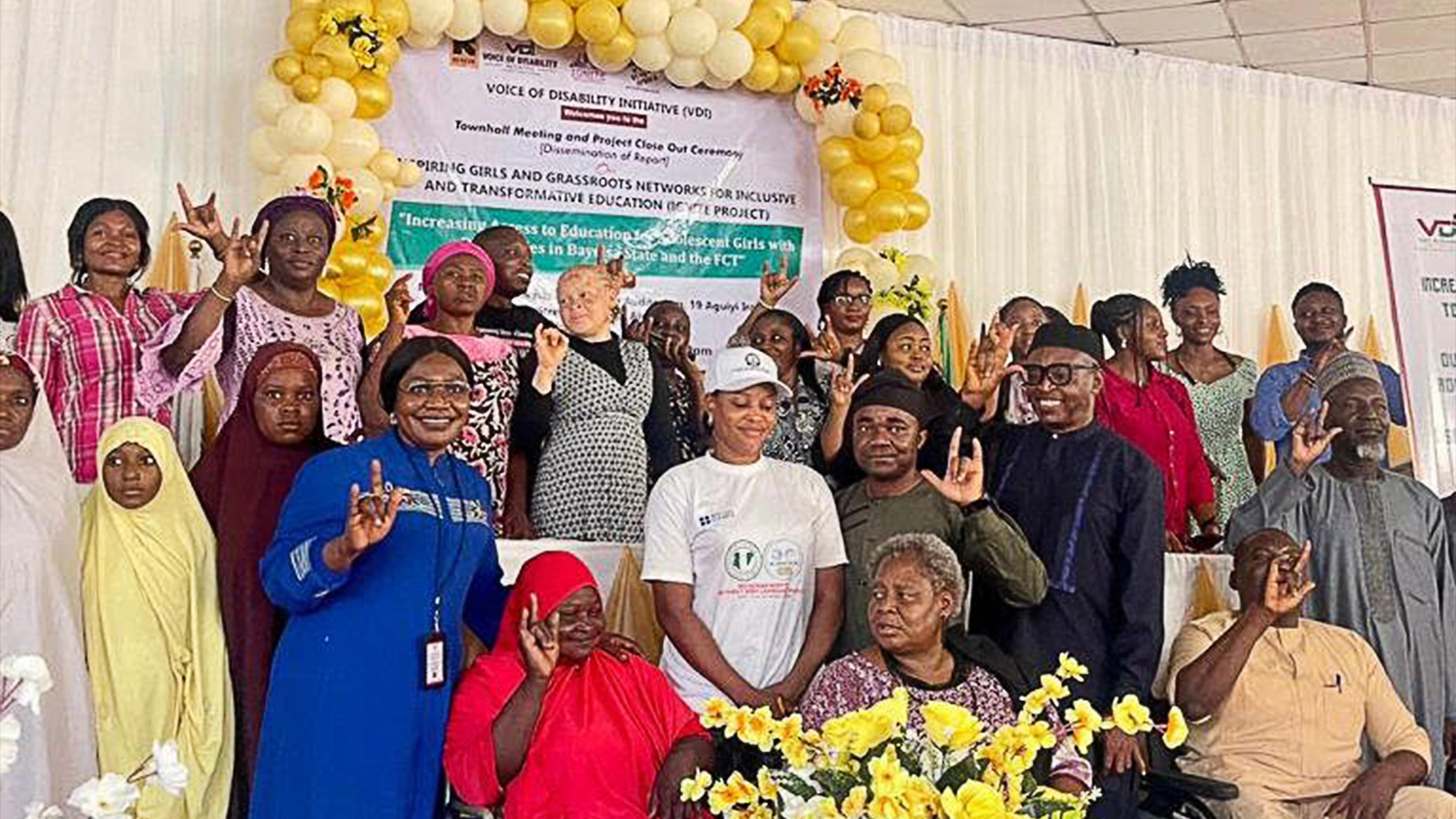
Nigeria’s first female deaf lawyer and Executive Director of the Voice of Disability Initiative (VDI), Catherine Chinyere Edeh, has said that persons living with disabilities (PLWDs) in the country are in dire need of improved access to education and various empowerment opportunities.
Approximately 35.1 million people are living with disabilities in Nigeria, according to 2023–2024 estimates from the National Commission for Persons with Disabilities and the Joint National Association of Persons with Disabilities (JONAPWD).
The figure represents about 15 percent of the country’s population, with Kano and Lagos states recording the highest numbers.
Speaking during the project dissemination and close-out meeting of the Inspiring Girls and Grassroots Networks for Inclusive and Transformative Education (IGNITE) Project held in Abuja on Thursday, Edeh also decried the over-reliance of non-governmental organisations (NGOs) on foreign donors to support persons living with disabilities in Nigeria.
While applauding the establishment of the National Commission for Persons with Disabilities (NCPWD), she stressed the need for increased budgetary provisions by the Federal Government to address teething challenges faced by persons with disabilities.
Edeh noted that many girls with.disabilities suffer from low self-confidence due to stigma and discrimination in society.

“We can build confidence, teach skills and inspire ambition, but without proper funding and infrastructure, their potential will remain limited,” she said.
She explained that VDI programmes focus on confidence-building, goal-setting and decision-making, using the “Rule Praise” approach: “I can, I will, I must.”
On her personal journey, Edeh recalled losing her parents at the age of 11 and rising from a humble background to become Nigeria’s first female deaf lawyer.
“We came to restore the confidence of these girls. Many have been crushed to the point that they no longer value themselves,” she said, while appealing for stronger collaboration between government and organisations working in the disability sector.
Also speaking at the event, Ene Ede, Chief Facilitator at Edoka Trauma Care Centre and a gender activist, called on government, the private sector and civil society to increase funding and support for persons with disabilities, particularly adolescent girls.
“Seeing people like her fight for the education of adolescent girls resonates deeply with me. Had I gone into the marriage I was contracted into before my ninth birthday, my life—and the contributions I could have made—would have been cut short,” she said.
Ede described education as an equaliser capable of bridging gaps between children from different socio-economic backgrounds.
She noted that UNESCO recommends allocating between 15 and 20 percent of national budgets to education, but stressed that persons with disabilities are often excluded or educated in isolation, limiting their chances for full inclusion.
Sharing a personal experience, she recalled working with a deaf editor who later succeeded internationally, stressing that opportunities begin with access to quality education.
“Many disabilities result from societal negligence. It is our responsibility to ensure their needs are met,” she said.
Ede further urged stronger implementation of existing laws protecting vulnerable groups.
“We have signed laws and acquired rights on paper, but without proper budgeting, monitoring and evaluation, these rights remain theoretical. We cannot afford to deceive our citizens,” she warned.
She therefore called on government, corporate organisations and civil society groups to prioritise funding and structured support for persons with disabilities.
Government officials and stakeholders at the event echoed the call.
Bashir Abubakar, Director of Special Needs and Nomadic Education at the FCT Universal Basic Education Board, commended VDI for supporting government efforts to improve access to education for children with disabilities.
Similarly, Daniel Chike Uwaezuoke, Vice Chair of the Board of Trustees of VDI, noted that the focus on girls with disabilities was deliberate, as they face multiple layers of discrimination.
According to the organisers, the IGNITE Project targeted 320 adolescent girls with disabilities in Bayelsa State and the Federal Capital Territory (FCT). A total of 353 girls were identified and assessed, while 226 received life skills and personal development training during the project implementation.
The initiative aims to empower participants and strengthen inclusive education policies to ensure that girls with disabilities can learn alongside other students in regular schools.

