 Follow Us on Google News


 Follow Us on Google Discover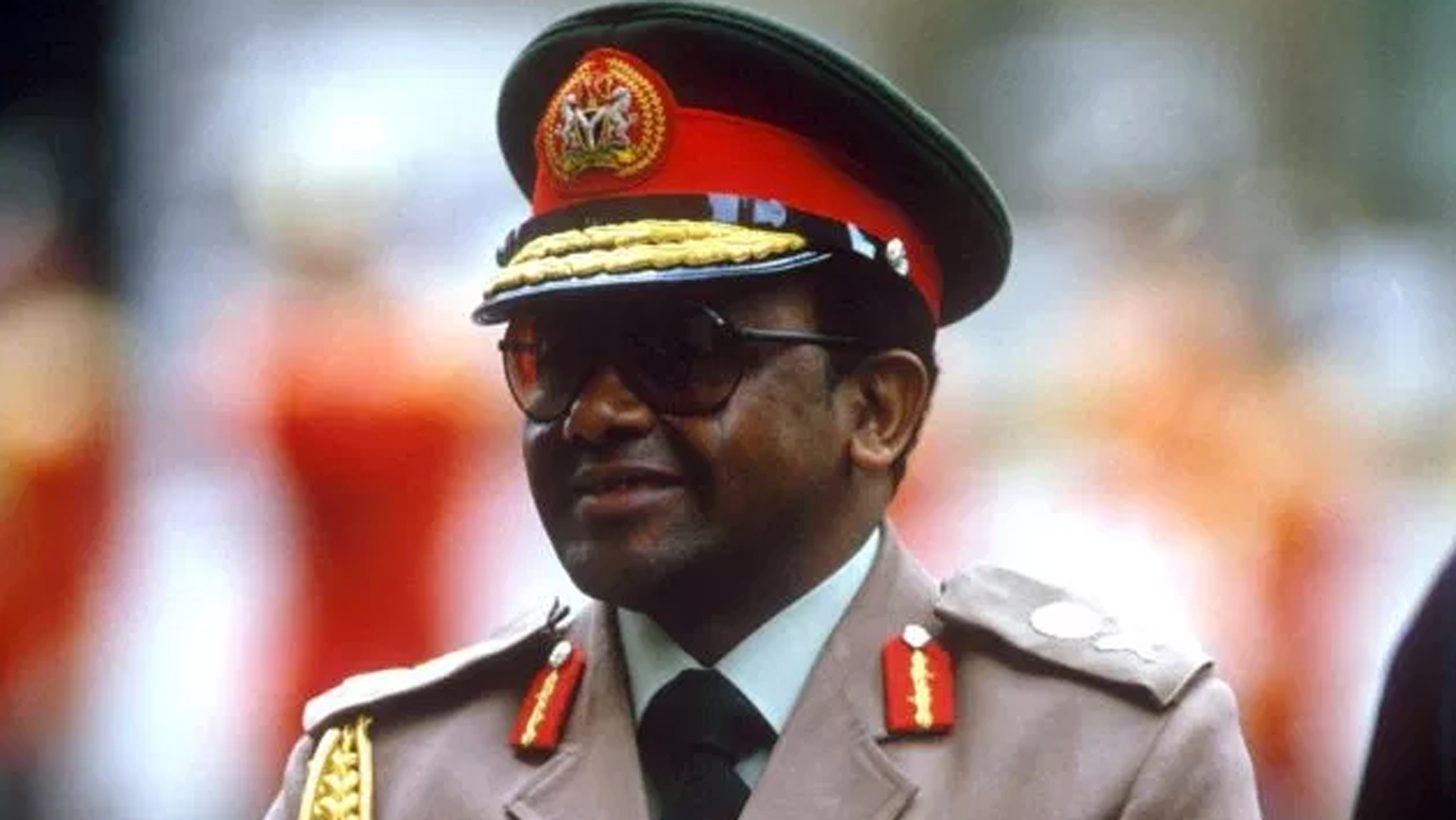
**Former Head of State says he urged Abacha to dismantle powerful military clique around him
***Reveals bid to free MKO Abiola, claims he was kept in the dark over major decisions
‘I only saw documents on transfers to Abacha’s family, associates in 1999’
Former Head of State, General Abdulsalami Abubakar (retd), has revealed that a powerful clique of military officers operating around the late Head of State, General Sani Abacha, repeatedly sought the removal of some senior officers from government and at one point marked him and three other generals for retirement and political isolation.
Abubakar disclosed that he personally advised Abacha to dismantle the group, which he described as an influential “kitchen cabinet” that often shaped government decisions outside formal channels.
The former military leader made the revelations in his autobiography, Call of Duty, unveiled on Saturday alongside two companion volumes, Nigeria’s Grand Patriot and Mediating for Peace in Africa, during celebrations marking his 84th birthday at the Presidential Villa, Abuja.
The event attracted a distinguished gathering, including President Bola Tinubu, represented by Vice President Kashim Shettima; former Head of State General Yakubu Gowon, who chaired the occasion; and former Presidents Olusegun Obasanjo and Goodluck Jonathan.

In the memoir, Abubakar offers one of the most detailed insider accounts yet of the workings of the Abacha administration, describing how a small group of influential officers wielded enormous power behind the scenes.
According to him, the group repeatedly pressured Abacha to retire certain senior military officers, including himself.
“To be fair, General Abacha was loyal to his friends,” Abubakar wrote.
“A caucus that sprang up when he became Head of State didn’t want to see some faces around and often insisted that some officers be retired.”
He identified those targeted as Lt. Gen. Jeremiah Useni, Lt. Gen. Garba Duba, Maj. Gen. Mohammed Balarabe Haladu and himself.
“All the time, four of us who were slated for retirement survived because Abacha was devoted to friendship.
Ironically, all those hawks were retired before us. They became a pain in Abacha’s neck and he had to get rid of them,” he stated.
Abubakar, who served as Chief of Defence Staff under Abacha, said he eventually confronted the late ruler over the influence of the clique.
“In one of our conversations, I told him that he needed to disband the group of officers that formed the clique around him,” he recalled.
“He initially wanted me to talk to them and ask them to be careful, but I refused and insisted that he should be the one to speak to them. Finally, one by one, he retired them from the military.”
The former Head of State also disclosed that some members of the group wanted former military president General Ibrahim Babangida arrested.
According to him, Abacha rejected the proposal after asking what offence Babangida had committed.
“They said charges could always be found after his arrest,” Abubakar revealed.
General Abubakar also shed fresh light on efforts by senior members of the regime to persuade Abacha to release the presumed winner of the June 12, 1993 presidential election, Chief Moshood Kashimawo Olawale .(MKO) Abiola.
He said several officials appealed to the military ruler to engage Abiola directly and seek a political solution to the crisis triggered by the annulled election.
“We asked him to release Bashorun MKO Abiola from detention and to discuss with him one-on-one the way forward,” he wrote.
However, he said Abacha rejected the advice.
“Abacha did not give our advice any positive consideration.”
Abubakar acknowledged that despite disagreements within government, ultimate authority rested with the Head of State.
“No matter what I say, I cannot deny that I was his Chief of Defence Staff and a member of the Provisional Ruling Council. But the final decision was for the Head of State to make,” he said.
The former military ruler further claimed that many critical decisions during the Abacha years were taken outside formal government structures.
Although the Provisional Ruling Council met regularly, he said some matters had already been decided by members of the informal inner circle before reaching the council.
“I found out that some matters were discussed by the kitchen cabinet and, in some cases, decisions were already taken prior to the meetings,” he wrote.
He also maintained that he was sidelined from major investigations, including the alleged coup plots that led to the arrests of former President Olusegun Obasanjo, the late Major-General Shehu Musa Yar’Adua and later Lieutenant-General Oladipo Diya.
Despite serving as Chief of Defence Staff, he said he was often excluded from key security deliberations.
“The home truth was that a large chunk of Abacha’s kitchen cabinet did not see me as part of the administration,” he stated.
Abubakar also addressed the long-running controversy surrounding funds later traced to members of Abacha’s family and associates.
He said reports linking the late ruler to massive offshore assets came as a surprise to him because the Abacha he knew was meticulous about accountability and prudent in government spending.
According to him, it was only in the final days of his own administration in 1999 that he was shown documents detailing transfers linked to Abacha’s family and associates.
“It was in the closing days of our administration in 1999 that I was shown papers of money transfers to accounts traced to members of his family and associates,” he wrote.
Abubakar said he was subsequently informed that the funds had allegedly been moved abroad as a contingency measure against possible international sanctions.
“He was said to have been advised by Colonel Muammar Gaddafi that if Western powers froze Nigeria’s assets, his government would be stranded if it did not have funds abroad,” he stated.
While stressing that he could neither verify nor dismiss the explanation, Abubakar added:
“I would be lying to say I thought of Abacha as a thief.”
He nevertheless acknowledged that senior officials, including himself, were never informed about the transactions.
“Unfortunately, he didn’t put some of us in confidence about what he was doing. Perhaps it would have been a different story,” he said.
The memoir paints a picture of an administration deeply divided between formal institutions and an influential inner caucus, with Abubakar portraying himself as a senior officer who frequently challenged decisions he considered unjust while remaining largely excluded from the regime’s most sensitive operations.

