 Follow Us on Google News


 Follow Us on Google Discover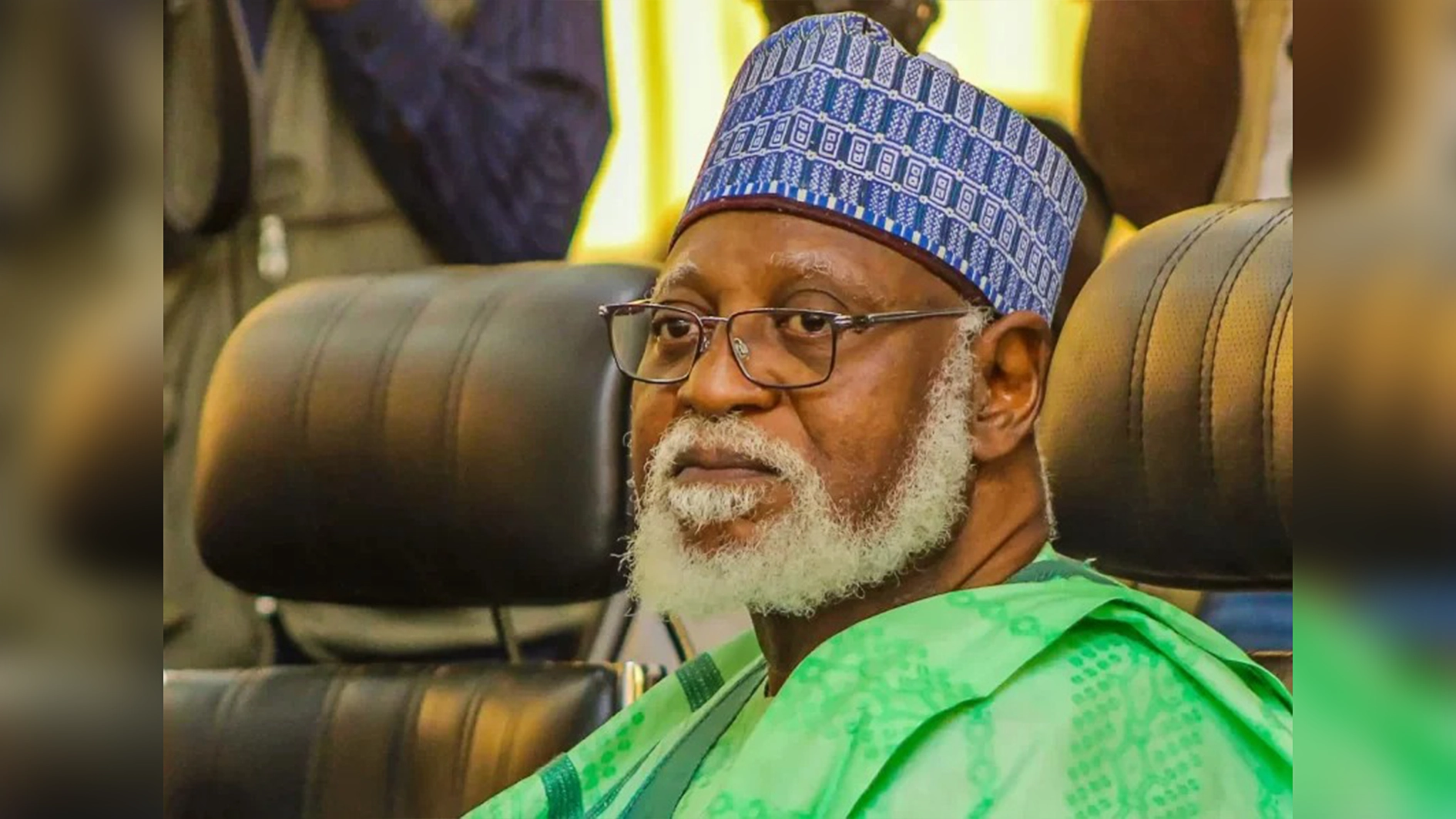
For a man who once wielded the immense powers of Nigeria’s military presidency, General Abdulsalami Abubakar’s most enduring legacy may not be the authority he exercised, but the power he willingly relinquished.
Nearly three decades after Nigeria’s return to democratic rule, many of the defining events of that turbulent era remain caught between history and controversy.
Questions have persisted over the death of Chief Moshood Kashimawo Olawale (MKO) Abiola. Speculation has endured over General Sani Abacha’s alleged hidden wealth. Debate has also continued over how close Nigeria came to another prolonged military regime following Abacha’s sudden death in 1998.
On Saturday, Abdulsalami returned to the centre of those conversations. At the Presidential Villa, Abuja, where political leaders, former presidents, diplomats, military officers and elder statesmen gathered to mark his 84th birthday and unveil his autobiography, Call of Duty, the former Head of State offered fresh insights into one of the most consequential periods in Nigeria’s history.
The occasion was more than a birthday celebration or a book launch. It evolved into a national reflection on leadership, sacrifice, power and the difficult choices that shaped the birth of the Fourth Republic.
The dominant theme throughout the gathering was clear: Nigeria’s democratic journey might have taken a markedly different course had Abdulsalami made different choices.

President Bola Tinubu, represented by Vice President Kashim Shettima, described the retired general as a statesman who placed national interest above personal ambition at a critical moment in the nation’s history.
Tinubu praised Abdulsalami for guiding Nigeria through one of its most delicate transitions and helping to stabilise the country after years of political uncertainty and military rule.
As part of the tribute, the President announced the allocation of land in Abuja for the permanent site of the Africa Resource Centre for Strategy and Leadership, an institution founded by Abdulsalami to promote peace, good governance and leadership across Africa.
Former President Goodluck Jonathan echoed the sentiment, crediting Abdulsalami with laying the foundation for Nigeria’s democratic stability by resisting pressure to remain in office beyond the transition period.
Jonathan said the former Head of State’s decision to hand over power, when many expected otherwise, strengthened public confidence in the democratic process and spared the country from further political uncertainty.
Perhaps the most striking confirmation of that pressure came from Major General Aliyu Abdulrasheed (retd), chairman of the organising committee for the event.
According to him, influential figures within the military establishment urged Abdulsalami to extend his six-month transition programme after assuming office following Abacha’s death.
Many considered the timetable overly ambitious. Others feared the country was too fragile for a rapid return to civilian rule.
But Abdulsalami refused and stood his ground.
The revelation offered a rare glimpse into the intense behind-the-scenes struggle that accompanied Nigeria’s transition from military dictatorship to democracy.
At a time when military rulers across Africa routinely manipulated transition programmes to prolong their stay in power, Abdulsalami chose a different path.
That decision ultimately paved the way for the election of former President Olusegun Obasanjo and the handover to civilian rule on May 29, 1999.
Obasanjo, who also spoke at the event, credited Abdulsalami with sustaining the transition process despite enormous political pressures and uncertainties.
The former president further disclosed that efforts had been underway to secure Abiola’s release before his sudden death, a development that dramatically altered the course of Nigeria’s political history.
Yet it was Abdulsalami’s account of Abiola’s final hours that generated the greatest public interest.
Few episodes in Nigeria’s political history have provoked as much controversy as the death of the presumed winner of the June 12, 1993 presidential election.
For years, allegations that Abiola was poisoned have remained a recurring feature of public discourse.
In Call of Duty, Abdulsalami rejects that narrative unequivocally.
According to him, an autopsy requested by Abiola’s family and conducted by Nigerian, American, British and Canadian pathologists found no evidence of poisoning.
Instead, the examination concluded that the businessman and politician died of natural causes linked to pre-existing health conditions.
The former Head of State disclosed that Abiola had been managing hypertension and serious heart-related ailments long before his detention.
Drawing from medical reports and eyewitness accounts, Abdulsalami reconstructed the events of July 7, 1998.
He recounted how Abiola fell critically ill during a meeting with a visiting American delegation led by then U.S Undersecretary of State for Political Affairs, Tom Pickering, and Assistant Secretary of State for African Affairs, Susan Rice.
According to Rice’s account, quoted in the memoir, Abiola began coughing heavily shortly after the meeting commenced before showing signs of severe distress.
Pickering similarly recalled that Abiola struggled to breathe as officials rushed to secure emergency medical assistance.
Despite efforts by doctors, he could not be revived.
Abdulsalami recalled receiving the devastating news from his Chief Security Officer and described the shock that followed.
“My head went blank,” he wrote.
The account represents one of the most detailed official narratives yet on the circumstances surrounding Abiola’s death and is likely to reignite debate over one of Nigeria’s most enduring political mysteries.
The memoir also addresses another long-standing controversy from the Abacha era.
Abdulsalami dismissed allegations that he received $500 million in cash after Abacha’s death, describing the claim as entirely fictitious.
“I want to put it on record that nobody gave me $500 million or any amount, bigger or smaller,” he stated.
The denial forms part of a broader effort by the former military ruler to set the record straight on a period that continues to generate speculation and competing narratives.
Beyond the revelations, however, the launch served as a reminder of how history often turns on the decisions of individuals confronted by extraordinary circumstances.
Abdulsalami’s tenure as Head of State lasted less than a year. Yet within those few months, Nigeria witnessed the death of Abacha, the death of Abiola, the dismantling of military rule, the restoration of democratic governance and the birth of the Fourth Republic.
For many speakers at the event, that remains the defining measure of his legacy.
In a country where leaders are often remembered for the power they accumulated, Abdulsalami is remembered largely for the power he surrendered. 27 years after handing over to a civilian government, the former military ruler remains a pivotal figure in Nigeria’s democratic story, not because he seized power, but because he chose to let it go.
And as the tributes, revelations and reflections at the Presidential Villa demonstrated, the decisions he took during those turbulent months in 1998 continue to shape the course of the nation today.

