 Follow Us on Google News
 Follow Us on Google Discover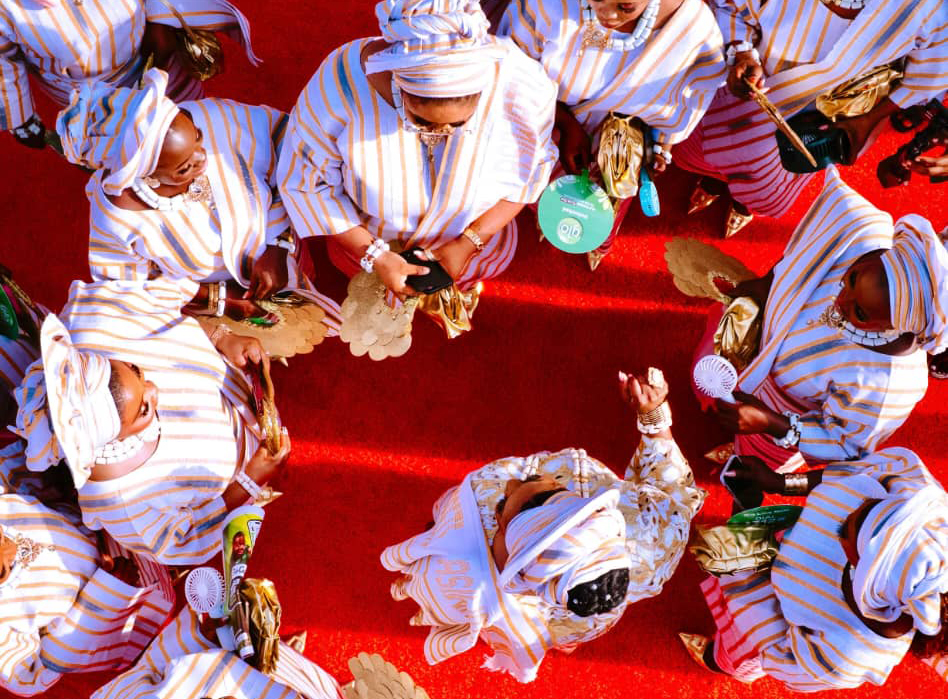
“To rise to the level of your goals, you must fall to the level of your systems,” the nugget by American writer James Clear captions an Instagram post by Adedotun Soyebi from December, last year.
The brilliant photographer and founder of the media productions firm, Adedotun Soyebi Productions (ASP), has carved a legacy that directly reflects that philosophy, with his trailblazing documentary photographs and videos serving as a blueprint for distinct ethnographic and developmental narratives about Africa.
“I believe that when God has given you a talent, it’s not just to create wealth; you have to transfer knowledge and liberate people,” he tells Guardian Arts.
Amassing a portfolio that spans several influential figures, political office holders and large corporations, including Former Governor Godwin Obaseki; Africa’s second female President Namibia’s Netundo Nandi-Ndaitwah; US musician Swae Lee; among several others, Adedotun Soyebi has created compositions that shape purpose and not just subjects, with every click of his shutter.
His latest work, a photo documentary on Ojude Oba, vividly showcases his ethnographic interest and human-interest storytelling. In one picture frame from the series, we see two Eyo masquerades composed symmetrically and colourfully, at the revered festival grounds in the bustling city of Ijebu Ode, Ogun State. We also see aerial shots of families all clad in colourful Aso Oke regalia. Then, the wide shots of gold-dusted human figurines in live performance added a midas touch to the collection.
Adedotun Soyebi’s auteurship precedes him, essentially why his career journey has purposefully driven him towards birthing Adedotun Soyebi Productions. With a robust clientele including Dangote, Edo State Government, Manufacturers Association of Nigeria (MAN), Fidelity Bank, among others, his impact-focused storytelling has helped tell deep scenic stories that shape both lives and cultures.
In a riveting chat with the photographer, he welcomes us into his world of lights, cameras and lenses, as he navigates his early career pivot; his muses; philosophies; as well as his mission to repurpose African audio-visual storytelling one documentary at a time.
How did you begin your journey into the world of photography?
To be honest, I’ve been fascinated about cameras since I was little. My dad gave me his old Kodak camera. It’s not like I was fascinated about becoming a photographer, though. However, when I was in university, I developed a stronger interest in it around 2012, and I decided to just express how I view or see things through pictures. I wasn’t focused on any niche, when I started. I just took pictures of whatever I saw. From passports, to pictures of flowers, I shot whatever just intrigued me. I was documenting memories, basically.
What was that first photograph you took that intrigued you?
I can’t remember that, to be honest.
What made you decide to do it professionally?
It was just a hobby turned career. I didn’t decide. I don’t want to throw the word purpose around, but it’s basically what I’ve been doing. I enjoy taking pictures and people also enjoy receiving and paying for them, so I guess I’ve just been on that path. And, you know, I’m just now modifying it properly to be more of a business than just something I do for leisure. And this, this has been happening for like, at least 10-12 years; and I just decided to use it to put food on my table.
You have photographed traditional rulers, cultures and places. What inspires you towards documentary photography?
Generally, I just like to preserve. It started from documenting memories, but, now, the focus is: what kind of memories? It’s now a pursuit of legacy. So, whatever has a handprint of legacy behind it is a subject I want to capture; because I see stories in there that nobody sees. This is why someone like Governor Godwin Obaseki was quite an experience. Knowing how he created a paradigm shift in Edo politics and governance, this was a person worth documenting. A quiet man, but he was doing things tenaciously. He broke the internet quite a couple of times, even while I was documenting him. He’s not just a public figure. Another person that strikes me too is the Olu of Warri; he is somebody that got to the throne through real trials and tribulations. And he’s a young and learned King, a different kind of king that the Warri kingdom would see So, I enjoy documenting legacy and I also value impact. I love telling those stories. So, whether it’s about a culture that has been preserved for over 100 years and is still very vibrant , or just something else that is worth it for me, it’s something that I want in my portfolio. It’s something I want in my archives, something I would muse on to create art. It doesn’t matter if it’s the richest man in Africa, Aliko Dangote, there is always something intriguing about him that I can document. Recently, I met the new President of Namibia and she’s the first female president in Namibia. If you read about how this woman is moving, you’d see that she’s moving like a global world leader, and she’s picking things very fast.
There’s another powerful photograph where you shot Swae Lee dancing in the streets of Lagos with some children. How did you feel making that image?
I felt privileged. I enjoyed documenting the international star, and I saw more than acting for a video shoot. He was very intrigued by the kids. He was trying to have conversations with some of them. He was playing with some of them before the video shoot had even started. So, it was very easy by the time they were filming; they were all like synced, and it was a very intriguing experience for me. It made me see a different side of this young artist.
Tell us about your experience shooting the recent Ojude Oba festival?
Usually, whenever I have a job that is a personal project and not necessarily commissioned, I get so excited that I can’t sleep the night before. So, I’m usually up thinking about how the event is going to be. For Ojude Oba, I was so eager that I needed to get on the festival grounds very early to start matching my creative ideas with the reality that was unfolding. And for me. I saw some locals dancing and riding horses. I came down from my car and I started documenting them immediately. As I moved forward, I saw some women on the streets doing makeup, some were getting ready by the roadside tying their geles. So, I started getting excited. I also set up a drone, and I could see that the festival grounds were just opposite the King’s palace. And that is the real meaning of Ojude Oba, a festival happening right in front of the King’s palace. I just saw Yoruba people for who they are, partying, happy, luxurious, colorful, basking in a lot of swagger and pride in their heritage. You could talk to anybody there. Everybody was on a different level of pride, and it was very interesting to see that this festival has been going on for over 100 years, and it is even getting better and more popular. In a nutshell, I was able to document it in my own perspective.
You also create aerial photographs. Tell us about your experience doing that.
When photographing, I also like to get a bird’s eye view and just see things from above. Basically, I’m very intrigued about it. So I have a team of drone pilots. I also fly drones, and then we try to also create compositions from aerial photos that we take.
What’s the craziest experience you’ve ever had flying a drone?
I have had two crazy experiences. A group of birds were tracing my drone, and I was maneuvering the drone away from them. I also started using the drone to scare them, at some point. Eventually, I had to bring the drone to where humans were, because the birds won’t come there. But they were very upset. And then the second experience was in Senegal when I was taking a picture of the Lac Rose. The wind was very heavy and it was almost impossible to land the drone. So, it was almost like the drone was gone, but I kind of landed it the way a plane would land during stormy weather, just in opposite directions and I aligned the wind to let it land. It was crazy for me, but it was worth it.
It’s hilarious that the birds got upset.
They do! This is even as a side note, you know that in the sky birds actually mark their territories. A bird cannot just fly in a random part of the sky. Do you know that they literally have clans? I realized that with the drones. Once a drone flies up there, they recognize that ‘this device is not from here,’ and then they are already ready to attack, almost as if to warn you not to come there.
What would you describe as the most fulfilling experience you have had in your photography practice?
The last shoot I did in England with Godwin Obaseki. It was one of his last official trips as governor. You know that feeling when you finish exams and you are waiting for a vacation that’s happening in two days, and for that period you’re just a nuisance but not in the real sense of it; it was more like he was just free. He was free and I could document him doing that. It was very interesting and emotional for me.
There’s a particular caption you used on a social media post. It says, ‘For you to rise to your goals, you must fall to the level of your systems.’ What does that mean for you?
So, just as you have goals, you have aspirations. You want to be XYZ, you want to be the greatest. How do you get there? How can I know that you’re going to get there, it’s just by your fundamental principles. So, if you’re trying to be, let’s say the the biggest writer in Nigeria, for example, if you don’t cut the urge of depending on Chat GPT and using your own sense or intellect, then you can’t rise to the top; because eventually people will know what is original and what is fake. So, whether you’re working out in the morning, or you’re using your own intellect, or whatever it is you value, there is no way you can rise to your success if you’re going to keep falling down to your own systems.
Which do you enjoy more: shooting or editing pictures?
Both! They go hand in hand. For me, I’m editing already when I’m shooting.
Apart from photography, what are some other things you enjoy doing?
I love traveling. I love meeting new people, and I love business in general, yeah, making deals.
Do you have any particular photographers that have inspired your practice in any way?
Anny Roberts. He is the only photographer that has inspired me. I like seeing other people’s works, but I think being close with him and seeing what he’s created, he’s an extremely imaginative guy. He ushered me into photography. If you ever meet him, tell him that I said so.
What kind of camera do you enjoy using?
I only use a Leica. It’s very sophisticated in its design. It’s very unique from every other kind of camera, except, possibly, the Hasselblad. The only two other photographers I know that use a Leica are Kelechi Amadi and Tolani Alli.
So are you working on anything right now that you would like to share?
Nothing that I can disclose at the moment.
What’s next for you?
I’ve not even started anything. I’m still shooting. What’s next for me? I need to build to become someone of value in my field. I’m not close to that yet. So, there’s nothing next for me.
What is the vision for you as Adedotun?
I run a production firm called adunitotuns ASP, and we’ve done quite a bit around within Africa and in places like Russia, Dubai, China and so on. We are focussed on just telling stories, basically, but where I feel like I would have attained a very privileged level of success is when I can connect the African story. I can rewrite our own stories by documenting the people that are also rewriting stories in Africa. As long as I keep telling the stories of people that are reshaping the African story, I would definitely have the story and expose people to more knowledge of what we have in Africa and who we are as Africans.
This is encompassing your documentary production, I presume.
Yes, it does. Beyond just photography, our documentary video production is impact-focused. Personally, I believe solely in purpose. I believe that when God has put something in your hands, it’s not to create wealth; it is to transfer knowledge. As much as we want to remain wealthy or to get rich, I believe in a purpose which is to transfer knowledge and liberate people. So if your work isn’t creating some form of liberation, it would be nice to just turn your work towards that line. And that’s basically what I do. I’ve documented the AFREXIM President and what they’re doing in Afrexim Bank, because they believe that if we can have our monies spread within Africa, then we don’t need to be depending on the West for resources or any of that.
On the other hand, I want to use my own skill and company to just try and follow these people that are reshaping Africa, whether it’s the president of Namibia, the president of Sierra alone, who just became the chairman of ECOWAS, the president of Ghana, the Olu of Warri, or a governor in Nigeria. I am just geared towards these people that are reshaping whatever industry they are. I love to create documentaries that can show where the company was before, where they are now, and what they’ve used the money to do and then they could, in turn, leverage on that to get more funding; because I’ll tell an emotional story of how their $1 million project has now put water in a community that has not had water for almost 80 years. These are real life stories. Trust me, they had never seen water in that village until the state governor and the World Bank came and put water there. For me, I just felt like I’ve just been part of something small that is also very big, and that’s my vision.

