 Follow Us on Google News


 Follow Us on Google Discover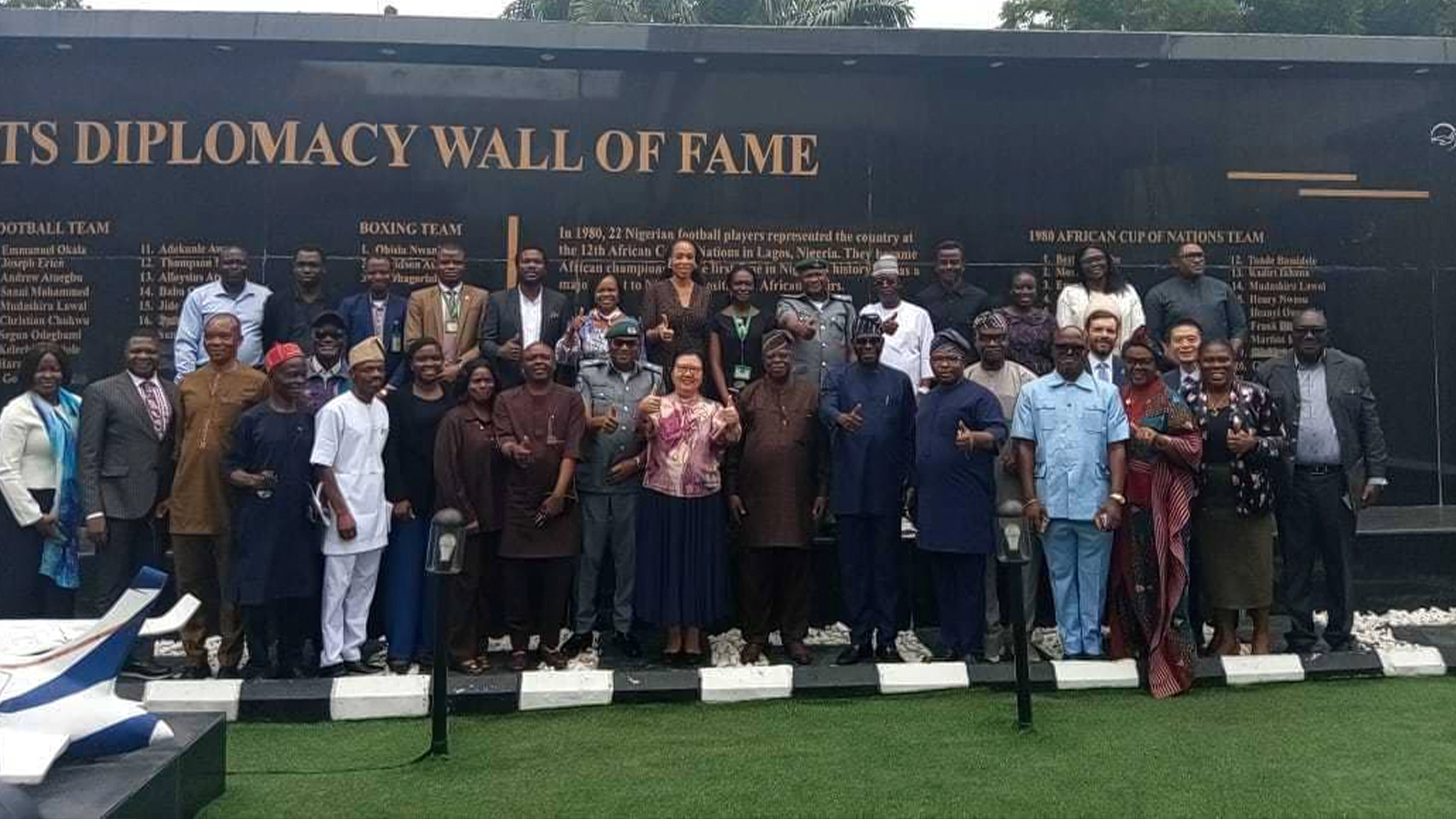
African countries must move beyond exporting raw materials and strengthen their industrial capacity, value addition and regional trade structures to fully benefit from China’s zero tariff policy, experts have said.
Director General, NIIA, Prof Eghosa Osaghae, has said that with the zero tariff policy, China is demonstrating that in the face of the geopolitical shifts, it can be counted on to be pro-Africa.
He added that the zero tariff policy is already taking its effect on Africa, with diversifications as one of the positive consequences for Africa.
This was at a Seminar on China’s Zero-Tariff Treatment on 100 per cent of Tariff Lines for African Countries and it’s Implications for Structural Economic Transformation in Africa organised by Centre for China Studies (CCS) in partnership with Embassy of the People’s Republic of China in Nigeria and the Nigerian Institute of International Affairs (NIIA), held in Lagos.
He however added that these issues still need interrogation to ensure that in theory and practice this equalisation is equitable and win-win for Africa.
He however noted that from Africa’s point of view, this might be the beginning of a de-dollarisation regime that people have advocated for a long time.

Prof Osaghae urged Africa to examine the impact from the 33 low-income countries that have since 2005 benefitted from the zero tariff, to avoid repeating mistakes, adding that regionalising trade structures through blocs like ECOWAS, SADC could help optimise the system.
“We must see how we can pull those resources and harness the markets. Infrastructural deficits can be overcome and those deficits of trade facilitation that have made it impossible for very low and weak economies to benefit,” he said.
Chairman of the occasion, Prof. Femi Otubanjo, said that the tariff has become a tool in the new geopolitical competition with the United States using them to protect its interest, revive it’s industrialisation and counter China, while pursuing a doctrine aimed at preventing any other country from becoming a major challenge to its influence.
He however said that China is not innocent in its geopolitical competition, questioning whether the zero tariff policy is genuine benefit or a subtle instrument of Chinese economic imperialism.
Otubanjo said that to get the maximum advantages of this tariff policy, Africa must diversify the economy and become industrially competitive.
Director, CCS, Mr Charles Onunaiju, said that zero tariff is not a gift but an opportunity that Africa can engage by quickly building relative advantageous and institutionalised policies, competencies and efficiencies.
“We can be sovereign. We can be independent and engage this opportunity to the optimum, without becoming a sub-life of anyone, including China. It depends on how we respond,” he said.
Onunaiju clarified that old competencies are no longer enough so the need to develop new ones with the evolving world.
He said Africa needs to engage with the objective consequences of changing global order by building capacity to respond to new opportunities and challenges, stating that failure to do so will leave the continent at the lower end. He urged Africa to step out of its comfort zone and build capacity.
Professor with the Institute of African Studies, Zhejiang Normal University, Jinhua, China, Efem Ubi, said China’s status as a $20 trillion economy and Africa’s relatively small two per cent share of global trade made it essential for African countries to maximise the zero tariff opportunity for economic growth and development rather than simply celebrate market access.
He said the policy has opened significant opportunities for African exporters, particularly by diversifying exports, increasing demand for agricultural products, strengthening manufacturing and promoting regional value chains, but stressed that zero tariff does not guarantee export growth.

