 Follow Us on Google News


 Follow Us on Google Discover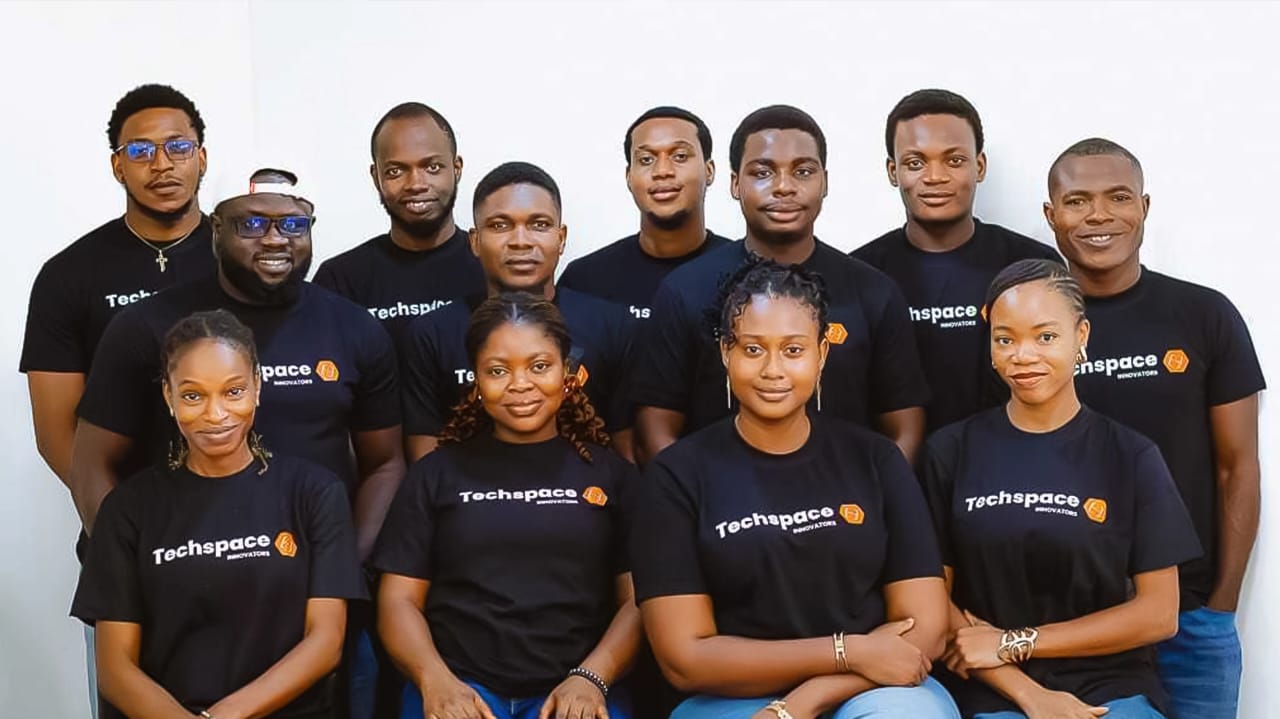
…Nigeria, excluding young innovators in displacement camps, he warns
Sesugh Gabriel Abenga, a software engineer and founder of TechSpace Innovators, in this interview with Ene Oshaba, speaks on why Nigeria’s real technology crisis is not access to devices but access to opportunity, and how children in underserved communities are already building globally competitive AI solutions. He says the company’s mission is to make STEM and AI education accessible and inclusive for all.
Tell us about the tech space advocacy that you do and what are the benefits especially for youths across Nigeria?
TechSpace runs two distinct tracks, both vital but different stories. Our In House programme serves students in structured classes. Our Outreach programme brings us to IDP camps and underserved schools. Each deserves to be told accurately.
Now, what does this victory mean? It says that when you give Nigerian children the right environment, methodology, and genuine belief in their capacity to build not just equipment but real innovation, they can compete with anyone in the world. These students went up against well resourced schools from Virginia, Kentucky, and Wisconsin and won both categories they entered with work they designed, trained, and built themselves.
But what truly excites me is what these points toward. If students in our current programme can produce this with limited resources, the question keeping me awake is: what happens when we reduce barriers further? What happens when we reach Dominic? When a million Nigerian children grow up knowing they are builders? That is not fantasy, that is trajectory.

You have said the real problem is an opportunity gap, not a device gap. What does that mean for children in underserved and displacement-affected communities?
I want to challenge the comfortable assumption that putting a device in a child’s hand solves the problem. Hardware matters, but that is just the beginning. I have seen children with devices and no one to guide them, no context, no pathway forward. The device sits idle, or becomes a passive consumption tool.
The device gap is easiest to solve, throw money at it. The opportunity gap is stubborn. It is the absence of a trusted adult who believes a child in underserved community can become a technology builder. It is curriculum never designed with that child’s reality in mind. It is the robotics club existing in the wealthy school but never in underserved communities. It is never being invited to make something.
For displacement-affected communities specifically, closing that gap means designing portable, low-bandwidth, trauma-informed learning environments. It means co-designing with communities rather than imposing solutions. It means training local facilitators from those communities. And crucially, when a child writes their first code or builds their first robot, there must be a narrative saying: this is the beginning, not a one-time event.
Economically, we are removing the ceiling over a child’s head. Saying: you can be a builder of solutions that transform your community. And with AI, this becomes urgent. If we do not bring these children in as creators now, we are not closing a gap, we are encoding inequality into the systems that will govern their lives.
How do you democratise AI education in places like Makurdi IDP Camp?
I want to start by naming something directly. The origin of AI and technology can largely be traced to a single zip code and that zip code is wealthy, Western, and urban. If we accept that geography as destiny, we have already written billions of children out of the future.
I would push back on the framing that children in underserved communities are not behind; they are excluded. That distinction matters. It is not a deficit in them, it is a structural failure around them.
Practically, we meet infrastructure reality honestly. We do not design for fibre broadband in a camp. We work with offline-capable tools, solar-charged devices, and curricula surviving interrupted electricity. Technology bends to context, not the other way around.
We use BBC microbit, affordable, physically robust, entirely offline. A child can have a working prototype in their first session. For AI specifically, we use Create AI, which teaches machine learning through physical motion. Children use their bodies to train models, watch them learn, and deploy them. It is immediate, embodied, and requires no mathematical background. Children stop seeing AI as something happening to them and start seeing it as something they understand and can interrogate.
Both tools lower the floor without lowering the ceiling. A ten-year-old can build from day one, but the foundations, physical computing, data, and machine learning logic, are university-level. We are not simplifying tech education. We are delivering the real thing through context-respecting tools. AI education must never be held hostage to expensive proprietary software. You build algorithmic thinking through block coding, unplugged activities, and robotics. What is required is intentional design and a willingness to build for communities the mainstream market ignored.
You describe Dominic as a “lost innovator.” How many Dominics do you believe exist across Nigeria’s displacement camps, and what risks do we face as a country if their potential remains untapped?
Numbers without faces do not move people, so let me start with Dominic’s story. When we visited an IDP camp asking if children had ever used computers, every hand stayed down. But one boy, Dominic, was not just listening. He was connecting. I asked about his background and learned he had dreamed of being a marine engineer. Before displacement, he had collected electronic components and scrap materials to build a model marine ship. This child, sitting in a displacement camp, written off by every system, had already begun engineering.

