 Follow Us on Google News


 Follow Us on Google Discover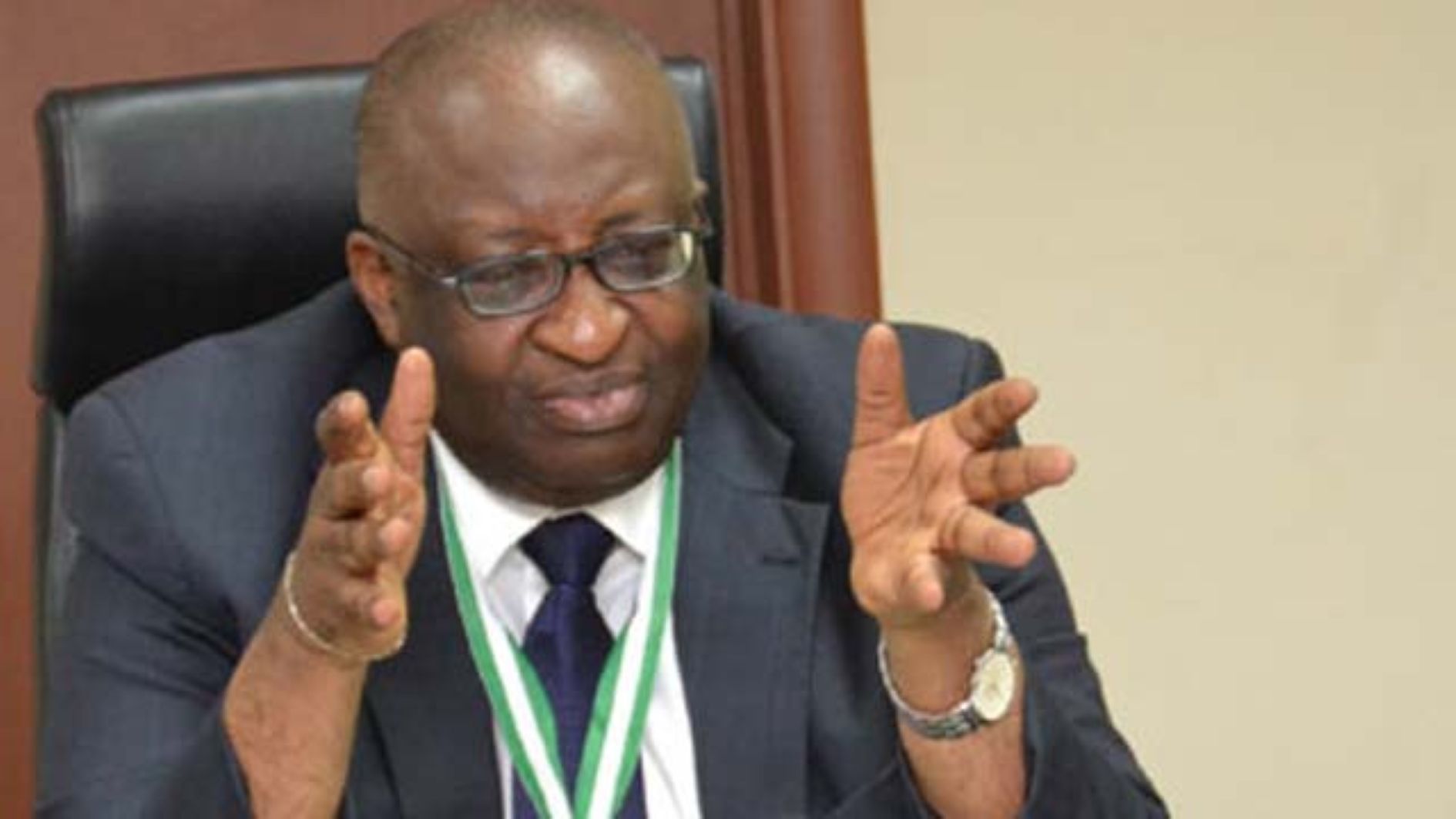
Former Vice-Chancellor, University of Uyo, Prof. Akpan Ekpo, has advised the Federal Government to expand Nigeria’s economic capabilities by aligning financial systems with productive investments.
He said the government must direct capital toward sectors that generate employment, foster technological learning, and create durable sources of national wealth.
The emeritus Professor stated this at an international conference organised by the Department of Political Science, Lagos State University (LASU), in conjunction with The West Africa Academy of Science.
Speaking at the conference with the theme: ‘Tinubunomics: An ideological perspective and its philosophical components’, Ekpo examined the policy reforms of the Bola Tinubu-led administration, including subsidy removal, exchange rate reform, and fiscal consolidation.
Noting that throughout history, major economic transformations had rarely emerged solely from technical policy adjustments, but had been preceded and guided by vigorous debates about the philosophical foundations of economic organisation, the appropriate role of the state and markets, and the long-term vision for national development, he said the ongoing debate surrounding the emerging concept of “Tinubunomics” illustrates precisely why such intellectual engagement is so essential.
Stating that President Tinubu should have assembled experts to examine the issue rigorously and offer alternatives before embarking on some of the reforms, he said what the system is doing now is damage control through the various palliative packages such as rice, cash transfer, among others.

Ekpo, who alongside other economic experts and scholars raised critical questions regarding the ideological foundations of President Bola Ahmed Tinubu’s economic framework, colloquially termed “Tinubunomics, argued that while the administration’s reforms are in their infancy, their success hinges on a shift from structural adjustment toward deep-seated industrial transformation.
Professor Ekpo noted that while it may be premature to judge the final outcomes of these reforms, a trend is emerging based on their philosophical roots. He pointed to the disconnect between the President’s 2013 book, Financialism: Water from an Empty Well, and current policy implementation.
While the book offers a critique of global financial systems, Ekpo argued that it remains unclear how much of that “intellectual foundation” is actually guiding today’s fiscal and market efficiency efforts.
He emphasised that Tinubunomics attempts to build capitalism within Nigeria’s unique constraints, but the trajectory likely mirrors other nations that have followed similar reform paths.
Citing World Bank projections, Ekpo noted that positive outcomes could take fifteen years to materialise, with only marginal gains in the interim.
He said sustainable development will ultimately depend on systematically strengthening the “real economy” rather than just fiscal restructuring.
A Professor of Political Science at LASU, Professor Sylvester Odion Akhaine, took a more critical stance. Speaking on the topic: Tinubunomics, Debt Crisis and National Development, he framed the ideology of Financialism as “Economic Pan-Africanism”—a doctrine centered on African self-reliance.
However, Akhaine pointed out a stark contradiction: despite the President’s written commitment to self-reliance, Nigeria’s debt has surged to over N144 trillion.
He argued that for Tinubunomics to be meaningful, it must pivot away from debt-heavy models and toward a strategy that authentically fosters domestic independence.
Other experts also proffered actionable strategies to steer the national economy toward prosperity.
Director General, Bureau of Public Procurement (BPP), Dr. Adebowale Adedokun, said Nigeria must focus on sectors where it holds a natural edge and better harness its local resources.
Professor of Economics, LASU, Prof. Jimoh Saka, said the government must maintain a steady framework to drive backward integration and industrialisation.
He said there must be aggressive protection and support for “infant industries” and SMEs to bridge the supply gap during regional expansion.
The consensus among the speakers was that Nigeria’s future depends on structural transformation through industrialisation, rather than mere structural adjustment.
As Professor Ekpo warned, the nation’s prosperity will be defined by the “intellectual engagement” and the long-term foundations that guide today’s policy decisions.

