 Follow Us on Google News


 Follow Us on Google Discover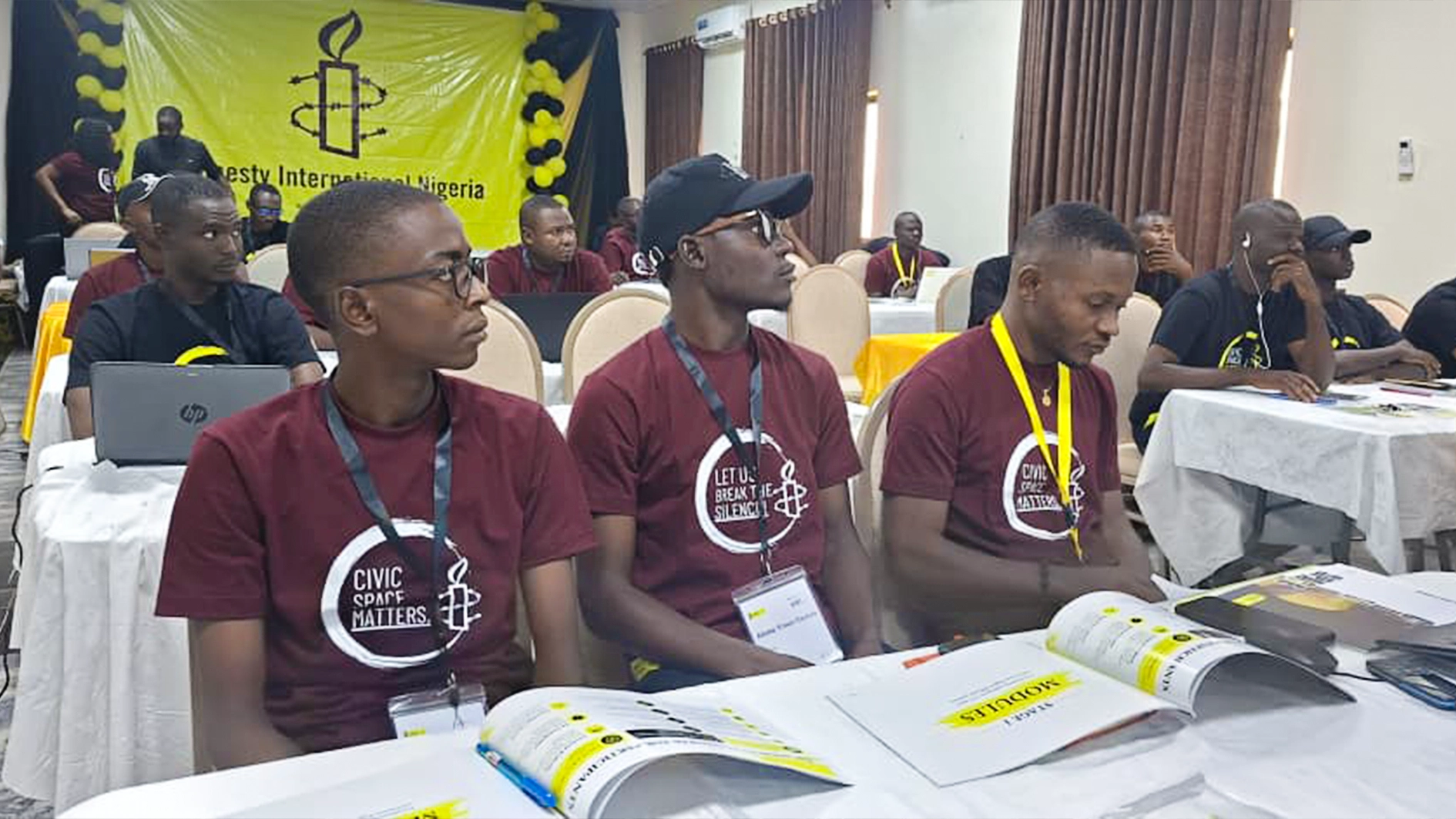
Amnesty International Nigeria has trained young Nigerians on defence of civic space and human rights violations at the community level and digital space.
The organisation after a two-year day training held in Bauchi for Young Human Rights Defenders (HRDs) drawn from different parts of the North-East, said that the participants would be at the frontline of civic engagement in Nigeria to document abuses, mobilising communities, and holding power to
account.
The Bauchi State Coordinator, Amnesty International Nigeria, Amina Ibrahim said that civic space is shrinking and marked by arrests, harassment, legal intimidation,
and weak accountability, saying that these expose them to significant risks that undermine their safety and effectiveness.
The organisation said in response to the growing human rights violations, it was supported by the German Embassy Fund, to implement a capacity-building project to equip young (human rights defenders) HRDs with the knowledge, skills, and safety tools they need to engage more safely and sustainably in human rights work.
“This training is the second in a series of regional workshops targeting 90
volunteers across three regions of Nigeria. Held over two days in Bauchi, the training
will bring together participants for structured, participatory learning that moves from theory to practice. Across the first day, participants explored the Nigerian human
rights landscape, developing skills in the ethical documentation of violations, and
receiving grounding in safety, security, and resilience, including situational
awareness for field realities.
“The second day shifted towards analysis and action, with sessions on human rights data analysis, advocacy strategies, and volunteer pathways within (Amnesty International Nigeria) AIN, culminating in a hands-on step-down planning lab where participants
designed community-level activities they will lead after the training,” she said.

She further explained that the defenders to document violations responsibly,
navigate physical and digital risks, and engage meaningfully with AIN’s broader
advocacy and reporting ecosystem — ultimately strengthening AIN’s capacity to share critical human rights developments with civil society, diplomatic missions, journalists,
and other key stakeholders.
The participants were strengthened with capacity to monitor and report human rights
concerns and apply ethical documentation standards in the field. Through the step-
down planning lab, each participant would be supported to carry the training forward
into their communities, with a collective target of generating at least 100 new AIN

