 Follow Us on Google News


 Follow Us on Google Discover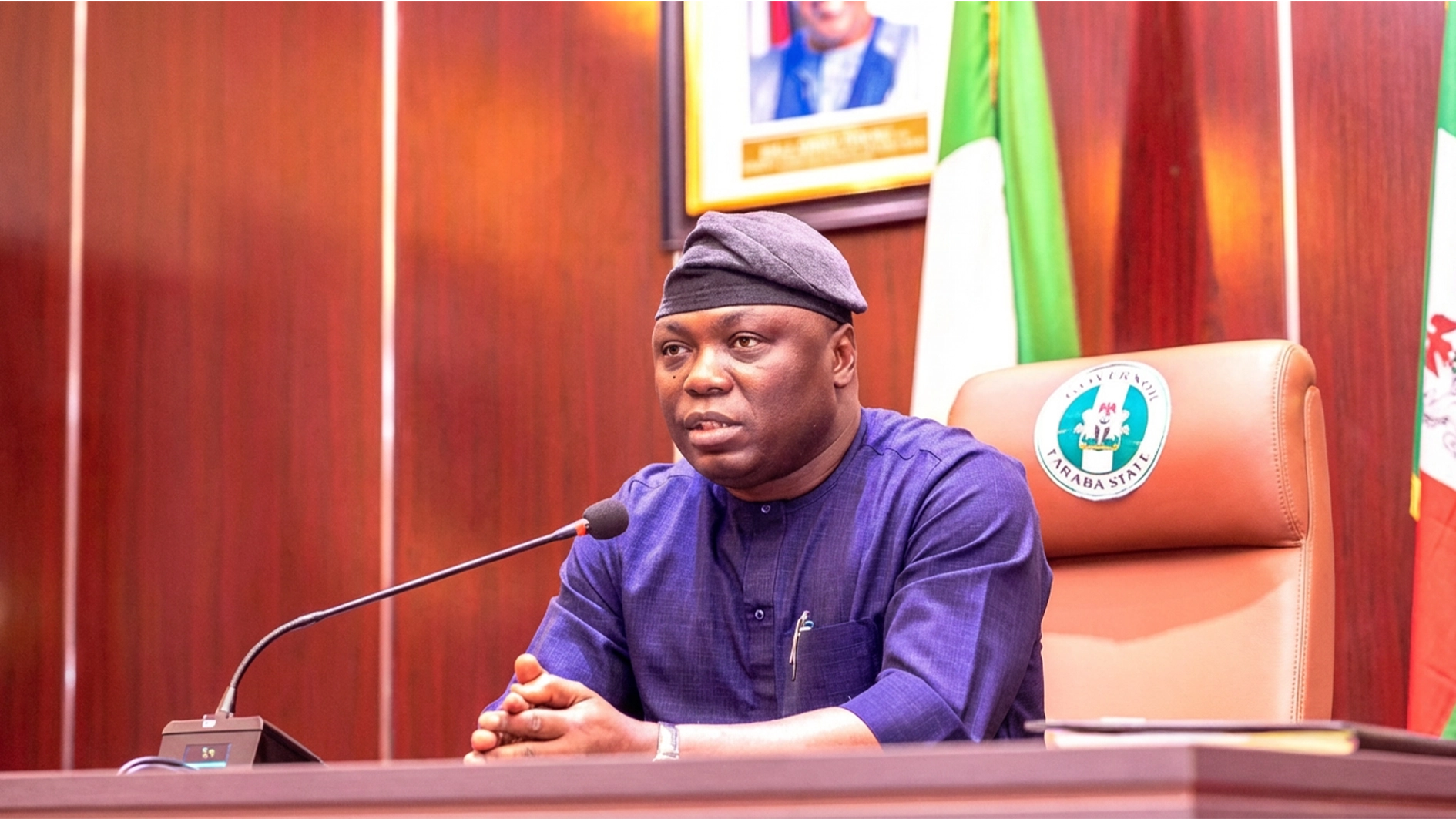
Taraba state’s political landscape, as noticed by The Guardian, has entered a volatile phase following the defection of governor Agbu Kefas from the People’s Democratic Party (PDP) to the ruling All Progressives Congress (APC).
What initially appeared to be a seamless realignment—one that might hand the incumbent an uncontested path to renomination, has instead evolved into a competitive and unpredictable contest ahead of the party’s governorship primaries.
The APC’s decision to adopt direct primaries fundamentally reshapes the dynamics of the race. With voting expected across all 168 political wards in the state’s 16 local government areas, the contest shifts from elite negotiation to mass mobilisation.
This format favours aspirants with deep grassroots networks, organisational reach, and the ability to energise rank-and-file party members particularly those validated through the party’s electronic registration system.
The party, through it leadership has publicly ruled out the possibility of consensus candidacy or preferential treatment, reinforcing a narrative of internal democracy. Yet, in practice, such assurances often coexist with entrenched power struggles, especially when incumbency is at stake.
Governor Kefas enters the race with the traditional advantages of incumbency: control of state resources, institutional visibility, and influence within party structures. His defection also coincided with a reconfiguration of APC leadership in the state, an advantage critics argue was engineered to consolidate his control.

However, these strengths are offset by growing dissatisfaction over governance. Critics pointed to a perceived gap between policy announcements and tangible outcomes, particularly in infrastructure, education, and economic development. Signature initiatives, such as free education, have faced implementation challenges, while high profile projects remain largely unfulfilled.
Compounding this is a broader political narrative portraying the governor as disconnected from key stakeholders, including party loyalists who supported his 2023 victory. His controversial stance on sidelining “old politicians” has further alienated established political actors, potentially weakening his coalition ahead of the primaries.
The controversy surrounding employment practices, particularly allegations involving the displacement of legitimate workers has further complicated his re-election calculus, feeding a narrative of insensitivity among sections of the electorate.
Zoning politics also complicates his bid. Taraba’s informal power rotation system suggests a shift away from the Southern Senatorial Zone where Kefas hails from after over a decade of leadership from the region. While some voters may support continuity to complete an eight-year cycle, others see rotation as overdue.
Former Minister of Transportation Jaaji Sambo represents the Northern Senatorial Zone, positioning him as a beneficiary of zoning sentiment. In theory, this gives his candidacy strategic relevance, particularly among elites advocating regional balance.
Yet, his political capital appears limited by weak grassroots structures and a perceived absence from state politics since leaving federal office. While his ministerial tenure delivered modest infrastructural gains in Jalingo, critics argue that his broader statewide engagement has been minimal.
Observers noted that beyond his tenure as minister, Sambo has struggled to maintain a strong political presence across the state. His perceived detachment may prove costly in a direct primary system that rewards local mobilization.
Businessman and philanthropist David Sabo Kente emerges as a formidable challenger, blending outsider appeal with insider experience. A long standing APC financier and grassroots mobiliser, Kente has cultivated a broad support base through sustained philanthropic activities under the DSK Foundation.
His late entry into the race-reportedly at the urging of political stakeholders—adds to his narrative as a reluctant reform candidate. Unlike Kefas, Kente faces fewer accusations of incumbency fatigue; unlike Sambo, he possesses an established statewide network.
Kente’s candidacy also benefits from cross religious acceptance, a critical asset in Taraba’s plural political environment. However, his origin from the Southern Zone introduces a paradox: while it may consolidate southern support, it risks clashing with zoning expectations favouring a northern shift. His promise to serve a single term and restore rotational balance could prove pivotal in reconciling this tension.
His established structures across all 16 local government areas could prove decisive in a primary where organization often outweighs rhetoric.
Kente support base spans multiple local government areas, bolstered by years of political investment and social interventions. Analysts suggested that his cross religious acceptance and organizational strength could position him as a formidable challenger. Kente’s narrative, framing his ambition as a corrective mission , according to analysts, may resonate with voters seeking an alternative to the status quo.
Former Minister of Power Saleh Mamman enters the race under a cloud of controversy. While his Northern origin aligns with zoning arguments, his candidacy is significantly undermined by ongoing legal challenges and a controversial ministerial record.
Central to his political liability is the stalled Mambilla Hydroelectric Power Project, a flagship initiative in Taraba that failed to advance meaningfully during his tenure. Allegations of mismanagement tied to the project have damaged his credibility, making him a less viable option in the eyes of many party stakeholders and voters.
The stakes of the APC primaries extend beyond internal party dynamics. A divisive or perceived unjust outcome could fracture the party and create openings for opposition forces—potentially even smaller or emergent parties—to capitalise on discontent.
Taraba’s political history underscores the fluidity of voter allegiance, where incumbency does not guarantee continuity and intra party disputes often reshape electoral outcomes. As the 2027 governorship race approaches, the APC faces a defining test: whether it can balance internal democracy, zoning expectations, and candidate viability without triggering defections or voter backlash.

