 Follow Us on Google News


 Follow Us on Google Discover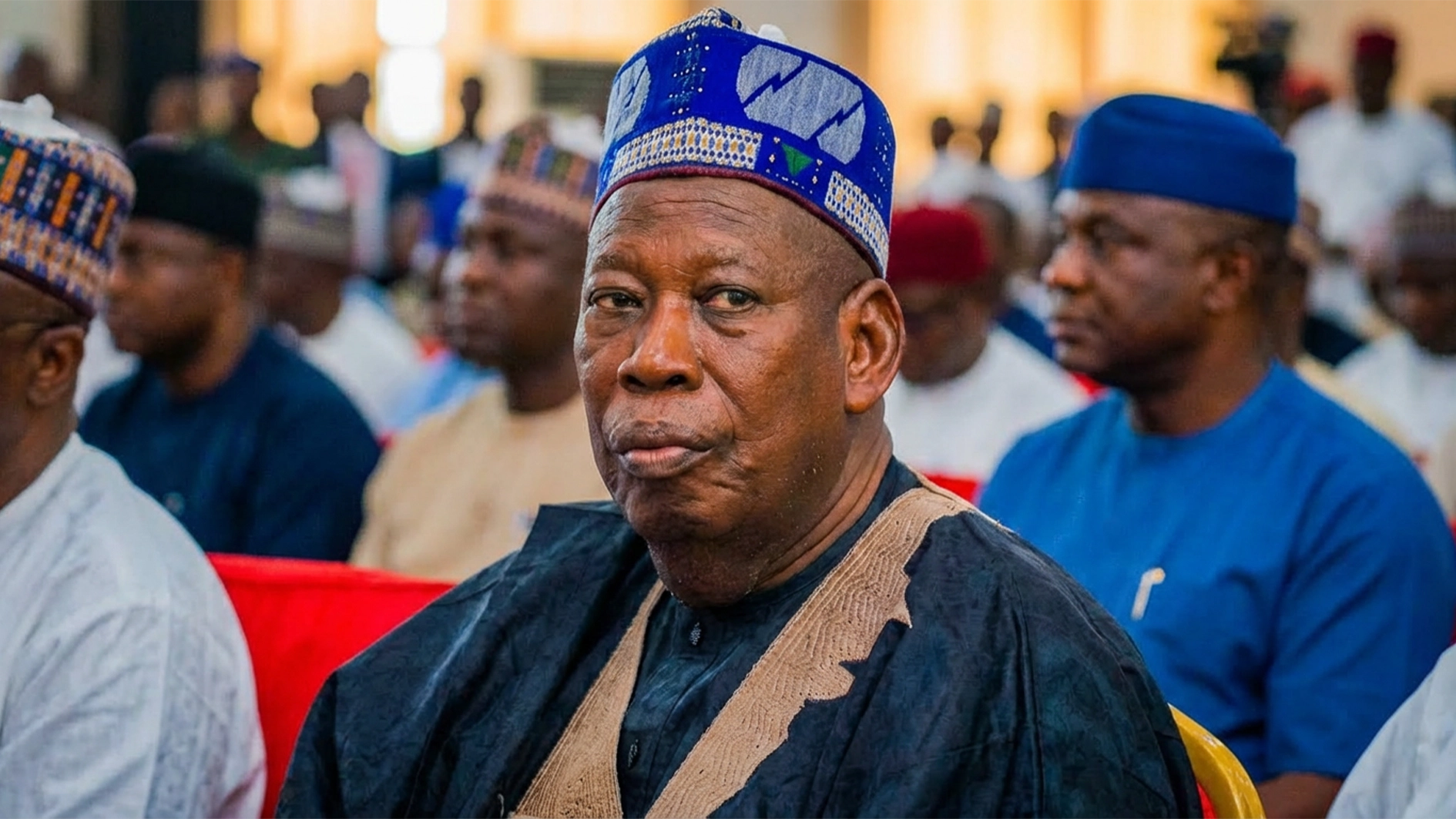
The public presentation of Nigeria’s Journey to Democratic Rule, a book chronicling the country’s transition from military rule to democracy, on Wednesday reignited calls for ideological political parties, stronger democratic institutions and sustained electoral reforms as political leaders reflected on Nigeria’s democratic evolution.
Former National Chairman of the All Progressives Congress (APC), Dr. Abdullahi Umar Ganduje, former Nasarawa State Governor and Chairman of the Universal Basic Education Commission (UBEC), Senator Tanko Al-Makura, and the Minister of Information and National Orientation, Mohammed Idris, who was represented at the event, used the occasion to advocate measures they said were necessary to consolidate Nigeria’s democratic gains.
The book, authored by New Telegraph journalist, Onyekachi Eze-Opezulu, was presented at the Barcelona Hotel, Wuse II, Abuja.
Speaking at the event, Ganduje described the publication as a timely contribution to preserving Nigeria’s democratic history, stressing that documenting the country’s political evolution was essential for future generations.
According to him, democracy extends beyond the conduct of periodic elections and must be anchored on the rule of law, constitutional order, credible electoral management, internal democracy within political parties, security and free, fair and credible elections.
“As we continue to strengthen our democratic institutions, these pillars must remain firmly protected because they are the foundation of political stability, national unity and sustainable development,” he said.

The former Kano State governor expressed concern over what he described as the absence of ideological foundations among political parties, arguing that the trend had weakened Nigeria’s political system and encouraged defections driven by personal interests rather than principles.
“Political parties are expected to be driven by clear philosophies, programmes and policy directions that distinguish one from another.
“Unfortunately, the absence of strong ideological foundations has, over the years, weakened party politics, encouraged defections based on personal interests rather than principles and made it more difficult for citizens to identify clear policy alternatives,” Ganduje said.
He maintained that strengthening internal democracy and promoting issue-based politics would deepen democratic culture and restore public confidence in the political process.
Ganduje also commended the author for painstakingly documenting key milestones in Nigeria’s democratic history, describing the book as an important reference material for students, researchers, policymakers and political actors.
He expressed optimism that the publication would stimulate informed national discourse while encouraging Nigerians to remain committed to protecting democratic institutions.
The Minister of Information and National Orientation, Mohammed Idris, whose remarks were delivered by a representative, described the publication as a well-researched account of Nigeria’s democratic journey, particularly the transition period between 1986 and 1999.
He said the book arrived at a critical time when the country needed scholarly contributions capable of educating citizens on the sacrifices and efforts that culminated in the return to democratic governance.
According to the minister, the publication serves as an important tool for public enlightenment and a repository of Nigeria’s democratic history.
“It represents a record of information aimed at chronicling our gains, pains and eventual arrival at democratic governance, which all Nigerians have been enjoying from 1999 till date,” he said.
Idris urged government institutions, private organisations, educational establishments and public libraries to acquire copies of the book to enrich research and historical documentation.
He acknowledged that Nigeria’s democracy continued to face challenges but said the administration of President Bola Tinubu remained committed to consolidating democratic governance through the implementation of its Renewed Hope Agenda.
The minister said ongoing efforts in infrastructure development, education, healthcare and security were aimed at meeting citizens’ expectations under democratic rule and fostering national development.
Chairman of the occasion, Senator Tanko Al-Makura, described the book as a valuable historical record that captures one of the most defining periods in Nigeria’s political history.
Recalling his participation in the country’s transition programme as a member of the Constituent Assembly and former Plateau State Secretary of the defunct National Republican Convention (NRC), Al-Makura said the publication would help younger generations understand the struggles that shaped Nigeria’s democratic experience.
He noted that President Bola Tinubu also played a significant role during the period as a senator in the aborted Third Republic and later as a leading figure in the National Democratic Coalition (NADECO), which championed the restoration of democratic governance.
Al-Makura observed that Nigeria had recorded 27 years of uninterrupted democratic rule, the longest democratic experience since independence, describing the period as evidence of the country’s growing political maturity.
While acknowledging that no democracy is perfect, he said Nigeria had made notable progress through peaceful transfers of power and continuous improvements in its electoral process, including the deployment of technology in voter accreditation and election management.
He also highlighted the inclusion of Section 60(3) of the Electoral Act, 2026, which empowers the Independent National Electoral Commission (INEC) to adopt both electronic and manual methods in election result management, describing it as another milestone in the evolution of the country’s electoral system.
The former governor urged Nigerians, irrespective of political affiliation, ethnicity or religion, to support efforts aimed at strengthening democratic institutions, preserving national unity and sustaining democratic governance.
He also advocated the teaching of history in schools, arguing that understanding the country’s past remained essential to building a stronger and more inclusive democratic future.
The author, Onyekachi Eze-Opezulu, said the book was conceived to preserve the history of Nigeria’s transition from military rule to democracy and provide future generations with an accurate account of one of the country’s most significant political transformations.
The event attracted politicians, government officials, academics, media practitioners, civil society representatives and members of the diplomatic community, who commended the publication as a significant contribution to Nigeria’s democratic scholarship and political history.

