 Follow Us on Google News
 Follow Us on Google Discover
THE Burundian President Pierre Nkurunziza has dared African and world leaders on moves to send peacekeepers to the country to starve off violence and instability that is looming there, warning them to stay out and threatened to attack any peacekeepers.
Speaking in the capital, Bujumbura, President Pierre Nkurunziza said the proposed African Union peacekeeping force would violate Burundi’s Constitution, which forbids such an intervention if there is a functioning government and no fighting between “two parties.” “Burundi will consider it an invasion” if any foreign troops come and will fight them, the president said.
Nkurunziza, who is from the Hutu ethnic group, appears to be sidelining military officers from the Tutsi minority whose loyalty is questioned. Some Tutsis are also starting to defect from the army and one, a colonel, announced the creation of a new rebel group last week.
The defection of Lt. Col. Edouard Nshimirimana had stirred speculation that other Tutsi soldiers will follow him, leading to a full-blown conflict and mass bloodshed.
 The Burundian government had accused Rwanda, which has the same ethnic groups as Burundi and is led by a Tutsi president, of recruiting and training rebels opposed to Nkurunziza, charges the Rwandan government denies. More than 800,000 ethnic Tutsis and moderate Hutus were killed in Rwanda’s 1994 genocide.
The current violence in Burundi erupted after the ruling party announced in April that Nkurunziza would run for a third term, which many observers said violated both peace accords that ended a civil war here and the Constitution. A prominent human rights activist told The Associated Press that Burundi’s long-standing ethnic divide between Hutus and Tutsis is the key issue facing the country again.
Anschaire Nikoyagize, president of the Burundian League for Human Rights, said that while the current government had encouraged some reconciliation, some members of the ruling party remember killings in Burundi in 1972 and Tutsi oppression of the Hutu majority under military governments that ruled from the mid-1960s to the late 1980s.
Burundi’s army was considered the greatest success of the 2000 Arusha peace accord because it brought Hutu and Tutsi soldiers into a unified force.
Now, that gain is starting to varnish as the violence, which had claimed more than 200 lives, now takes on a more ethnic dimension.
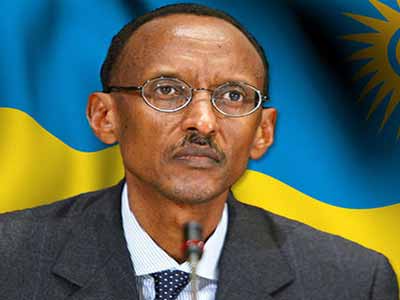
Those divisions, which appeared tangential at a time when the crisis was widely seen as political, were slowly becoming more visible as defections from the military signal possible war ahead.
Defections in Burundi’s army showed it is no longer unified, said Thierry Vircoulon, International Crisis Group’s project director for central Africa. “The candidacy of President Nkurunziza was very divisive, including in the security forces,” he said. Nkurunziza was re-elected in July, in a vote that international observers said was not credible.
However Presidential spokesman Willy Nyamitwe has dismissed reports of ethnic divisions within the army as opposition propaganda.
The Tutsis make up 14 percent of Burundi’s 10 million people, while Hutus are 85 percent of the population. According to the Arusha agreement, Tutsis should hold 40 percent of posts in the government and the national assembly, as well as 50 percent of all seats in the Senate and the military.
As a former rebel leader, Nkurunziza came to power in 2005 following the signing of the Arusha accord. The Constitution created as a result of the accord says a president can serve for one term, renewable once.

