 Follow Us on Google News


 Follow Us on Google Discover
• Explains How Nigeria Lost N6.2tr In 2022
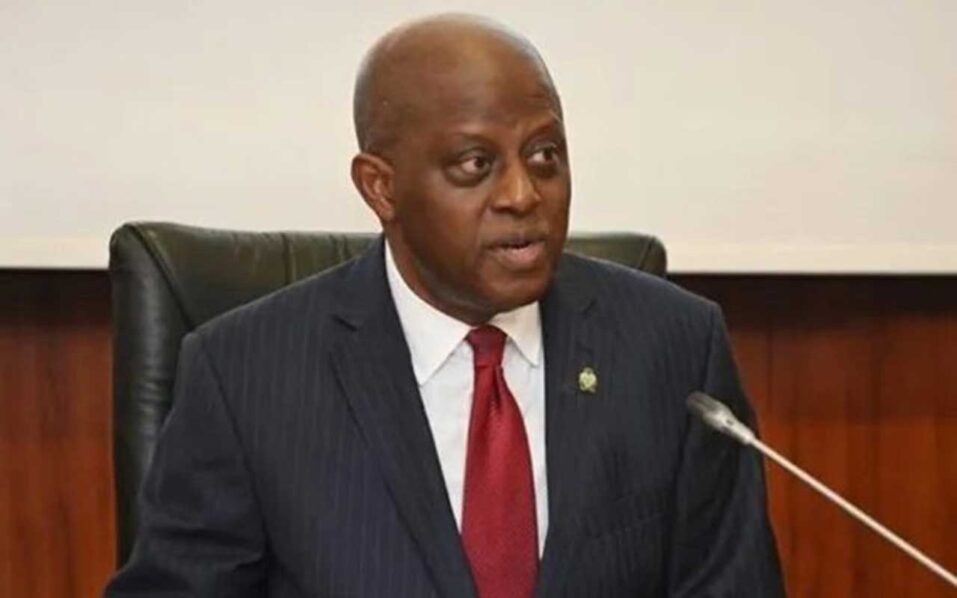
With the addition of 850 basis points to the monetary rate, food inflation soaring by 7.13 per cent, core inflation up by 5.98 per cent, and the naira sliding to its lowest band at N1,600 exchange rate for a dollar, the Governor of the Central Bank of Nigeria (CBN), Yemi Cardoso, insisted that his one year tenure in office has witnessed remarkable progress.
[ad]
As at September 2023, inflation was 26.72 per cent, while food inflation was 30.64 per cent. Inflation was 32.70 per cent up from 26.72 per cent when Cardoso and his team were appointed by President Bola Ahmed Tinubu.
Also, the exchange rate hovered between N767 and N780 to the dollar, while a bag of rice was sold for between N45,000 and N50,000. The same bag of rice now costs between N100,000 and N110,000 per bag, depending on location.
He highlighted that as part of the CBN’s 2024-2028 Corporate Strategy, branded with the values of Integrity, Meritocracy, Professionalism, Accountability, Courage, and Tenacity (IMPACT), the decision to move away from quasi-fiscal interventions was made.
He said the CBN was committed to orthodox monetary policies and streamlined FX windows to restore market confidence, adding that the bank had also implemented new Bureau de Change (BDC) operations guidelines to enhance regulation and minimise FX market disruptions.
[ad]
Cardoso also highlighted the apex bank’s drive to improve internal efficiency, leveraging a “Digital-First Initiative” that has automated key processes, reduced operational costs, and introduced data-driven tools for effective policy-making.
He further disclosed that the Integrated Data Collection and Sharing Portal (IDSP) and a new Investor Relations Unit were established to foster a transparent and data-centric environment that encourages investment and supports the bank’s economic objectives.
Delivering a keynote address at a symposium on economic reforms and the unveiling of the compendium, ‘Promoting Stability in an Era of Economic Reforms: The Journey So Far’, to mark the first anniversary of the bank’s current management team, Cardoso reiterated the CBN’s commitment to stabilising the economy, curbing inflation, and restoring investor confidence.
He described the past year as one of the bank’s most challenging yet transformational, saying the bank has been able to address the credibility deficit it faced at the time.
According to Cardoso, the reforms have started to yield positive results, including marked improvements in the FX market and a stabilisation of foreign reserves, which have now surpassed the $40 billion mark, the highest in 33 months.
While noting that inflation remains elevated, he said it was on a downward trend, signalling that the reforms were taking hold in restoring market equilibrium and fostering growth.
Cardoso detailed the inherited economic challenges, such as the GDP growth slowdown to 2.31 per cent in Q1 2023, a significant decline from earlier years, and a sharp rise in inflation to 24.1 per cent by mid-2023.
[ad]
He noted that the CBN has confronted these pressures with a robust policy response in the past 12 months, prioritising measures to enhance stability in the foreign exchange market, improve monetary policy and curb inflation.
To address the fiscal deficit, he highlighted the impact of the ‘Ways and Means Advances’ by the CBN, which reached N22.7 trillion by mid-2023, necessitating urgent action. He also addressed the country’s capital importation challenges, with foreign direct investments and portfolio investments falling dramatically over the past decade.
Furthermore, the CBN governor acknowledged the adverse effects of multiple exchange rate windows, which encouraged arbitrage, reduced foreign investment, and led to a backlog in FX settlements.
The revenue losses attributed to these exchange rate issues were estimated at N6.2 trillion in 2022 alone. In response to this development, he said the CBN has undertaken a series of impactful reforms, including a recalibration of the Monetary Policy Rate (MPR), raising it by 850 basis points to 27.25 per cent alongside an increase in the Cash Reserve Ratio (CRR) for commercial banks to 50 per cent.
Cardoso insisted that the adjustments were critical to addressing inflationary pressures and fostering a stable economic environment. In his welcome address, the Deputy Governor, Economic Policy, of the CBN, Muhammad Abdullahi, who reflected on the challenges faced over the past year, emphasised how each obstacle had offered valuable opportunities for learning, development, and growth, demonstrating the resilience of the bank’s management and staff.
[ad]

