 Follow Us on Google News
 Follow Us on Google Discover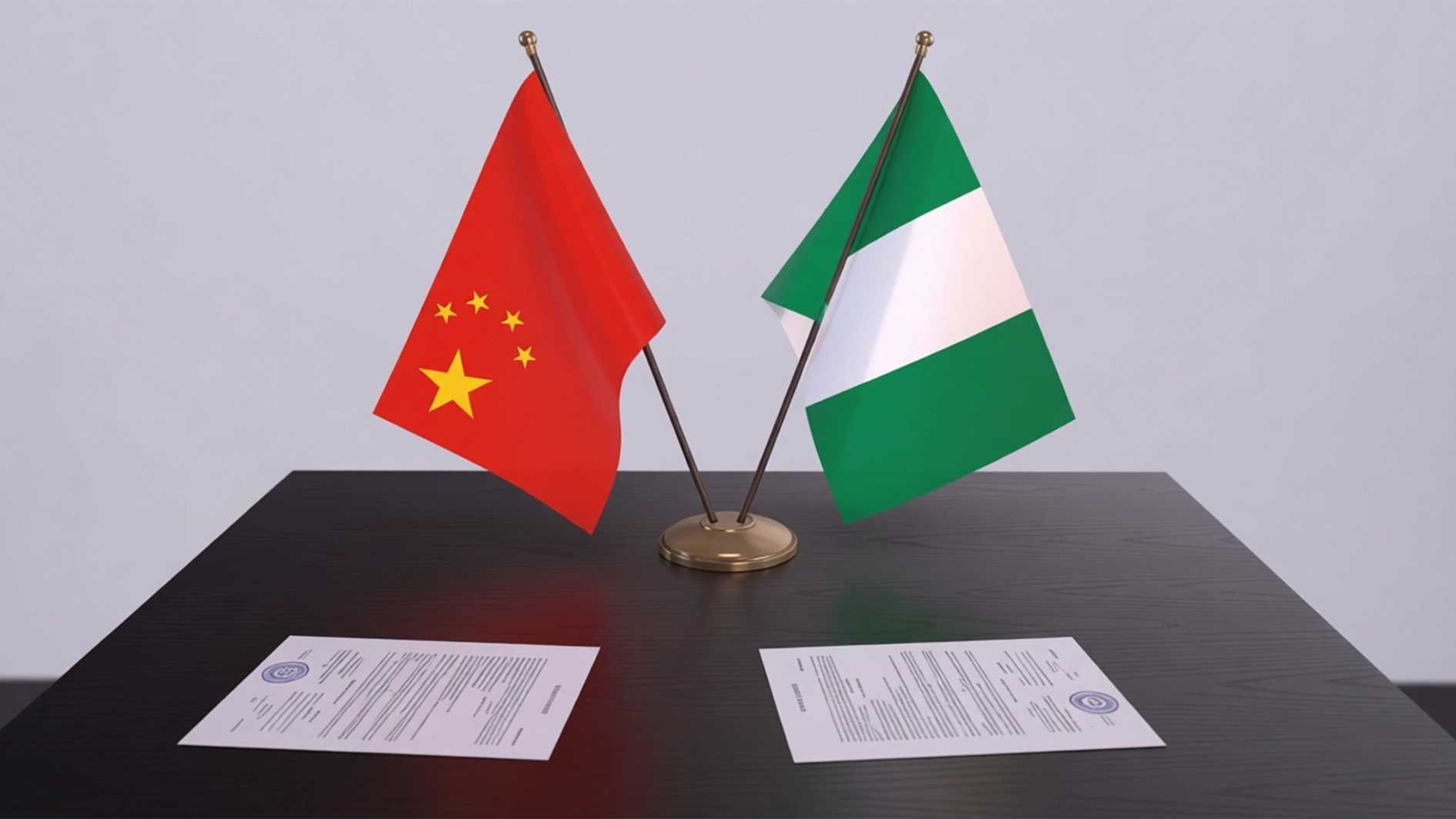
Experts and diplomats have underscored the growing importance of China-Nigeria relations, describing the bilateral partnership as a model of South-South cooperation driven by infrastructure development, educational exchanges, cultural diplomacy and a shared commitment to reforming global governance.
The views were expressed during presentations marking the 105th anniversary of the founding of the Communist Party of China (CPC) and the 55th anniversary of diplomatic relations between China and Nigeria.
In separate presentations, Consul General of the People’s Republic of China in Lagos, Yan Yuqing; Prof Joshua O. Bolarinwa of the Nigerian Institute of International Affairs (NIIA); Dr Adetoro O. Banwo of the University of Lagos; and the Chinese Director of the Confucius Institute at the University of Lagos, Wu Shuang, among other speakers, highlighted China’s governance philosophy and its implications for China-Africa and China-Nigeria cooperation.
Yan said the CPC’s development over the past 105 years had enabled China to transform from a poor nation into the world’s second-largest economy while lifting hundreds of millions of people out of poverty through reforms, self-reliance and people-centred policies.
According to him, the Party’s guiding mission has remained the pursuit of the well-being of the Chinese people, national rejuvenation and contributions to the common good of humanity.
He noted that China’s vision for global governance is now anchored on the concept of building a community with a shared future for mankind and promoting true multilateralism through greater consultation, joint contribution and shared benefits.
The envoy said the recently unveiled Global Governance Initiative complements China’s Global Development Initiative, Global Security Initiative and Global Civilisation Initiative as frameworks aimed at fostering a more equitable international order and amplifying the voice of developing countries.

He described Nigeria as one of China’s most important strategic partners in Africa, saying cooperation between both countries had expanded significantly under the Belt and Road Initiative and the Forum on China-Africa Cooperation.
According to him, projects such as the Lekki Deep Sea Port, the Lagos Blue Rail Line, the Lekki Free Trade Zone and the Ogun-Guangdong Free Trade Zone have contributed to economic growth, employment creation and improved transportation in Nigeria.
He also highlighted humanitarian initiatives implemented by the Chinese Consulate General in Lagos, including free cataract surgeries for hundreds of Nigerians and food support for vulnerable households.
Providing an academic perspective, Prof Bolarinwa said China’s emergence as a global power had reshaped international politics, finance and multilateral diplomacy.
He explained that China’s approach to global governance seeks reforms within the existing international system while advocating stronger representation for countries of the Global South.
According to him, the Belt and Road Initiative, together with the Forum on China-Africa Cooperation, has become a major platform for infrastructure financing, trade, education, technology transfer and cultural exchanges across Africa.
Bolarinwa noted that Nigeria and China had moved from modest diplomatic engagement following the establishment of relations in 1971 to a comprehensive strategic partnership formally upgraded in 2024.
He said bilateral cooperation now covers transportation infrastructure, energy, digital technology, education, healthcare, agriculture and security.
The scholar, however, urged both countries to address concerns relating to trade imbalances, debt sustainability, technology transfer and local content to maximise the benefits of the partnership.
He observed that future cooperation should increasingly focus on digital innovation, renewable energy, manufacturing, capacity building and institutional partnerships capable of supporting Nigeria’s economic transformation.
In his presentation, Dr Banwo examined the historical evolution of the CPC’s governing philosophy from its founding through the leadership of Mao Zedong, Deng Xiaoping, Jiang Zemin, Hu Jintao and Xi Jinping.
He argued that despite changes in leadership, a consistent theme has been the pursuit of improved living standards, economic development, technological innovation and people-centred governance.
According to Banwo, China’s rapid economic rise, industrialisation and technological advancement were achieved through long-term planning, reforms and investment in science, education and productive capacity.
He added that the country’s recent global initiatives reflected its ambition to contribute to reforms in international governance while promoting development cooperation and shared prosperity.
Speaking from the perspective of educational and cultural exchange, Wu Shuang said people-to-people engagement remained the strongest pillar of China-Nigeria relations.
She recounted how Nigerian graduates of the Confucius Institute had secured scholarships in China, built successful careers as interpreters, entrepreneurs and researchers, and created employment opportunities for others.
According to her, education goes beyond language acquisition by equipping young people with skills, confidence and opportunities capable of transforming communities.
She said the Institute has also encouraged cultural exchange by promoting Nigerian stories in the Chinese language while Chinese teachers continue to learn Nigerian languages and culture to strengthen mutual understanding.
Wu expressed optimism that deeper educational cooperation, youth exchanges, research collaboration and cultural understanding would strengthen bilateral relations in the years ahead.
She noted that this year’s 55th anniversary of diplomatic relations between China and Nigeria and the designation of 2026 as the China-Africa Year of People-to-People Exchanges provide fresh opportunities to deepen cooperation.
The speakers agreed that while infrastructure and trade remain important pillars of the partnership, sustained investment in education, technology, cultural exchange and human capital development will determine the long-term success of China-Nigeria relations and contribute to a more inclusive global governance system.

